Alphabet Learning English for Beginners Worksheets for Ages 7-8
4 filtered results
-
From - To
Unlock the joy of learning the English alphabet with our engaging worksheets, designed specifically for beginners ages 7-8. These fun and interactive resources are perfect for young learners, whether they are native speakers or learning English as a second language. Our worksheets cover essential alphabet skills, featuring colorful activities and exercises to help children recognize, write, and pronounce each letter correctly. By using these worksheets, your child will build a solid foundation in English, boosting their confidence and proficiency. Start your child’s alphabet journey today with Kids Academy’s expert-designed educational materials!
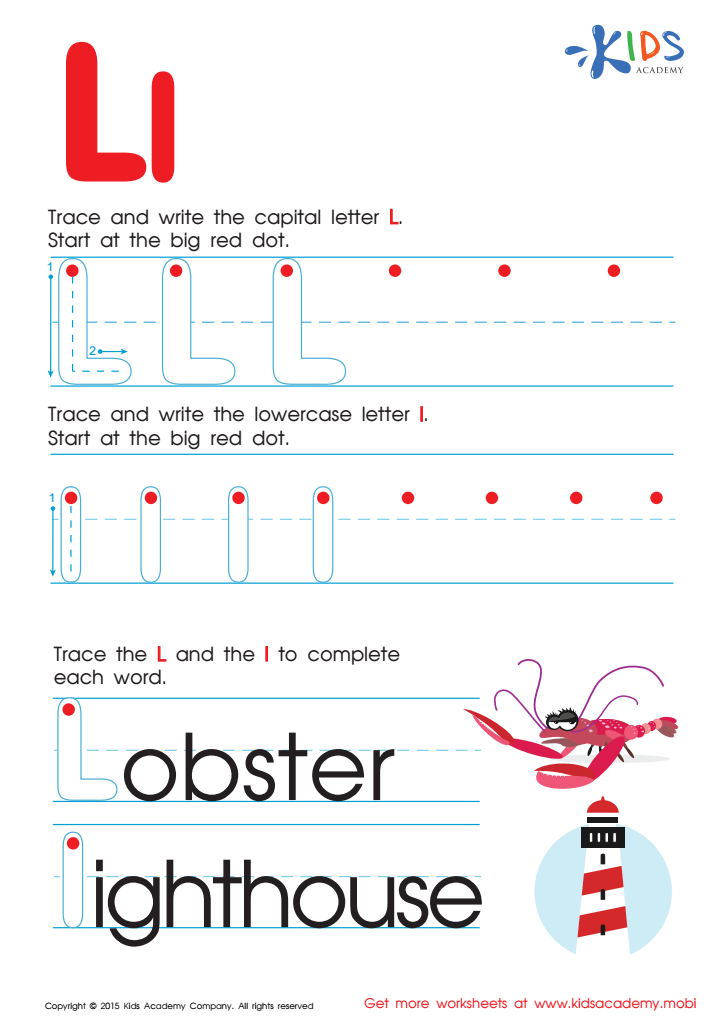
Letter L Tracing Page
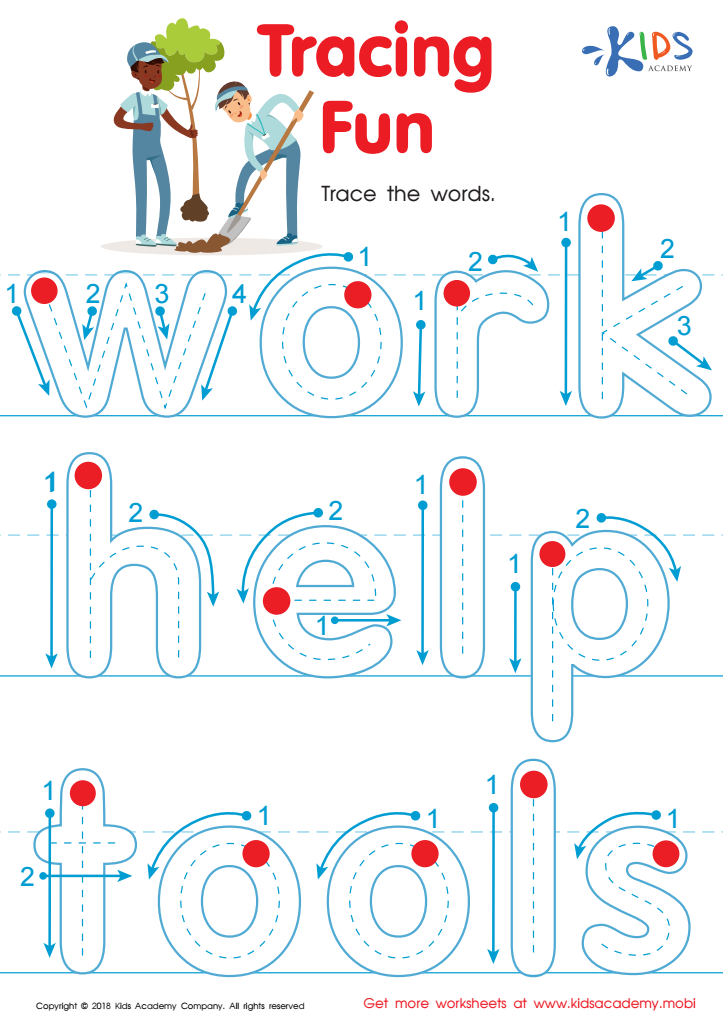
Tracing Fun Worksheet
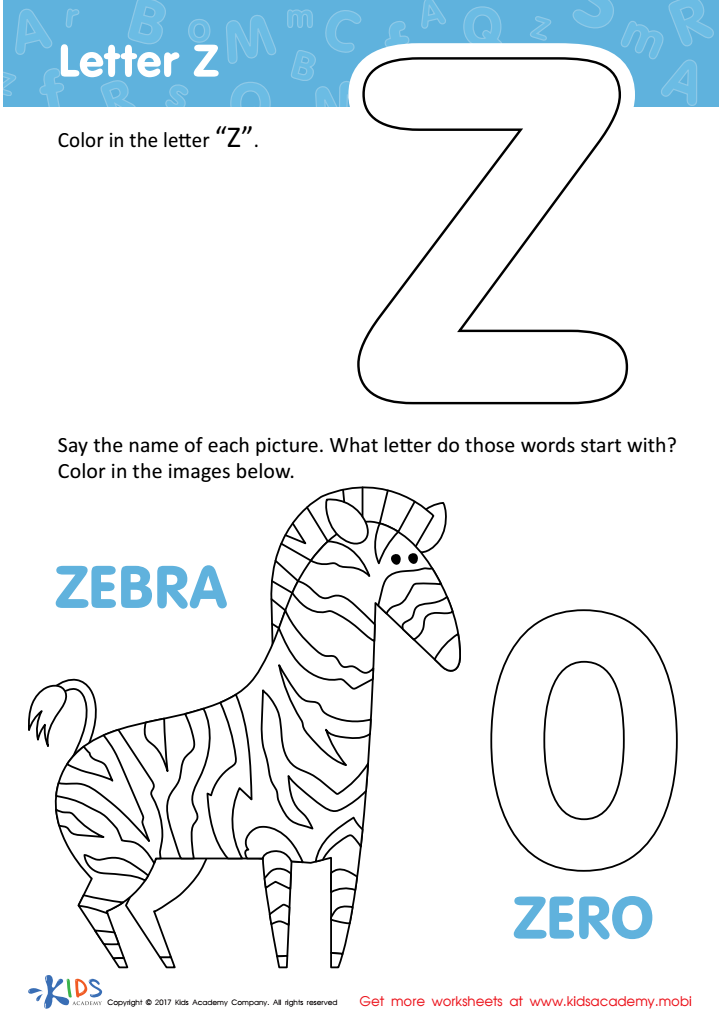
Letter Z Coloring Sheet
 Assign to My Students
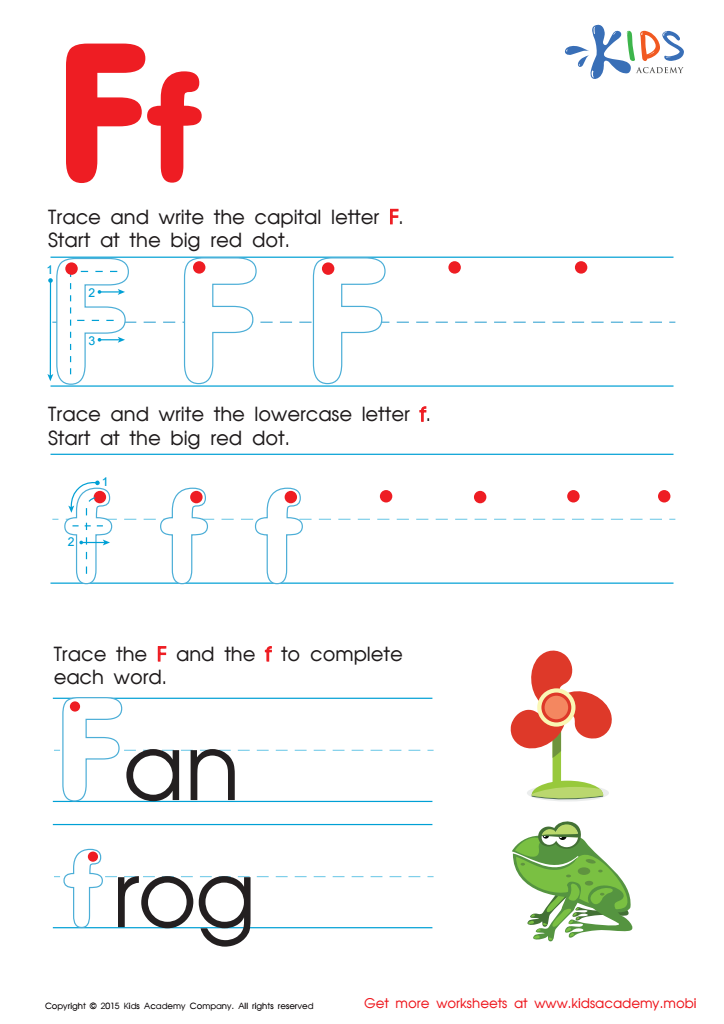
Letter F Tracing Page





Alphabet learning at ages 7-8 is fundamental in providing a solid foundation for language development. At this critical stage, children transition from emergent literacy to more advanced reading and writing skills. Parents and teachers play crucial roles in facilitating this process.
First, mastering the alphabet aids in phonemic awareness, allowing children to recognize and manipulate individual sounds in words, a core skill for reading fluency. Phonics, the relationship between letters and sounds, becomes intuitive with a strong knowledge of the alphabet. This proficiency helps children decode new words, leading to improved reading confidence and comprehension.
Second, a solid grasp of the alphabet boosts writing capabilities. Knowing letter names and sounds allows children to spell words phonetically, fostering independent writing. This autonomy in communication encourages creativity and self-expression.
Alphabet learning also impacts broader academic success. Literacy skills are foundational across subjects; comprehension in math, science, and social studies often relies on reading comprehension. Early positive experiences with literacy foster lifelong learning enthusiasm and academic confidence.
Finally, early engagement with the alphabet supports social and emotional development. Successfully acquiring literacy skills builds self-esteem and promotes a growth mindset. Parents and teachers, by prioritizing alphabet learning, ensure that children are equipped with the essential tools for educational advancement and personal development.