
Alphabet understanding Worksheets for Ages 7-8
6 filtered results
Difficulty Level
Grade
Age
-
From - To
Subject
Activity
Standards
Boost your child's literacy skills with our Alphabet Understanding Worksheets perfect for ages 7-8! Designed to strengthen letter recognition, phonemic awareness, and alphabet sequencing, these worksheets are a fantastic resource for early readers. Engaging exercises and activities make learning fun and effective, helping kids to confidently identify and use all letters of the alphabet. Ideal for classroom or at-home learning, these worksheets encourage independent practice and reinforce foundational language skills. Let your child embark on an exciting journey of literacy with our interactive and educational Alphabet Understanding Worksheets. Start today and watch their skills soar!
Favorites
With answer key
Interactive
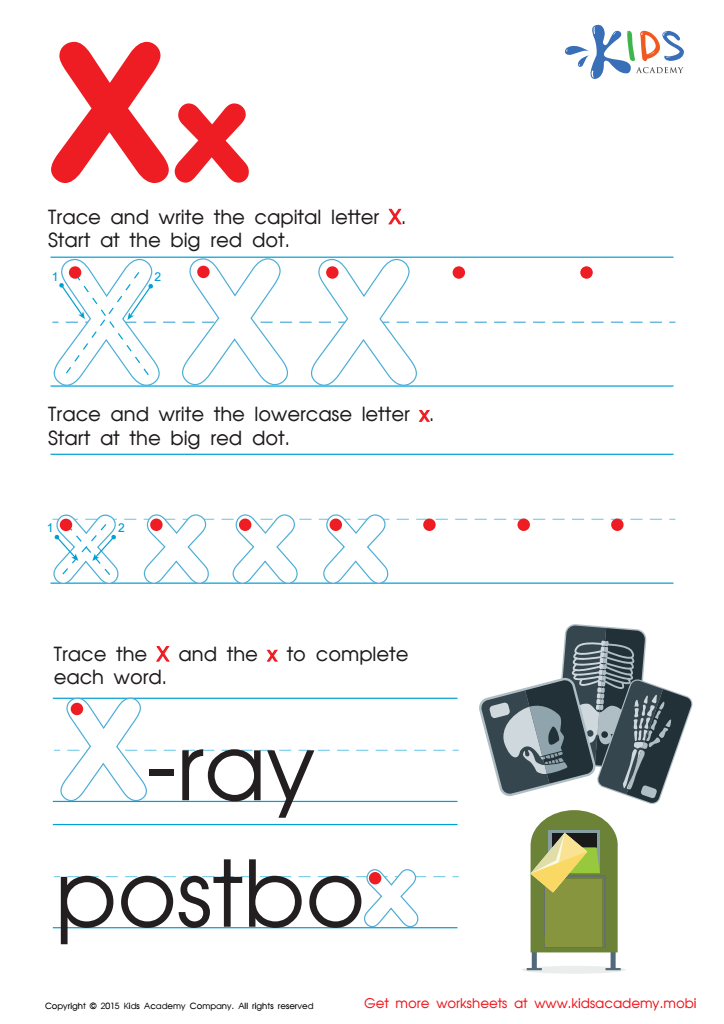
Letter X Tracing Page
Trace the uppercase letter "X" to learn, then write it yourself and practice. Then do the same with the lowercase "x" before completing the words "X-ray" and "postbox". Enjoy our alphabet printables!
Letter X Tracing Page
Worksheet
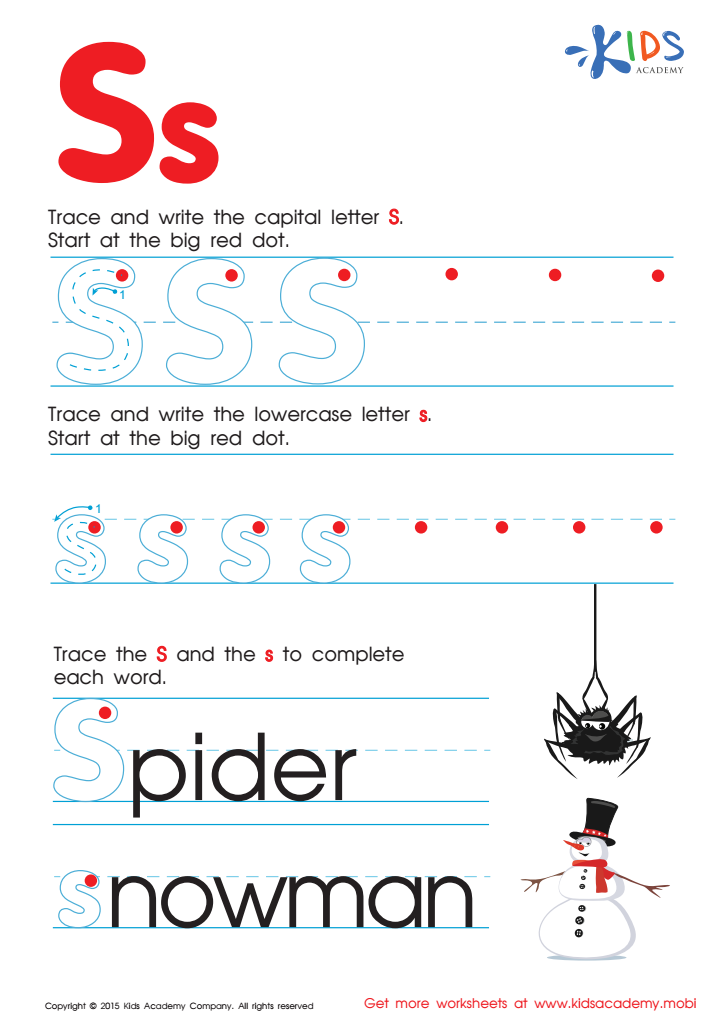
Letter S Tracing Page
Trace and write the capital and lowercase "S" on this ABC worksheet for kindergarten. Start with the big red dot and be careful. When you finish, help the spider and snowman in the pictures restore their words with the capital and lowercase letters. Continue learning the alphabet with Kids Academy.
Letter S Tracing Page
Worksheet
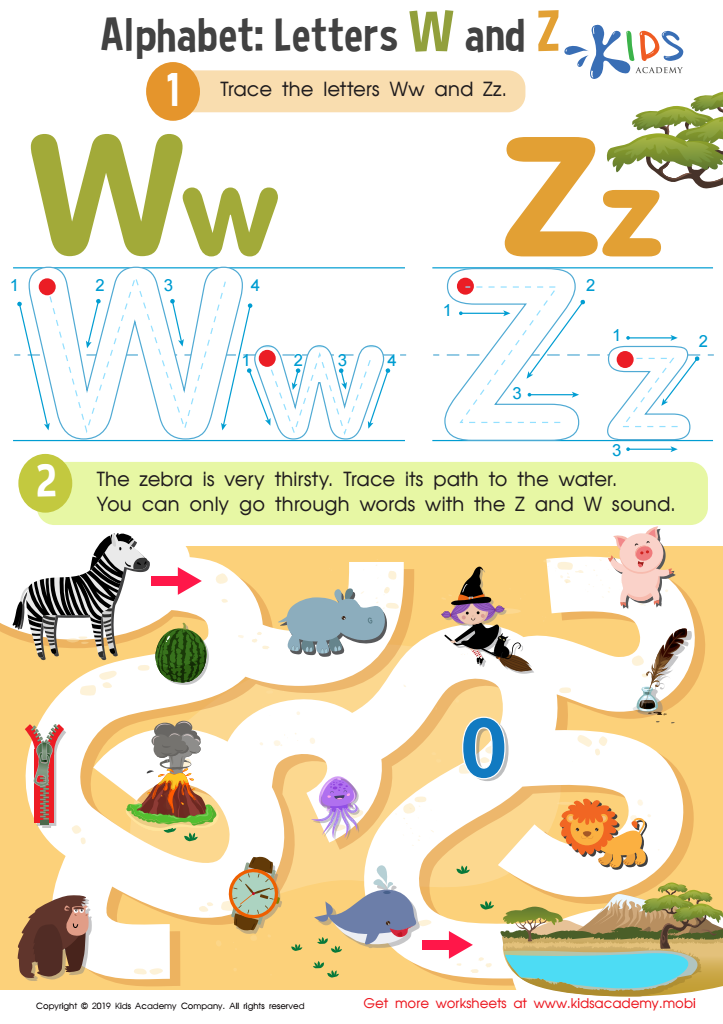
Letters W and Z Tracing Worksheet
Kids will go on a safari exploration of letters W and Z with this worksheet. Students will trace «W» and «Z» and then help the zebra find their watering hole, only following the path of the «W» and «Z» words among many others. It'll be a fun learning activity!
Letters W and Z Tracing Worksheet
Worksheet
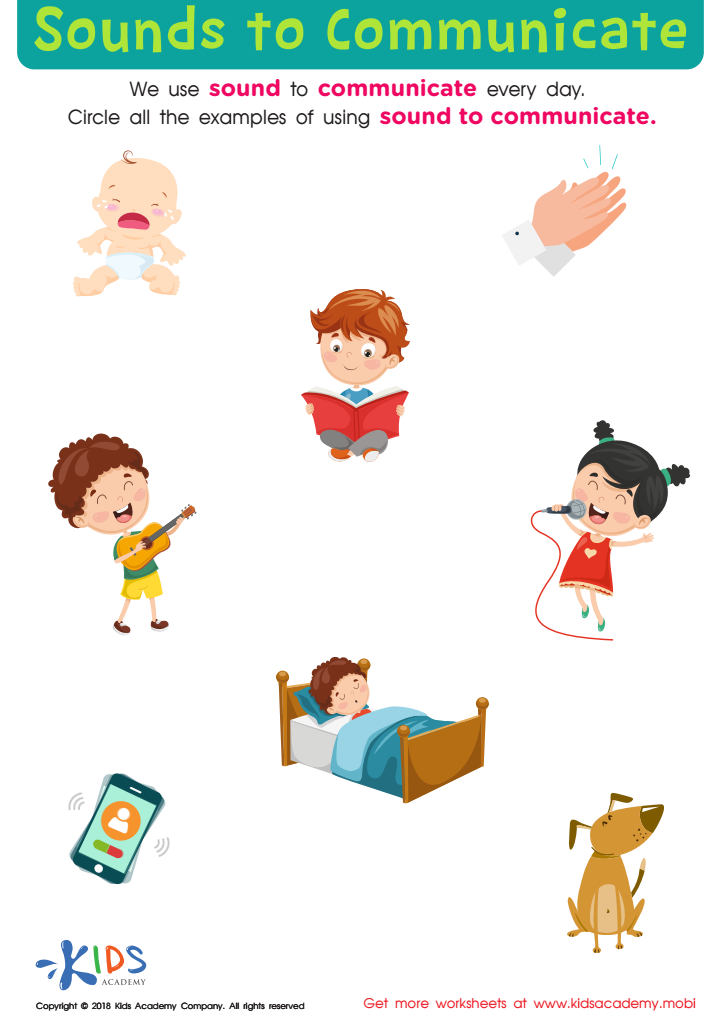
Sounds to Communicate Worksheet
Sounds are important for communication. Ask your students to name sounds people, animals and things make. Then, review this worksheet with them and see if they can identify the activities. Ask them to circle examples of sounds used to communicate.
Sounds to Communicate Worksheet
Worksheet
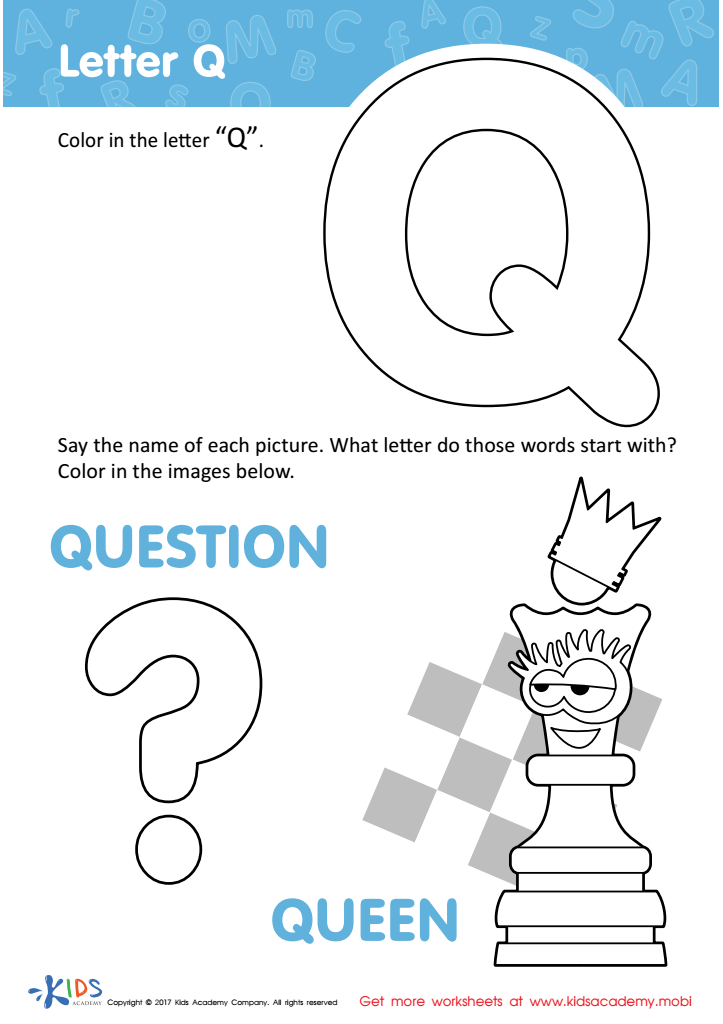
Letter Q Coloring Sheet
Kids need practice with letters not seen often. Give your child a boost with this letter "Q" coloring page! Have them color in the queen and question mark, while learning the sound "Q" makes. Fun and educational!
Download (PDF)
 Assign to My Students
Assign to My Students
Letter Q Coloring Sheet
Worksheet
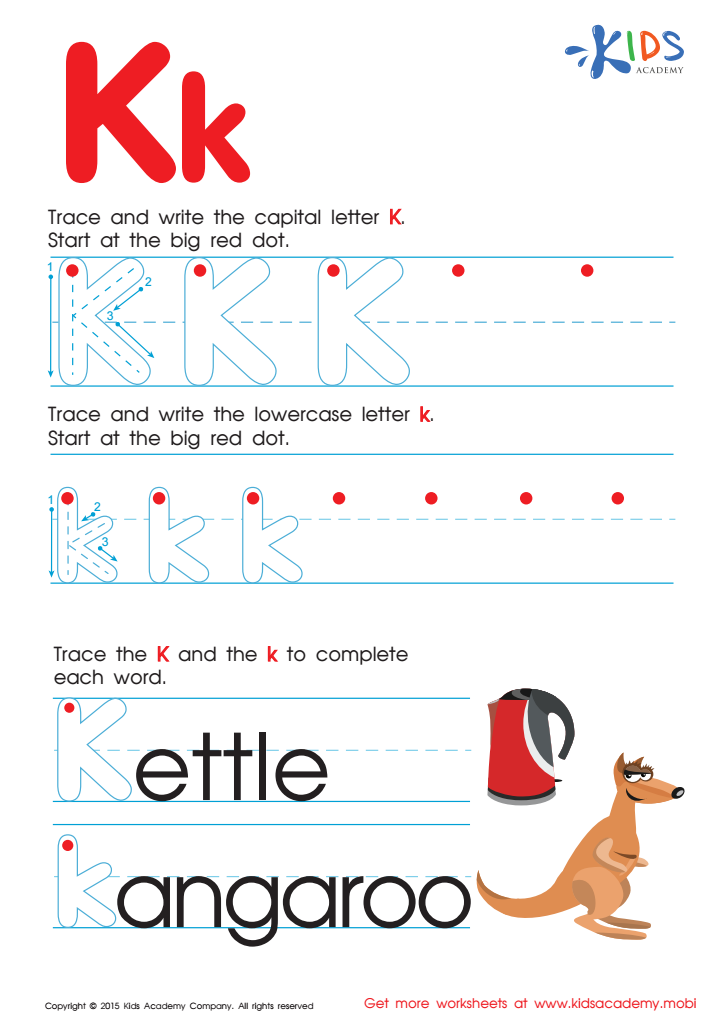
Letter K Tracing Page
Trace and write the letter K; start at the big red dot. Use it to complete words like "Kettle" and "Kangaroo". Visit Kids Academy for more free alphabet worksheets for kindergarten.
Letter K Tracing Page
Worksheet
Join Kids Academy for Free
Who is primarily going to use this learning content?







Understanding the alphabet at ages 7-8 is crucial for early literacy development, which acts as the foundation for future academic success. For both parents and teachers, prioritizing alphabet recognition and its associated skills, like phonemic awareness and letter-sound correspondence, plays a critical role.
By this age, children should ideally transition from recognizing individual letters to understanding how these letters form words and sentences. This cognitive leap is essential for developing reading fluency and comprehension. Without a solid grasp of the alphabet, children may struggle with tasks that require them to decode text, spell words, and write sentences—all fundamental skills across all subjects, including math and science, where reading instructions and word problems are common.
Moreover, proficient alphabet understanding fosters greater confidence and independence in young learners. They will feel more capable of exploring books, participating in class, and completing assignments, enhancing their overall engagement and enthusiasm for learning.
For parents, supporting alphabet learning means fostering a positive home literacy environment, such as reading books together and encouraging writing practice. For teachers, it involves implementing structured literacy programs that build on letter knowledge systematically, ensuring that every child has the opportunity to succeed. Overall, alphabet understanding is a cornerstone of educational development that parents and teachers should diligently nurture.








