Alphabetical understanding Worksheets for Ages 7-8
3 filtered results
-
From - To
Enhance your child's reading and sorting skills with our Alphabetical Understanding Worksheets, tailored specifically for ages 7-8. These engaging resources are designed to help young learners master the alphabet, navigate phonics, and improve their organizational skills through fun activities. By interacting with various exercises, children will learn to recognize alphabetical order, categorize words, and develop crucial early literacy skills. Our worksheets promote independent learning and are perfect for home or classroom use. Equip your child with the tools they need to succeed in their reading journey and foster a lifelong love for learning. Explore our collection today!
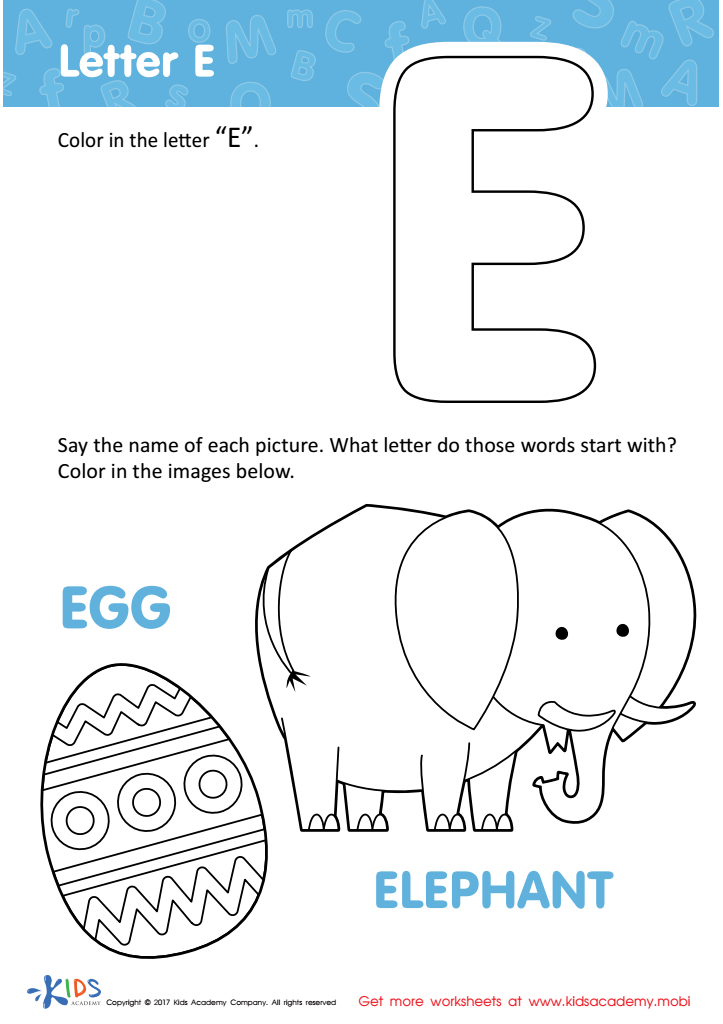
Letter E Coloring Sheet
 Assign to My Students
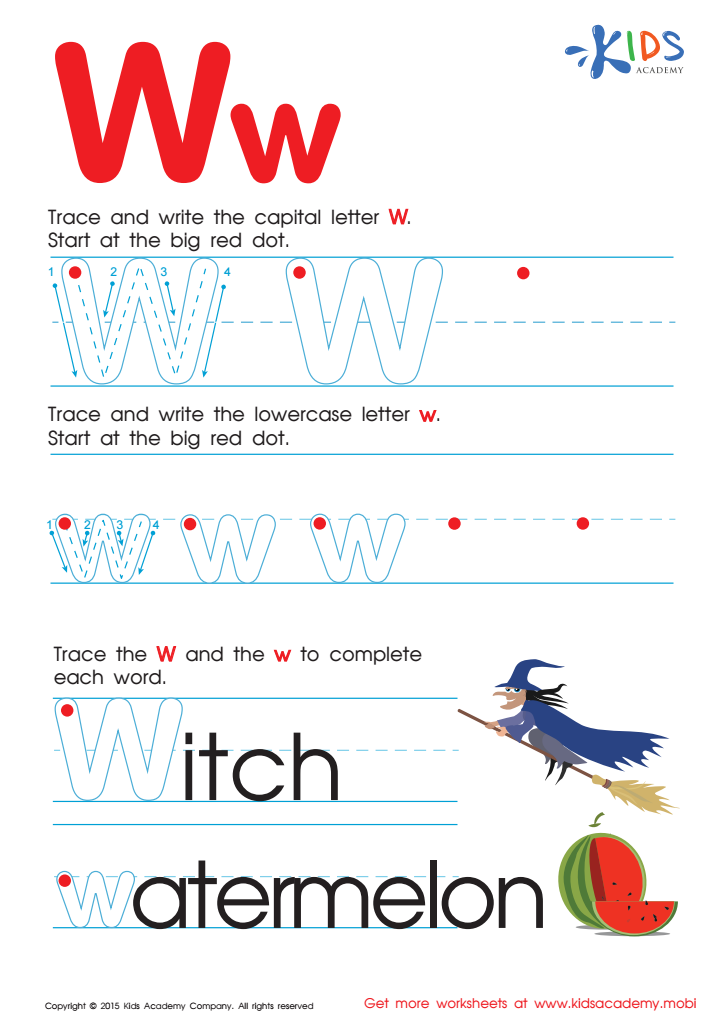
Letter W Tracing Page
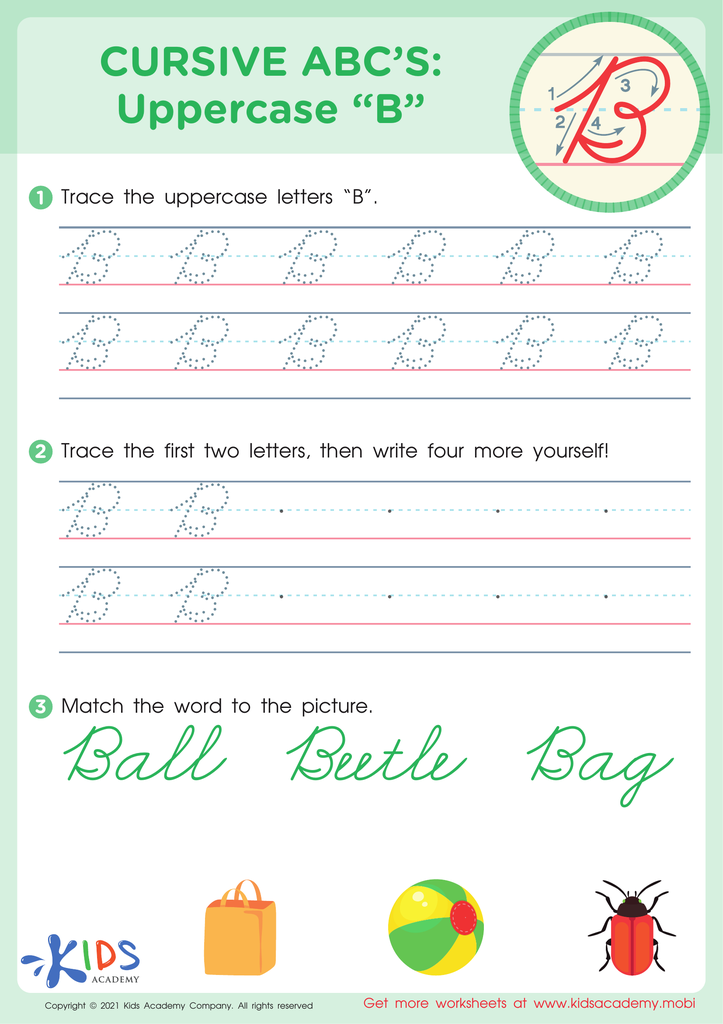
Cursive ABCs: Uppercase B






Alphabetical understanding is crucial for children aged 7-8 as it forms the foundation for their literacy development. At this stage, students are transitioning from learning to read to reading to learn. A solid grasp of the alphabet not only helps them decode new words but also enhances their spelling and writing skills.
Parents and teachers should prioritize alphabetic understanding because it fosters reading fluency, which directly impacts comprehension. When children can quickly recognize letters and sounds, they can focus more on the meaning of the text rather than struggling with word recognition. This fluency enriches their engagement with reading, encouraging a lifelong love for books.
Moreover, an understanding of the alphabet aids in organizing information. Children learn to categorize words and ideas alphabetically, improving their research and comprehension skills when accessing information—from libraries to digital resources.
Furthermore, in an increasingly digital age, where keying in searches often relies on alphabetic arrangement, familiarity with the alphabet becomes more indispensable. Thus, supporting children's alphabetical skills empowers them academically and equips them for future challenges, making it imperative for both parents and teachers to actively engage in developing this essential aspect of literacy.








