Applying math skills Worksheets for Ages 7-8
3 filtered results
-
From - To
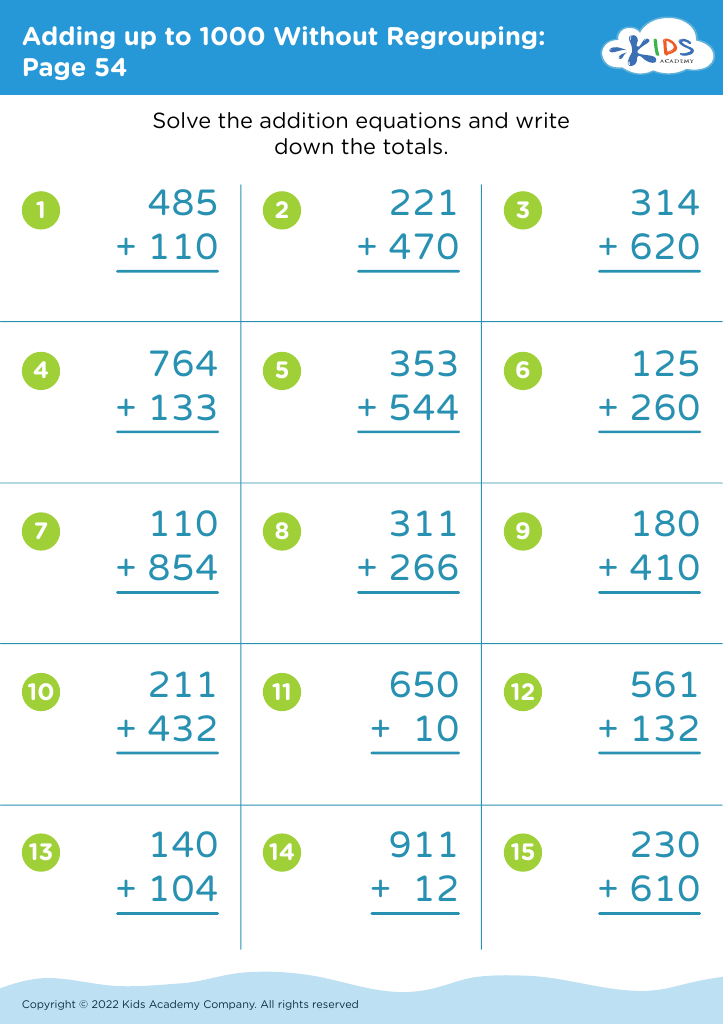
Explore our engaging "Applying Math Skills Worksheets for Ages 7-8," designed to strengthen young learners' mathematical understanding. These worksheets focus on real-world applications, encouraging children to solve problems and think critically. Covering essential topics such as addition, subtraction, and basic geometry, these resources help build confidence and proficiency in math. Unique, interactive activities enable kids to apply their skills in various contexts, making learning fun and effective. Ideal for supplemental practice at home or in the classroom, our worksheets ensure that students develop a strong foundation in math while fostering a love for learning. Start nurturing their math skills today!
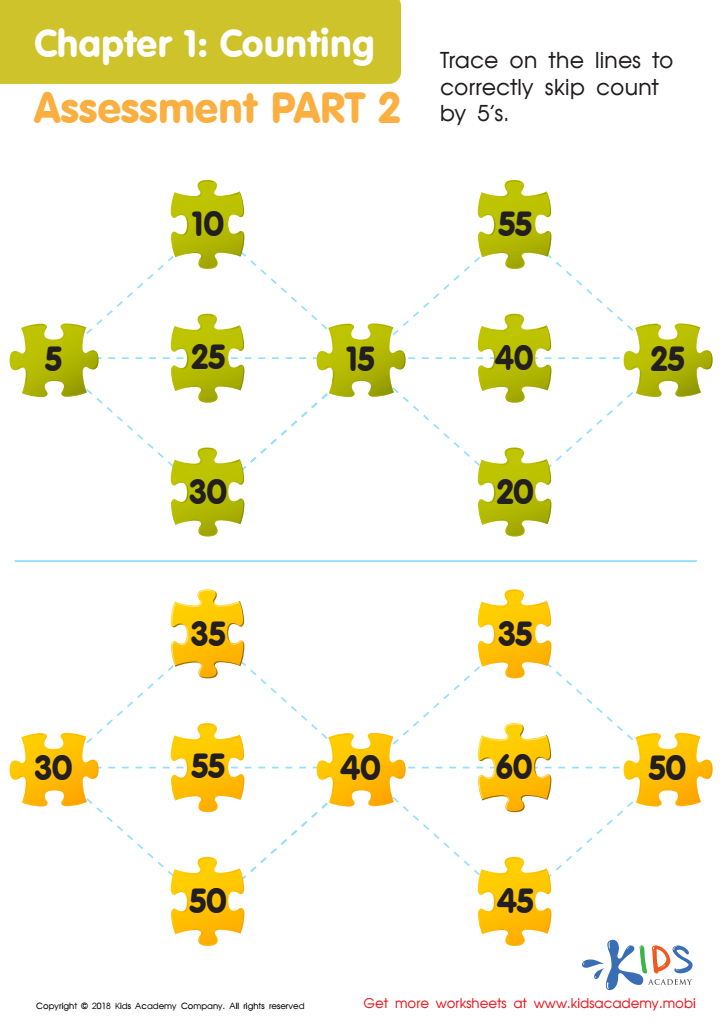
Counting: Assessment 2 Worksheet
 Assign to My Students
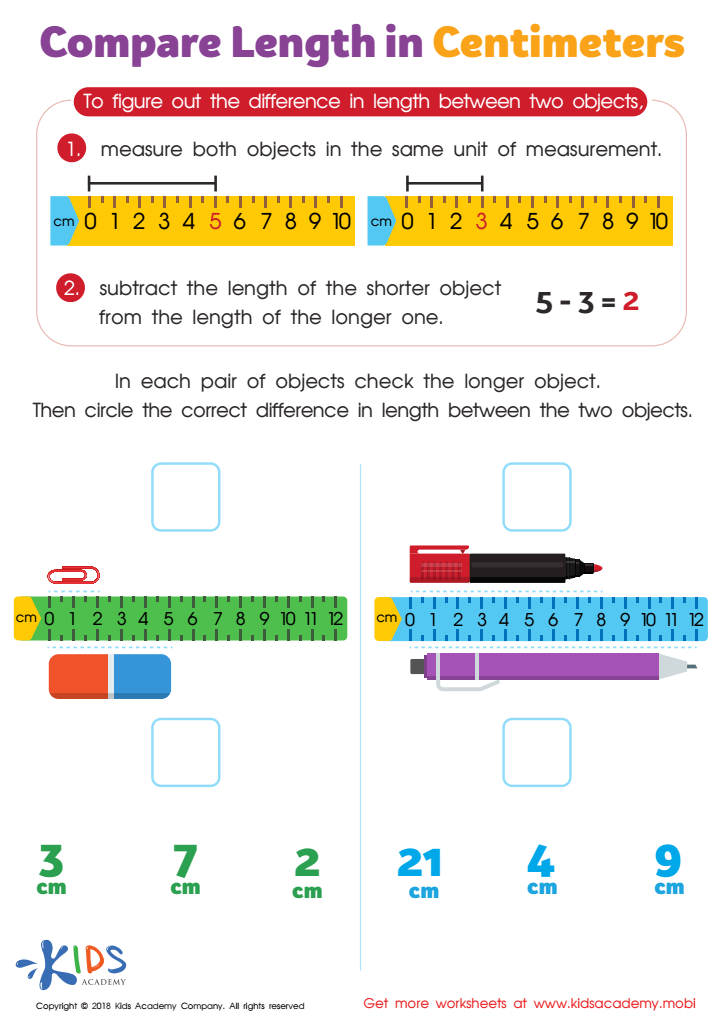
Compare Length in Centimeters Worksheet






Parents and teachers should prioritize applying math skills for children ages 7-8 because this developmental stage is crucial for building a solid foundation in mathematical understanding. At this age, children transition from basic arithmetic to more complex concepts, such as multiplication, division, and fractions. Engaging in practical applications of math in daily life helps reinforce these skills, enhancing comprehension and retention.
Additionally, applying math to real-world scenarios fosters critical thinking and problem-solving abilities. When children see math in action—whether in cooking, shopping, or playing games—they gain a practical understanding of its relevance. It allows them to relate math to everyday situations, which can boost their confidence and interest in the subject.
Moreover, consistent practice and application of math skills during this age can significantly contribute to overall academic success. Children are more likely to retain information when they apply their knowledge rather than merely memorizing concepts. Collaborative activities, such as group projects or math games, can also promote social skills while making learning more enjoyable.
In summary, fostering practical math applications during ages 7-8 lays a strong foundation for future learning and ignites a lasting interest in mathematics, crucial for long-term success in school and beyond.








