Astronomy basics Worksheets for Ages 7-8
3 filtered results
-
From - To
Explore the wonders of the universe with our Astronomy Basics Worksheets for Ages 7-8! Designed to ignite a passion for space, these engaging and educational worksheets introduce young learners to fundamental astronomical concepts. Kids will discover fascinating topics such as planets, stars, and galaxies while improving their critical thinking and observational skills. With a variety of activities, including coloring pages, puzzles, and quizzes, these worksheets make learning fun and interactive. Ideal for classroom enrichment or at-home study, our resources support early learners in developing a strong foundation in science. Begin your child’s journey through the cosmos today!
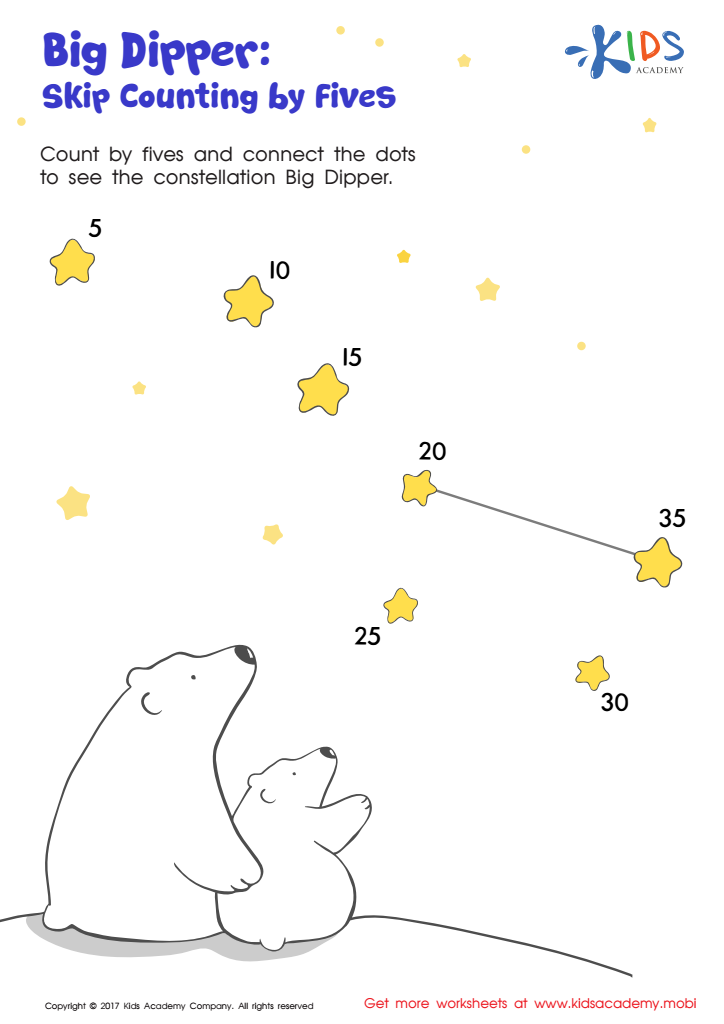
 Assign to My Students
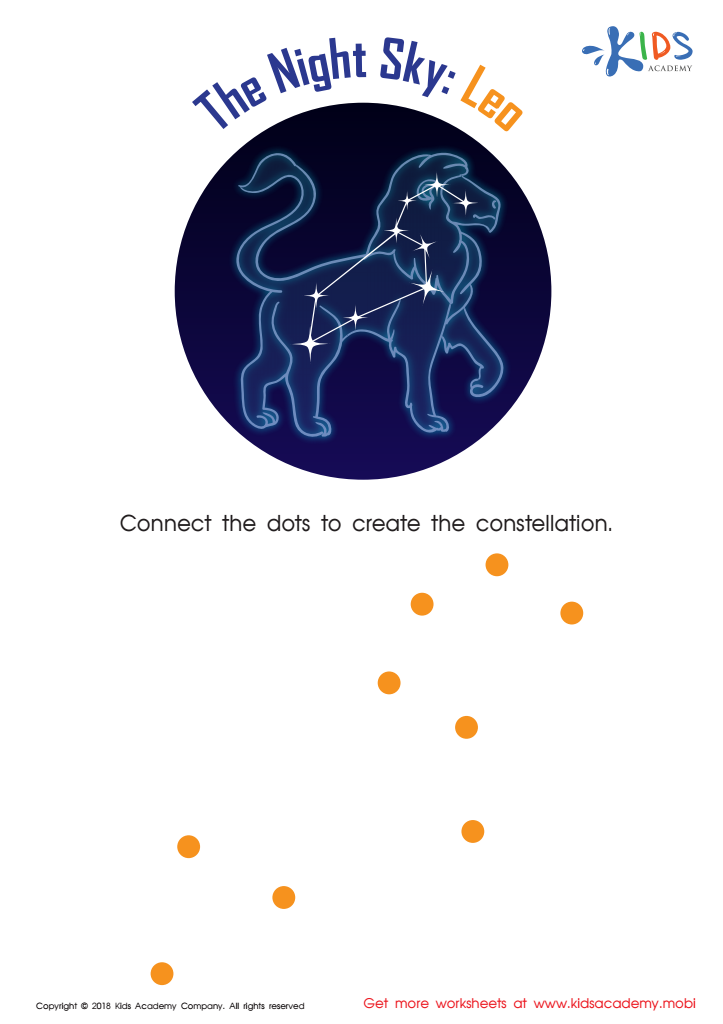
The Night Sky: Leo Worksheet
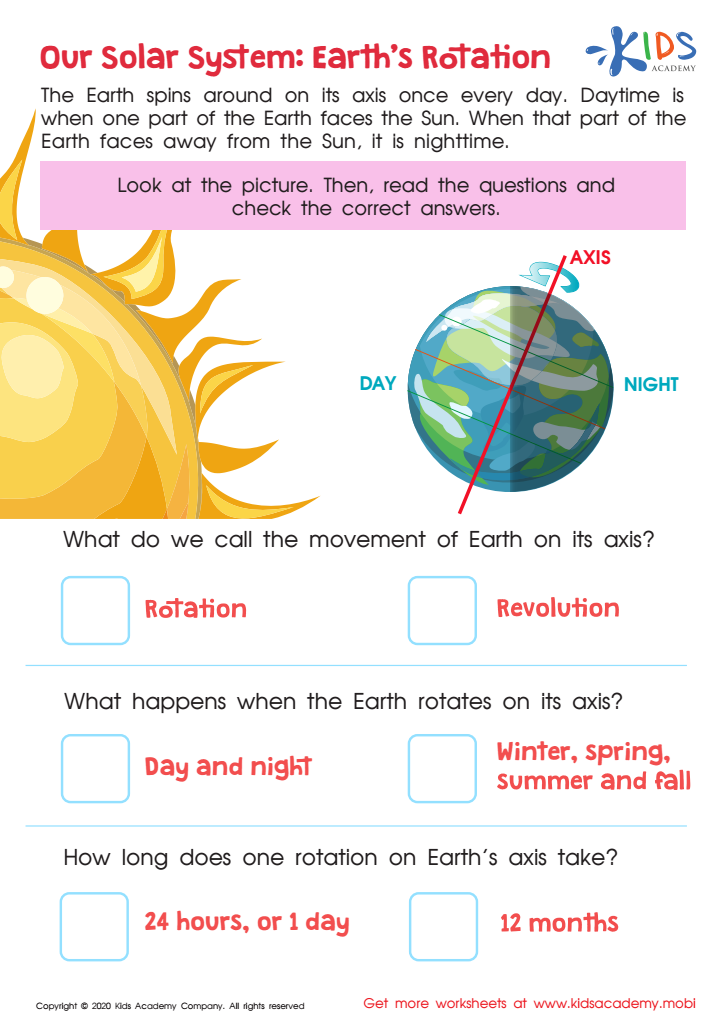
Our Solar System: Earth's Rotation Printable








Parents and teachers should care about introducing astronomy basics to children aged 7-8 because it fosters a sense of wonder and curiosity about the universe. At this age, children are naturally inquisitive, and exploring astronomy can satisfy their thirst for knowledge while laying the groundwork for critical thinking skills.
Understanding basic astronomical concepts, such as the solar system, stars, and phases of the moon, helps children grasp fundamental scientific principles. This knowledge not only enriches their vocabulary but also encourages observational skills and an appreciation for nature. Classroom activities like stargazing or model-making can make learning interactive and engaging, further solidifying these concepts in their minds.
Additionally, astronomy introduces themes of teamwork and collaboration as children work together on projects, sparking discussions about the environment, geography, and technology. It also opens avenues for discussions about diversity and belonging, as they learn about different cultures’ interpretations of the stars.
Finally, fostering an early interest in astronomy can inspire future aspirations in STEM fields, guiding children towards exciting career paths in science, technology, engineering, and math. In essence, introducing astronomy to young minds cultivates not only education but also creativity, thinking skills, and an appreciation of the cosmos.








