
Basic Mathematics Worksheets for Ages 7-8
7 filtered results
Difficulty Level
Grade
Age
-
From - To
Subject
Activity
Standards
Our "Basic Mathematics Worksheets for Ages 7-8" are designed to enhance young students' math skills in an engaging and effective way. These printable worksheets cover fundamental topics such as addition, subtraction, multiplication, division, and problem-solving. Tailored for kids aged 7 to 8, each activity aims to bolster their confidence and foster a love for math through fun and interactive exercises. Created by educational experts, our worksheets align with learning standards and are perfect for use at home or in the classroom. Help your child build a strong foundation in mathematics with our easily accessible resources.
Favorites
With answer key
Interactive
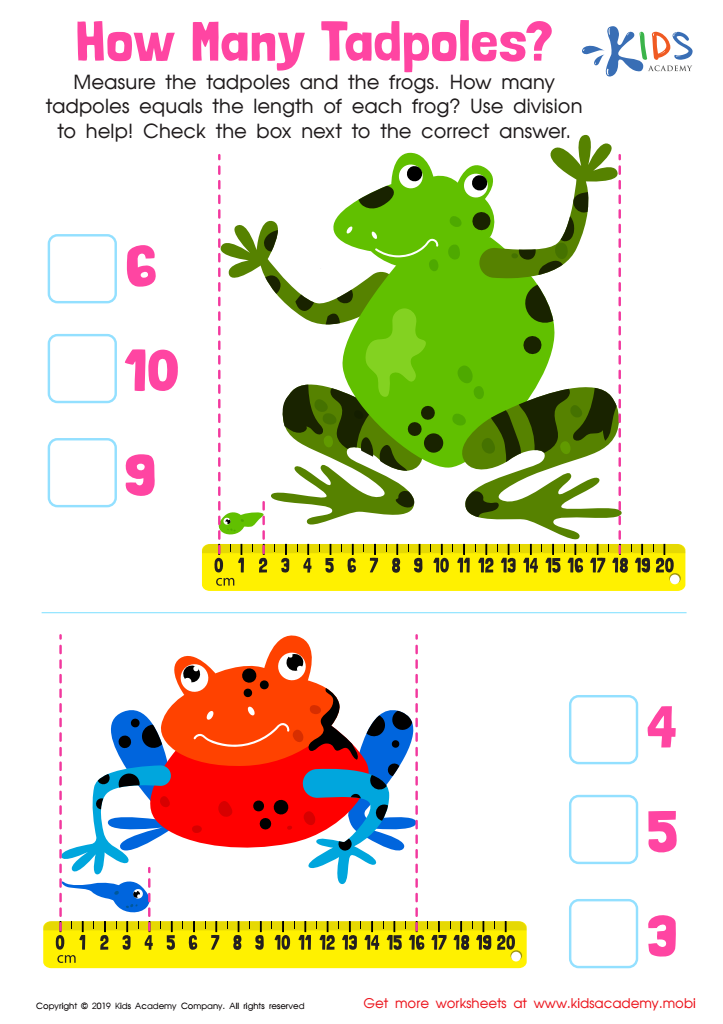
How Many Tadpoles Worksheet
Kids love tadpoles! They'll have fun using them to work out the measurements of their frog friends. By dividing the length of the frogs by the length of the tadpoles, children can deduce how many tadpoles it takes to equal a frog. With the use of 'how many' and 'each' they'll solve math problems without realizing it!
 Assign to My Students
How Many Tadpoles Worksheet
Worksheet
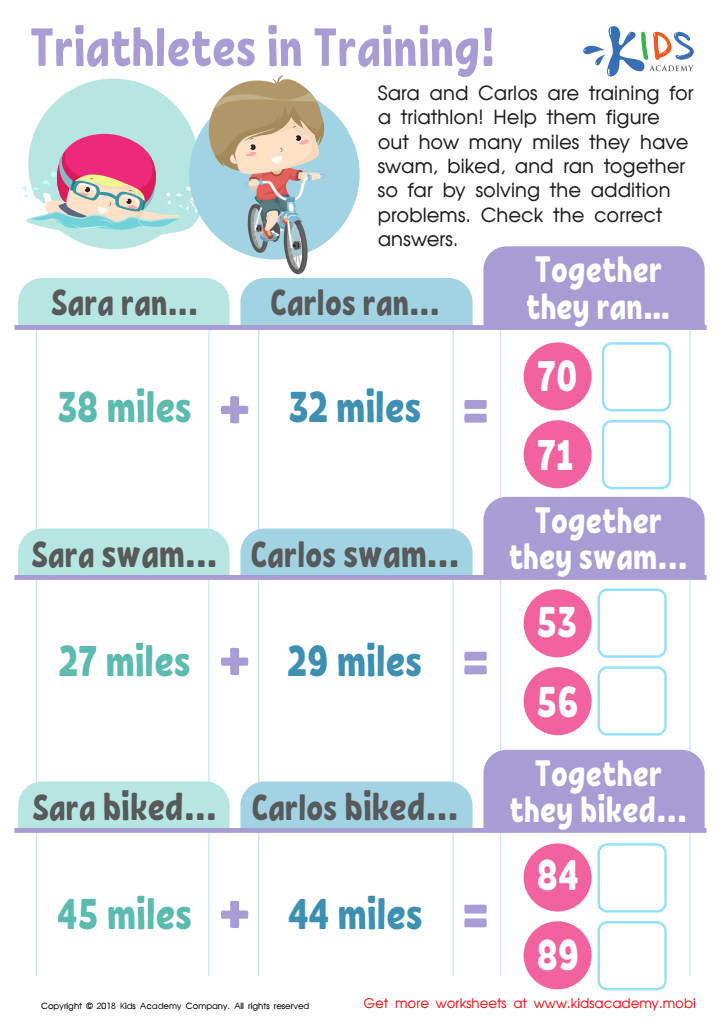
Triathletes in Training Worksheet
Sara and Carlos are training for a triathlon and need your child's help! They must solve the addition problems to figure out how many miles they've swam, ran, and biked. Help your kid check the answers and get them ready for the triathlon!
Triathletes in Training Worksheet
Worksheet
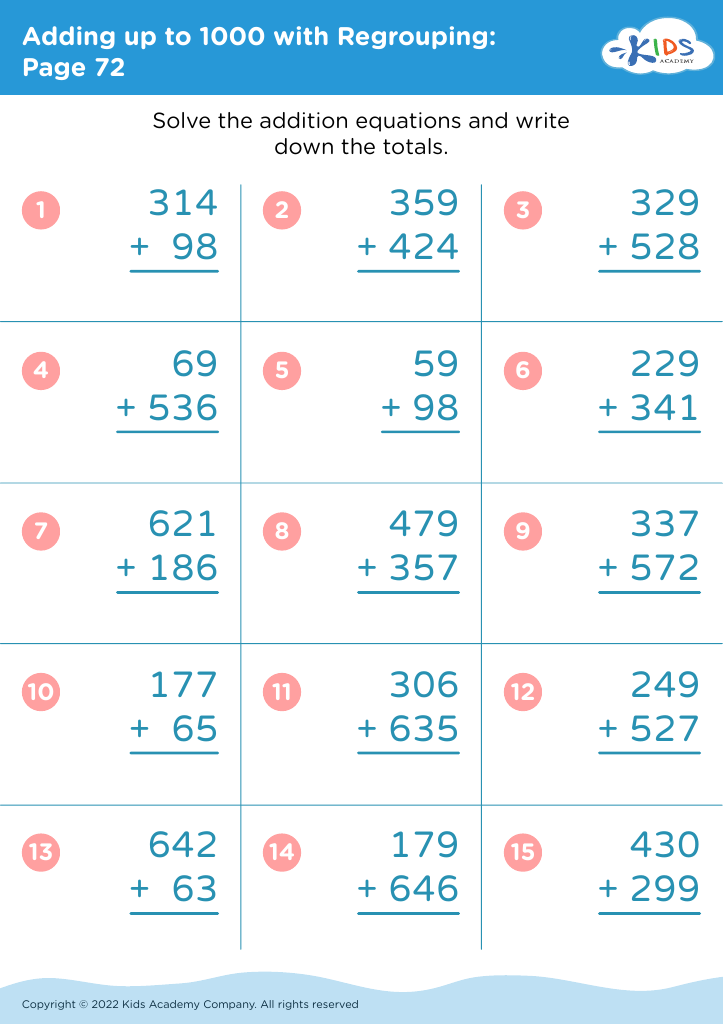
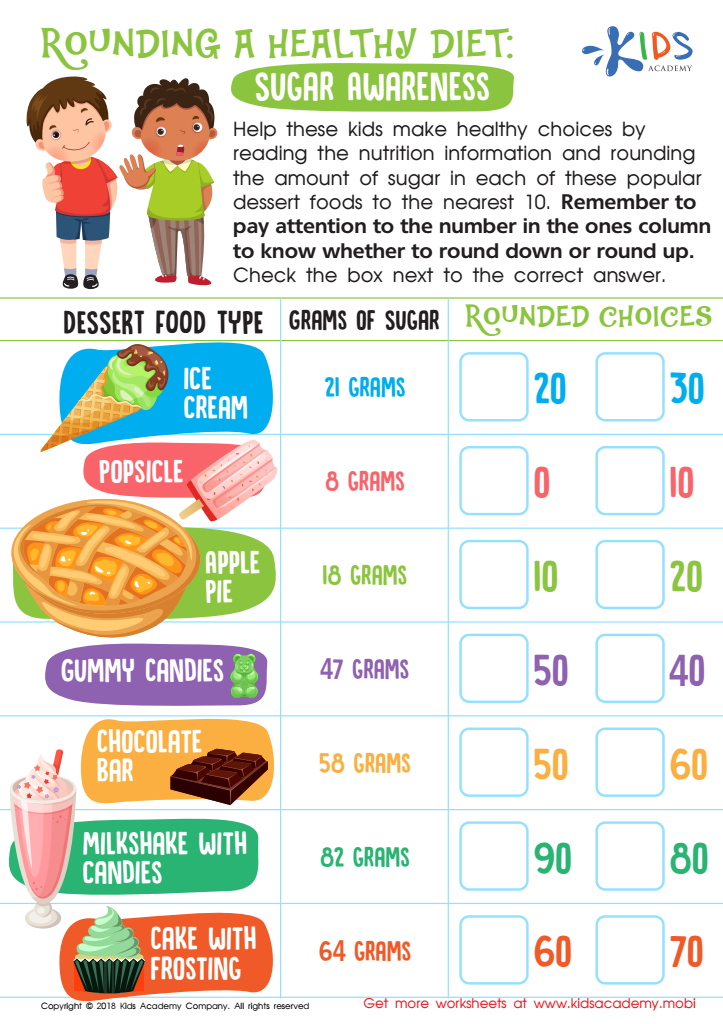
Rounding Healthy Diet Worksheet
Kids Academy understands the value of making math relevant. Check out this energizing rounding worksheet which merges math concepts with health class! Kids get to be aware of sugary treats and work out how many grams of sugar they contain. To complete, they view each item and round the number to the nearest 10. Remind them to focus on the ones column to decide if the number rounds up or down.
Rounding Healthy Diet Worksheet
Worksheet
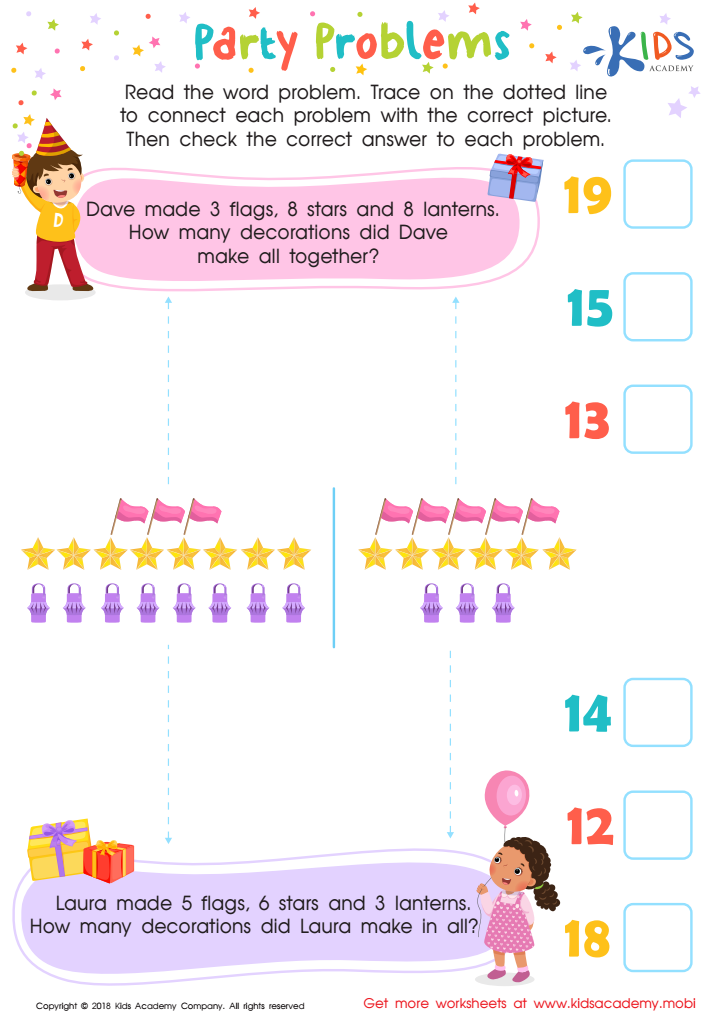
Party Problems Worksheet
Problems at parties? No problem! With this engaging PDF worksheet, your student can connect word problems to pictures, check correct answers, and find the sum of 3 addend problems. They'll be a party-saving hero in no time!
Party Problems Worksheet
Worksheet
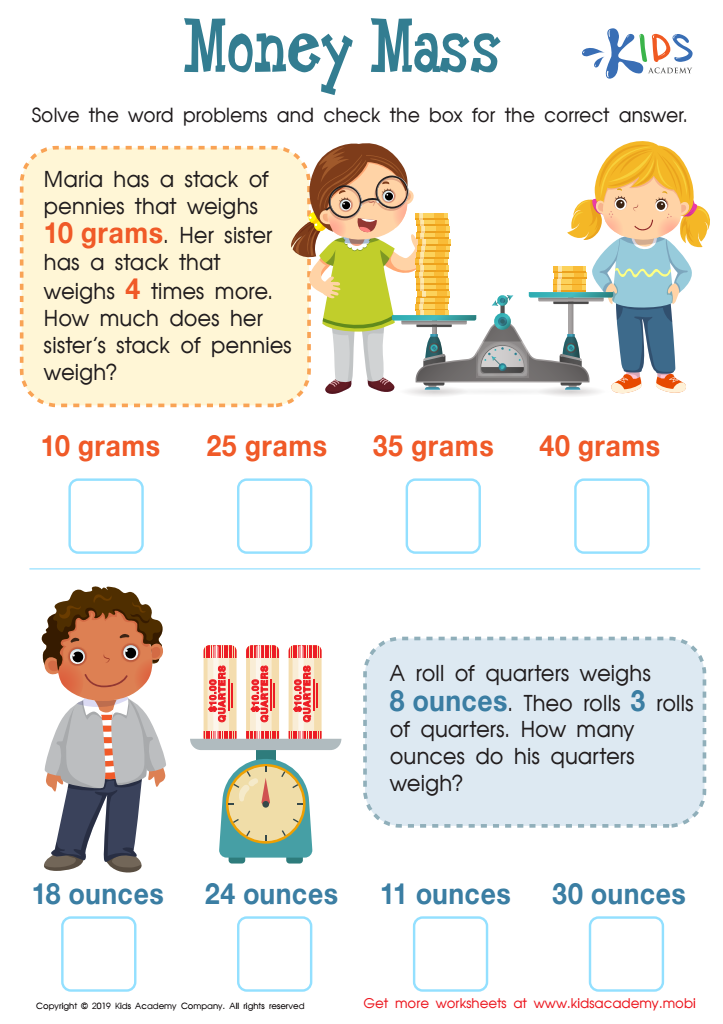
Money Mass Worksheet
By regularly working on math with your kids, they will become more confident. Ensure they understand the word problems in this printout, and help them solve it. Check the box for the correct answer of each to verify their work. With this practice, they will gradually get used to math and make progress.
Money Mass Worksheet
Worksheet
Join Kids Academy for Free
Who is primarily going to use this learning content?







Parents and teachers should prioritize basic mathematics for ages 7-8 because it serves as the building block for future learning. At this stage, children develop fundamental skills in addition, subtraction, multiplication, and division. These basic operations are essential for problems they will encounter in higher grades, both in math and other subjects integrating math concepts.
Early mastery of basic mathematics fosters confidence and a positive attitude towards more complex math tasks later on. Children who struggle with these foundational concepts may develop math anxiety, which can hinder their academic performance and self-esteem. Additionally, basic math drills critical thinking and problem-solving skills, important across various life aspects, from making decisions about money to understanding sciences.
Caring about and supporting a child's math learning also promotes persistence and a growth mindset. Encouragement from adults reassures children that effort leads to improvement, building resilience.
Moreover, mathematics is ubiquitous in everyday life—cooking, shopping, and even playing games involve key math concepts. Ensuring children grasp these basics equips them for practical tasks and experiences. Therefore, by focusing on mathematics at ages 7-8, parents and teachers lay down a durable framework that supports both academic success and real-world competency.








