Chess piece identification Worksheets for Ages 7-8
3 filtered results
-
From - To
Discover our engaging Chess Piece Identification Worksheets designed specifically for children ages 7-8! These thoughtfully crafted resources help young learners recognize and understand the different pieces of chess, including the king, queen, rook, bishop, knight, and pawn. Through fun activities such as matching, coloring, and labeling, children will enhance their observational skills while developing a strong foundation in chess terminology. Ideal for individual learning or classroom activities, these worksheets make the introduction to chess enjoyable and interactive. Encourage critical thinking and strategic skills with our artistic and educational worksheets that inspire a love for this classic game!
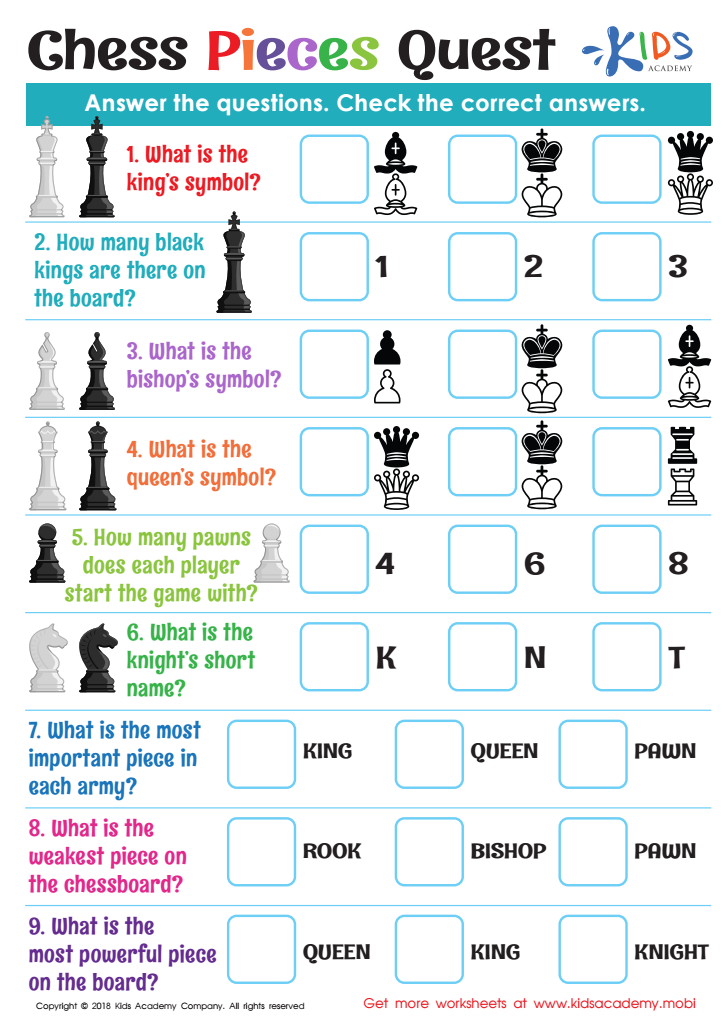
Chess Pieces Quest Worksheet
 Assign to My Students
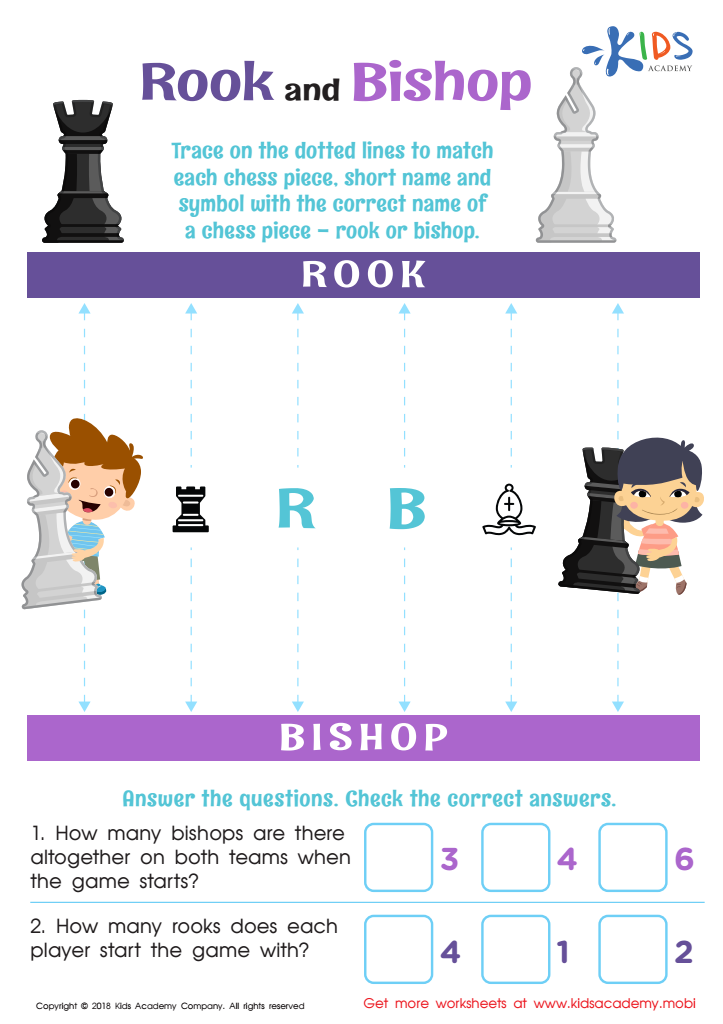
Rook and Bishop Worksheet








Chess piece identification for children aged 7-8 is crucial for several reasons. Firstly, this foundational skill fosters cognitive development by enhancing memory, concentration, and problem-solving abilities. When children learn to identify different chess pieces—pawns, knights, bishops, rooks, queens, and kings—they engage critical thinking as they begin to understand the unique movements and roles of each piece.
Secondly, chess has a rich history in teaching strategic planning and foresight. By recognizing each piece and its capabilities, children can formulate effective strategies during gameplay, reinforcing patience and discipline as they contemplate their moves ahead of time.
Moreover, chess is an excellent tool for emotional development. Learning to identify pieces correctly helps children build confidence and social skills through interaction with peers during matches. It enables them to communicate more effectively about the game, fostering teamwork and sportsmanship.
Lastly, the simple act of piece identification lays the groundwork for deeper engagement with the game. As children become more familiar with chess, they may develop a lifelong passion for it, reaping the benefits of enhanced cognitive skills and social interactions beyond the game itself. Therefore, parents and teachers should prioritize chess piece identification as a pivotal step in a child’s learning journey.








