Cognitive skill development Worksheets for Ages 7-8
5 filtered results
-
From - To
Unlock your child's potential with our expertly designed Cognitive Skill Development Worksheets for Ages 7-8. These engaging and educational resources are tailored to enhance critical thinking, problem-solving, and memory skills. Each worksheet helps young learners excel in areas like pattern recognition, logical reasoning, and spatial awareness while making learning fun and interactive. Perfect for both classroom and home use, our age-appropriate activities will support your child's cognitive growth and academic success. Trust Kids Academy to provide valuable tools to foster intellectual curiosity and creativity as your child embarks on their educational journey.
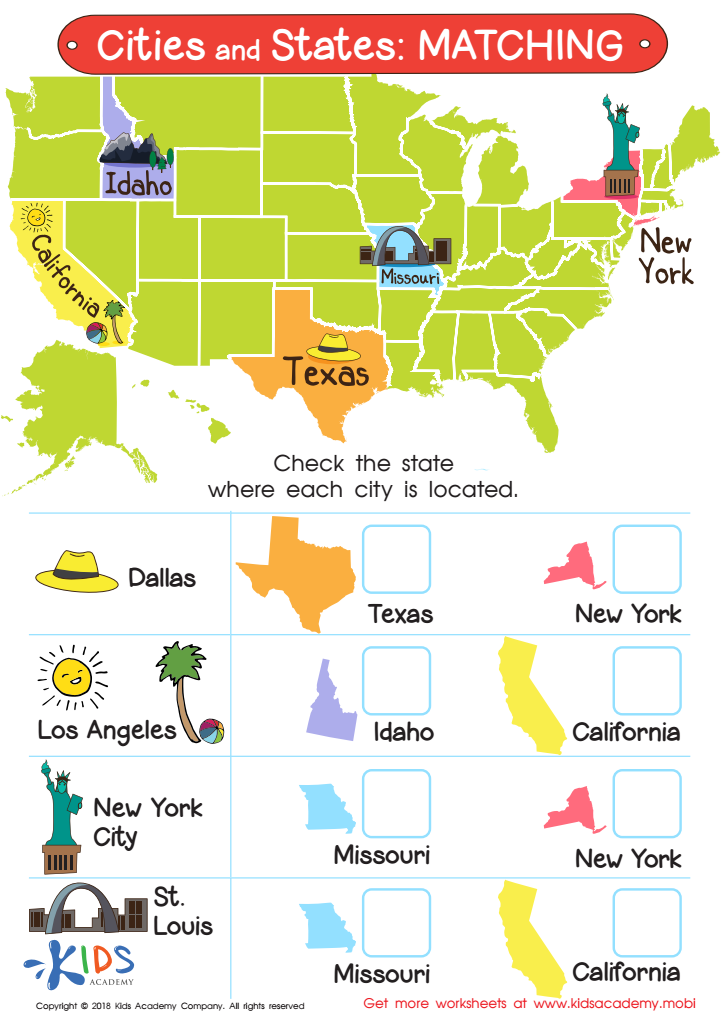
Cities and States: Matching Worksheet
 Assign to My Students
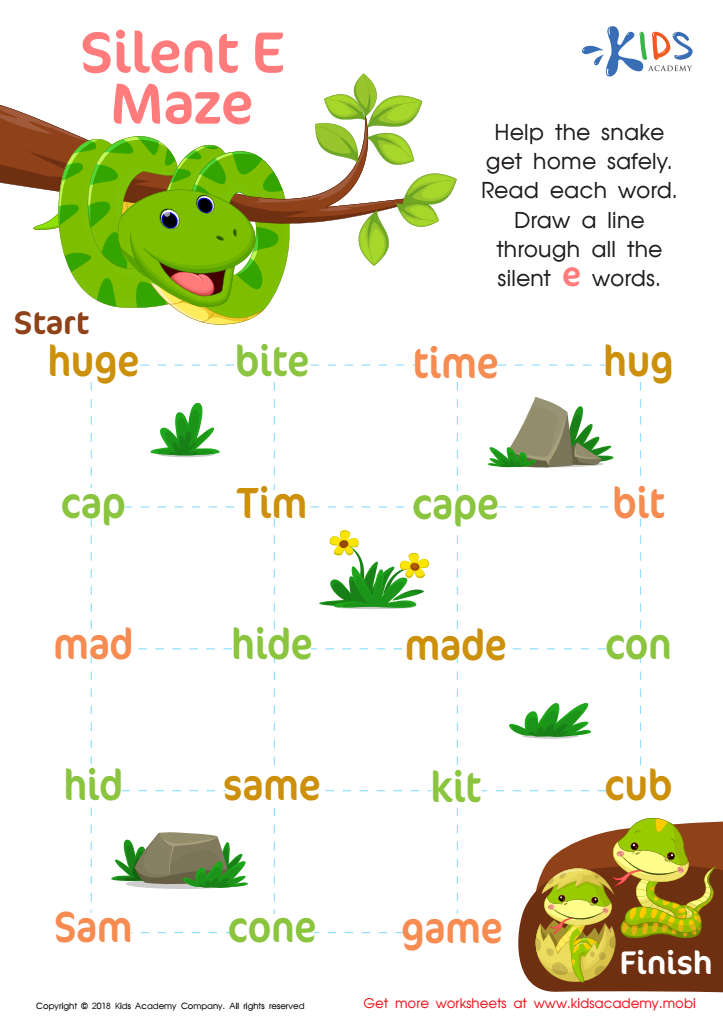
Silent E Maze Worksheet
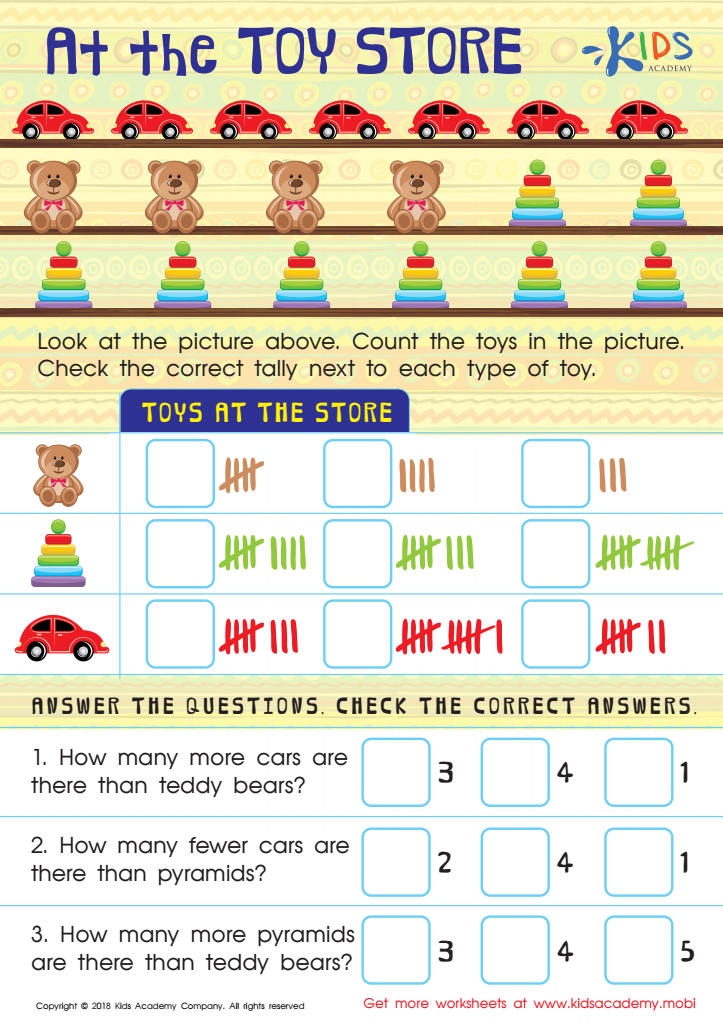
Tally Chart: At the Toy Store Worksheet

Notation of Checkmate Worksheet








Cognitive skill development is crucial for children aged 7-8 because this period serves as a foundational stage for their future learning and success. At this age, children's brains are rapidly developing, making it an optimal time to nurture skills such as critical thinking, problem-solving, and memory. These abilities are essential for understanding and integrating new information, which becomes increasingly complex in higher grades.
Parents and teachers play a vital role in facilitating cognitive growth. Engaging activities like puzzles, reading, and interactive games stimulate brain function and encourage mental flexibility. When adults provide a supportive environment rich in learning opportunities, children are more likely to develop strong cognitive skills that enhance their academic performance.
Moreover, well-developed cognitive skills contribute to emotional and social well-being. Children who can think clearly and solve problems effectively tend to have better self-esteem and can manage stress more adeptly. They also exhibit improved interpersonal skills, as they can understand others' perspectives and communicate more effectively.
Ultimately, investments in cognitive skill development lay the groundwork for lifelong learning, critical thinking, and success in everyday challenges. For these reasons, parents and teachers should prioritize activities and environments that promote robust cognitive growth during these formative years.








