
Developing arithmetic skills Worksheets for Ages 7-8
3 filtered results
Difficulty Level
Grade
Age
-
From - To
Subject
Activity
Standards
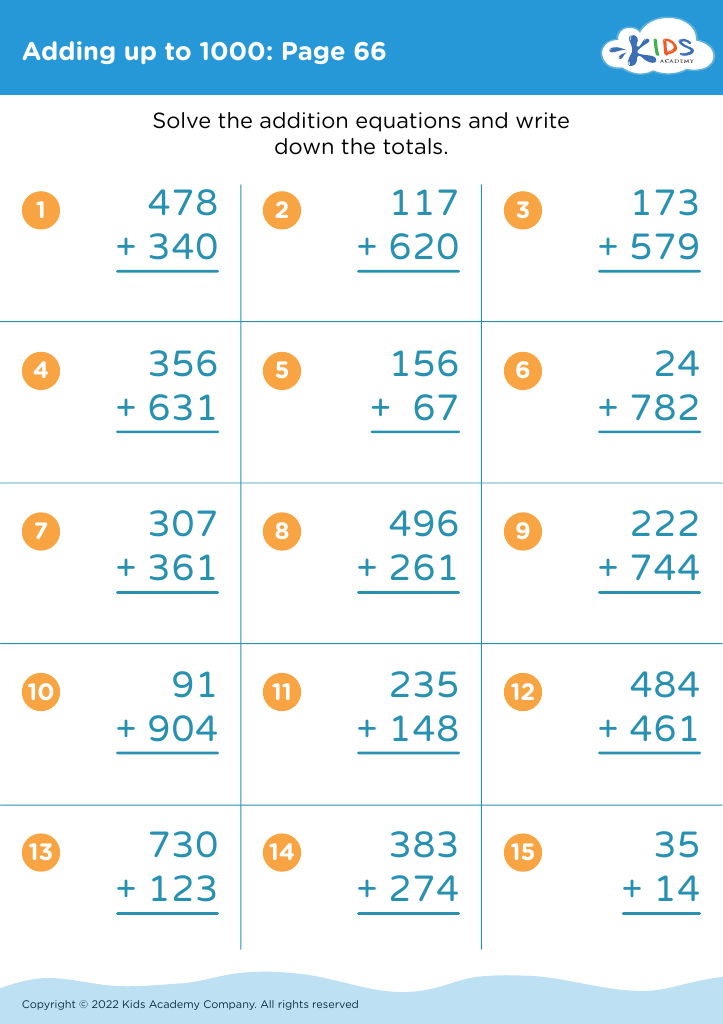
Enhance your child's arithmetic skills with our engaging worksheets designed specifically for ages 7-8. These thoughtfully created resources focus on essential concepts such as addition, subtraction, multiplication, and division, allowing young learners to practice and solidify their understanding of basic math. Featuring colorful visuals and interactive exercises, our worksheets make learning arithmetic fun and effective. Each sheet encourages independent thinking while providing valuable practice to build confidence and math proficiency. Perfect for home or classroom use, our developing arithmetic skills worksheets support your child's educational journey and set a strong foundation for future mathematical success. Explore today and watch their skills flourish!
Favorites
With answer key
Interactive
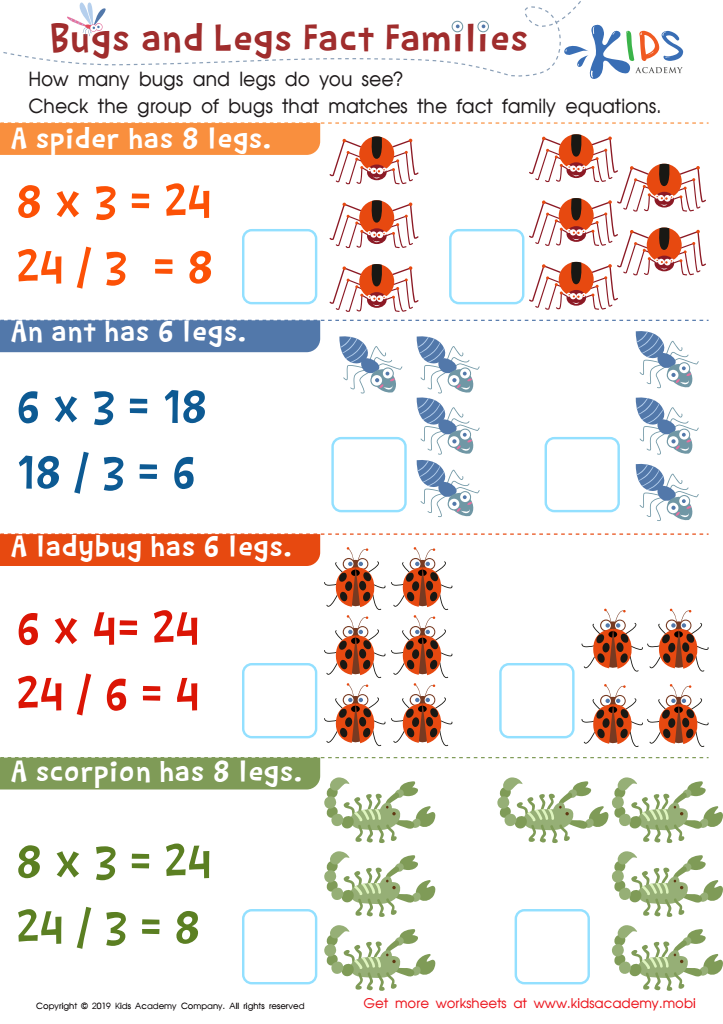
Bugs and Legs Fact Families Worksheet
This free worksheet uses bugs and insects to help young math students learn about fact families and recognize patterns in multiplication and division. It's a fun and colorful way to gain automaticity and efficiency in computation skills, without even realizing it's math!
 Assign to My Students
Bugs and Legs Fact Families Worksheet
Worksheet
Join Kids Academy for Free
Who is primarily going to use this learning content?








Developing arithmetic skills in children aged 7-8 is crucial for their overall cognitive development and lifelong learning. At this age, children transition from concrete understanding to more abstract thinking. Strong arithmetic skills provide a foundation for critical thinking, problem-solving, and logical reasoning. These skills are not just academic; they are essential for everyday tasks like managing time, budgeting, and understanding measurements in cooking or crafting.
Additionally, a solid grasp of arithmetic can boost children’s confidence and foster a positive attitude towards mathematics, reducing the likelihood of math anxiety later in life. Early intervention in arithmetic helps identify and address any learning gaps, ensuring that all children progress at a healthy pace. Teachers and parents play a key role in this developmental stage, as supportive environments can dramatically influence children’s attitudes towards math.
Moreover, skills developed during this age can directly impact future academic achievement. Proficiency in arithmetic is linked to success in higher-level math courses, which are increasingly vital in today's technology-driven world. By prioritizing arithmetic education now, parents and teachers lay the groundwork for students to thrive academically and develop skills crucial for everyday life, paving the way for a successful future.








