
Differentiating goods/services Worksheets for Ages 7-8
3 filtered results
Difficulty Level
Grade
Age
-
From - To
Subject
Activity
Standards
Explore our engaging "Differentiating Goods/Services Worksheets" tailored for ages 7-8! These interactive worksheets help young learners distinguish between goods and services, enhancing their understanding of everyday economic concepts. Each activity is designed to be fun and educational, promoting critical thinking and decision-making skills. From identifying items in a marketplace to recognizing service providers, children will gain valuable insight into the roles of goods and services in their daily lives. Perfect for classroom or home use, our worksheets foster an enjoyable learning experience while meeting educational standards. Download your set today and spark your child's curiosity about the world around them!
Favorites
With answer key
Interactive
 Assign to My Students
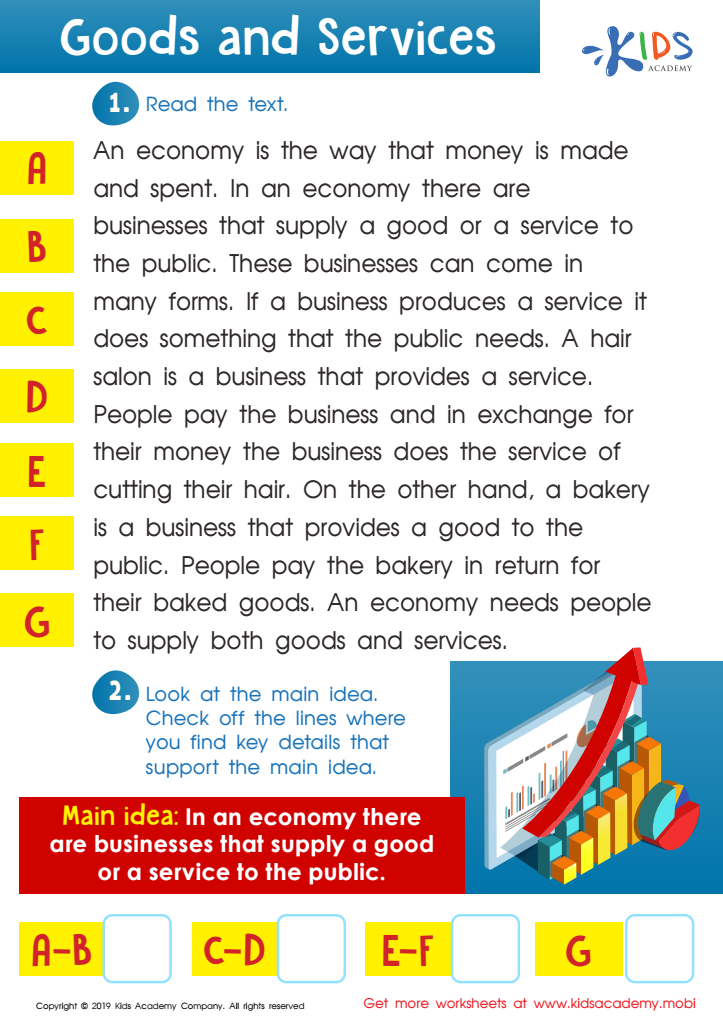
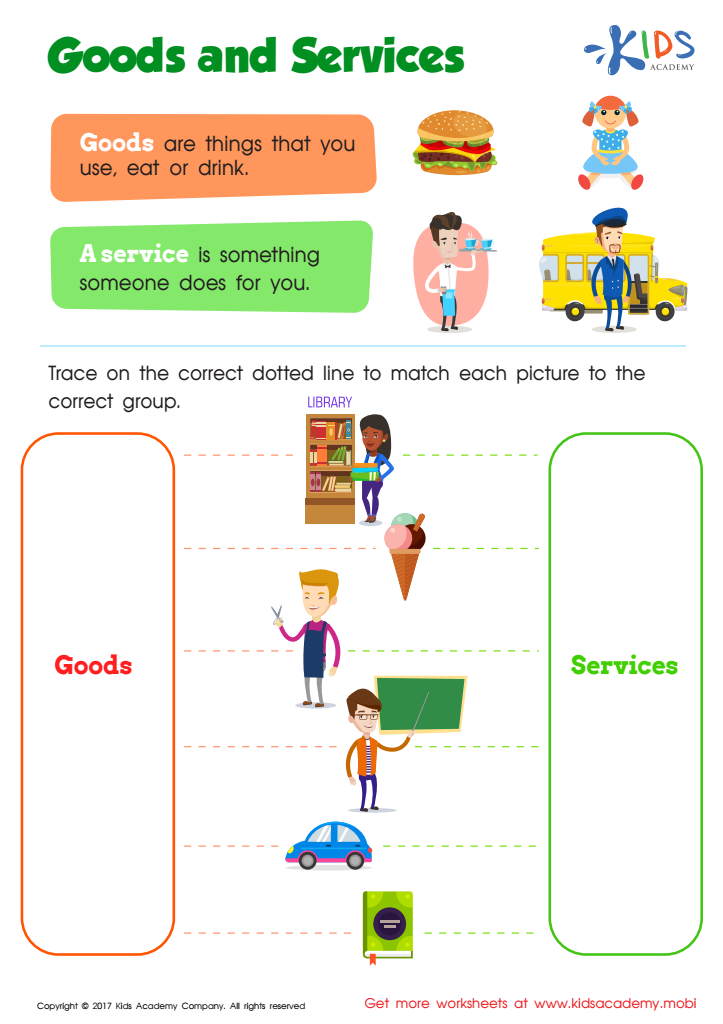
Goods and Services Worksheet
Teach your kids about the economy and businesses with this worksheet. Ask them if they know what goods and services are. After they complete the worksheet, they'll have a better understanding. Read the text to them and guide them step-by-step through the instructions. Help them learn!
Goods and Services Worksheet
Worksheet
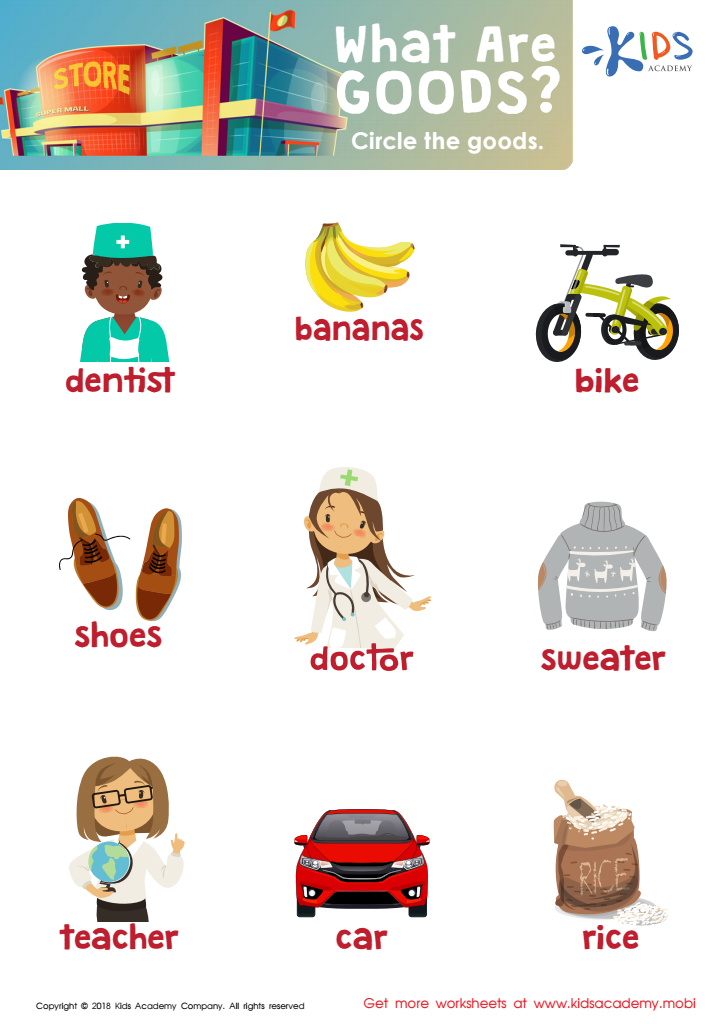
What Are Goods? Worksheet
Introduce your child to economics with this social studies worksheet! It helps kids differentiate between goods and services. Have them look at each picture, discuss what it does, and decide whether it's an object or a service. Encourage them to think carefully and circle the goods. It's a great way to start teaching the basics of economics.
What Are Goods? Worksheet
Worksheet
Join Kids Academy for Free
Who is primarily going to use this learning content?






Differentiating goods and services for children aged 7-8 is essential for fostering their unique learning styles, interests, and developmental needs. At this age, children are highly diverse in their abilities, backgrounds, and preferences. Differentiation allows educators and parents to tailor instructional methods, learning materials, and experiences to better engage each child. For instance, some students may thrive under visual learning, while others may benefit from hands-on activities or auditory instruction.
This personalized approach not only helps in addressing the varying levels of academic readiness among students but also enhances motivation and interest in learning. When children feel that their individual needs are recognized and supported, they are more likely to develop a positive attitude toward education, build self-esteem, and improve their overall performance.
Additionally, when parents and teachers provide differentiated goods and services, they create environments that promote inclusivity and equity, ensuring every child has the opportunity to succeed. As a result, children are more likely to develop critical thinking skills, creativity, and a love for learning, which are crucial for their long-term success. Ultimately, recognizing the importance of differentiation in education fosters a supportive and effective learning community for all children.








