
Enhance fine motor skills Worksheets for Ages 7-8
4 filtered results
Difficulty Level
Grade
Age
-
From - To
Subject
Activity
Standards
Boost your child's fine motor skills with our engaging worksheets designed specifically for ages 7-8! These resources combine fun and learning, making skills practice enjoyable. Kids will develop essential hand-eye coordination, dexterity, and muscle control through a variety of activities, including cutting, tracing, and drawing exercises. Our worksheets not only promote fine motor development but also enhance creativity and attention to detail. Ideal for both classroom and home settings, these sheets support early learning goals while keeping children entertained. Download and print our worksheets today to make fine motor skill learning a fun and enriching experience for your child!
Favorites
With answer key
Interactive
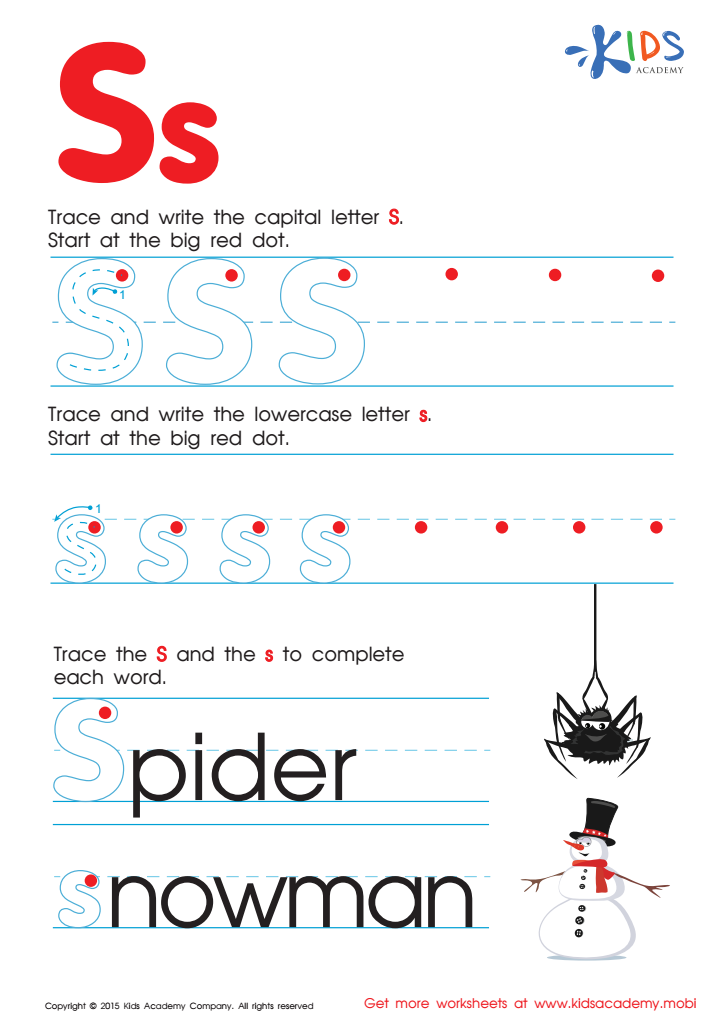
Letter S Tracing Page
Trace and write the capital and lowercase "S" on this ABC worksheet for kindergarten. Start with the big red dot and be careful. When you finish, help the spider and snowman in the pictures restore their words with the capital and lowercase letters. Continue learning the alphabet with Kids Academy.
 Assign to My Students
Letter S Tracing Page
Worksheet
Join Kids Academy for Free
Who is primarily going to use this learning content?




.jpg)



Enhancing fine motor skills in children aged 7-8 is crucial for their overall development and academic success. At this age, children are transitioning from foundational skills to more advanced tasks that require precision and coordination, such as writing, drawing, and manipulating small objects. Improved fine motor skills support these activities, allowing children to express themselves effectively and boosting their confidence.
Fine motor skills are closely linked to cognitive development as they involve complex brain functions that control hand-eye coordination and dexterity. As children engage in hands-on activities, their brain pathways strengthen, fostering problem-solving skills and creativity. Furthermore, proficient fine motor skills can positively impact a child's self-esteem; children who can write well or create detailed drawings tend to feel more capable and engaged in school.
Parents and teachers should prioritize activities that enhance fine motor skills, such as arts and crafts, using their hands for practical tasks, or engaging in sports that require coordination. By doing so, they not only support academic achievement but also help children develop independence and readiness for future challenges in both education and daily life. Strengthening fine motor skills today will pave the way for more complex skills tomorrow, laying a solid foundation for lifelong learning.








