Graph reading skills Worksheets for Ages 7-8
3 filtered results
-
From - To
Enhance your child's graph reading skills with our engaging worksheets designed specifically for ages 7-8. These fun and interactive activities focus on helping young learners understand different types of graphs, including bar graphs, line graphs, and pictographs. Through vibrant illustrations and real-world examples, students will practice interpreting data, answering questions, and drawing conclusions, all while fostering critical thinking and analytical abilities. Each worksheet is tailored to align with educational standards, making it an ideal resource for teachers and parents alike. Discover the joy of learning through our comprehensive collection of graph reading skills worksheets, supporting confident and capable young students!
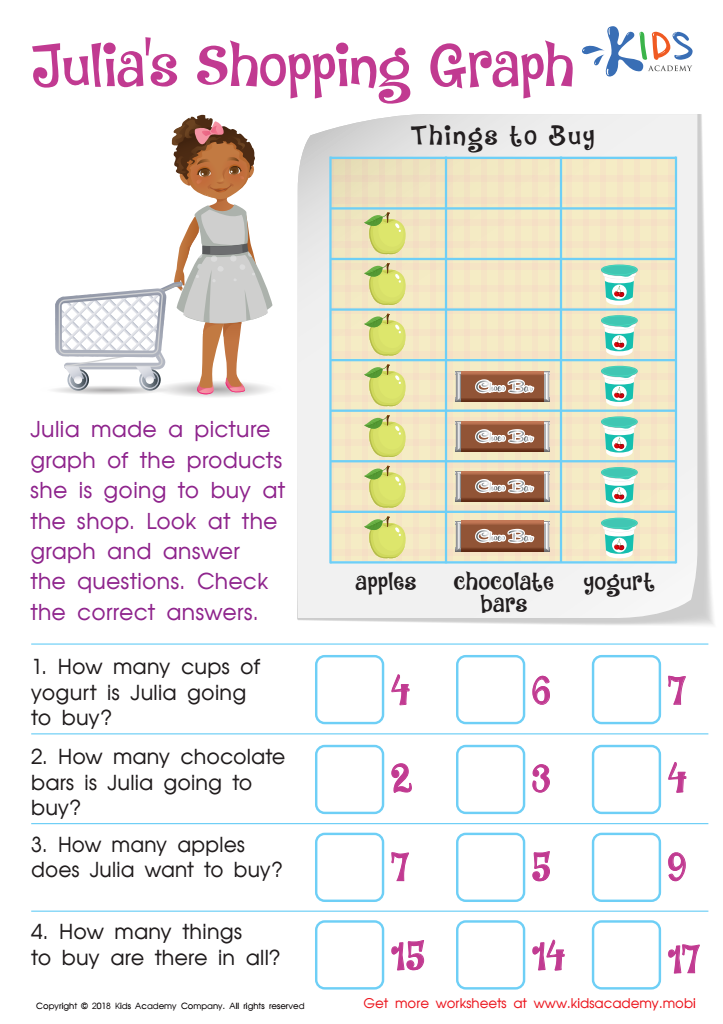
Julia's Shopping Graph Worksheet
 Assign to My Students
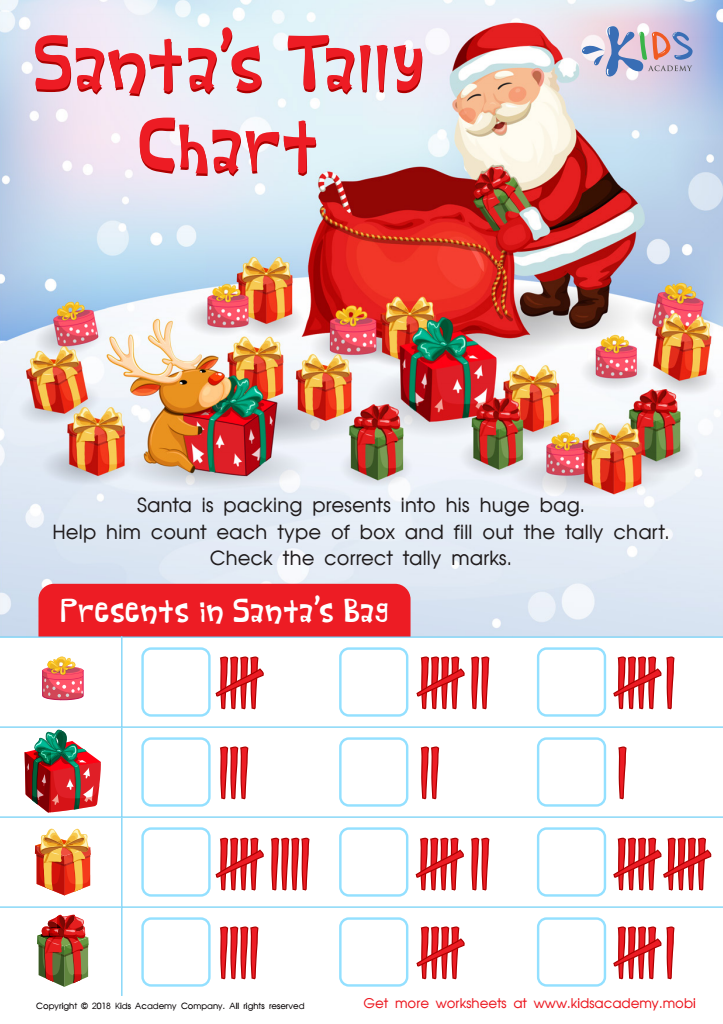
Santa Tally Chart Worksheet
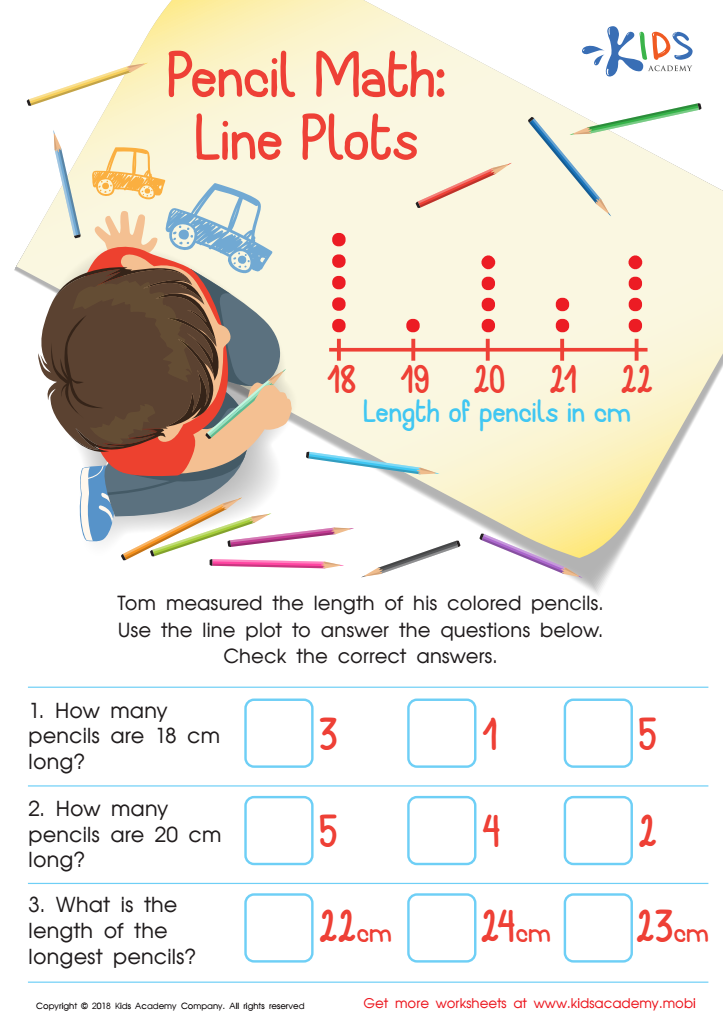
Pencil Math: Line Plots Worksheet






.jpg)
Graph reading skills are crucial for children aged 7-8, as they form the foundation for understanding quantitative data in various contexts, including academics, everyday life, and future career opportunities. At this age, children begin to encounter charts, bar graphs, and pictographs in subjects like math and science. Teaching them to interpret and create graphs enhances their critical thinking and analytical skills, enabling them to draw meaningful conclusions from data.
Moreover, these skills foster an understanding of representation, allowing children to visualize information, facilitating comparisons, and recognizing patterns. This is especially relevant in a world increasingly driven by data, where the ability to make sense of graphs can aid in making informed decisions, whether academically or in daily situations like reading weather reports or sports statistics.
Additionally, graph reading encourages collaboration and communication, as children discuss their findings with peers and learn to convey their ideas effectively. Encouraging engagement with graph-related tasks supports cognitive development, making learning not just a scholastic exercise but a practical life skill. Thus, parents and teachers should prioritize graph reading skills, as they are pivotal in equipping children with the tools necessary for successful navigation through both academic and real-world challenges.








