
Identifying patterns Worksheets for Ages 7-8
5 filtered results
Difficulty Level
Grade
Age
-
From - To
Subject
Activity
Standards
Explore our "Identifying Patterns Worksheets for Ages 7-8," designed to enhance your child's mathematical skills through engaging activities. These worksheets offer a fun and interactive way for young learners to recognize, create, and extend patterns using various shapes, colors, and numbers. Building a strong foundation in pattern recognition is essential for developing critical thinking and problem-solving abilities. Each worksheet is carefully crafted to challenge and inspire creativity, making math enjoyable and accessible. Perfect for classroom use or at-home practice, our resources are ideal for fostering a love of learning. Download now and watch your child thrive in mathematical understanding!
Favorites
With answer key
Interactive
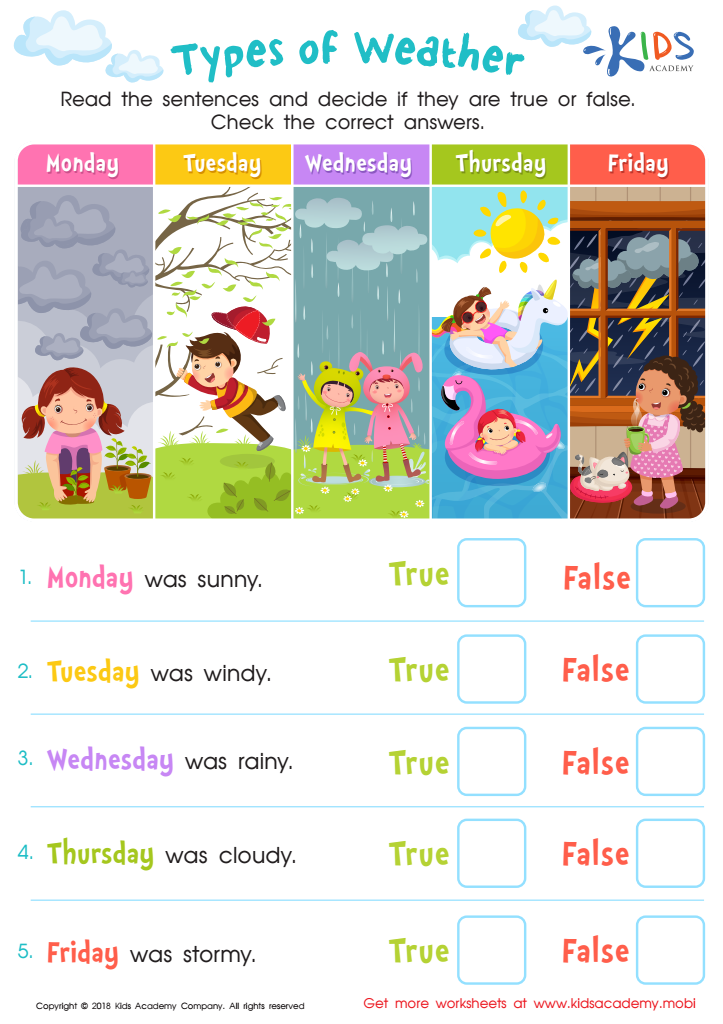
Types of Weather Worksheet
This worksheet will test your child's knowledge of the weather. Show them the pictures of five days of the week, each with a different weather and ask them to describe it. Then read the sentences and ask if they're true/false. Help them find the right answers.
 Assign to My Students
Types of Weather Worksheet
Worksheet
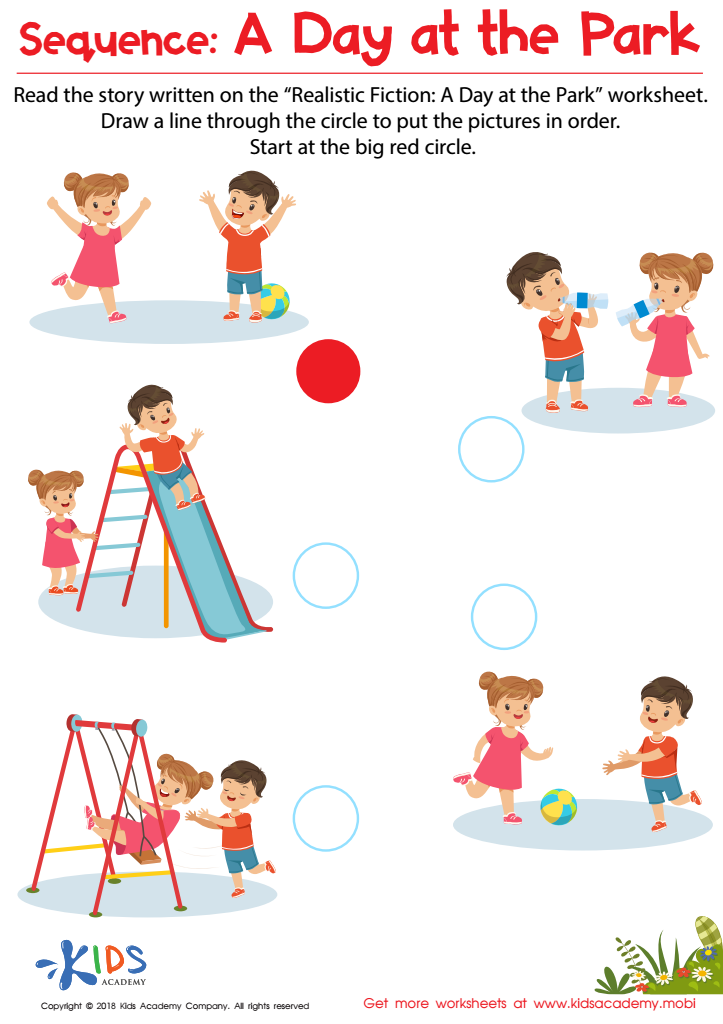
Sequence: A Day at the Park Worksheet
Help your child sequence the events of the story they just read with this activity! Start with the big red circle and draw lines to the other circles next to the images in the correct order. It's a great way to practice their reading skills! Try this downloadable worksheet today!
Sequence: A Day at the Park Worksheet
Worksheet
Join Kids Academy for Free
Who is primarily going to use this learning content?






.jpg)
Identifying patterns is a fundamental skill that plays a crucial role in a child's development, particularly for those ages 7-8. At this stage, children are transitioning from concrete operational thinking to more abstract reasoning, and recognizing patterns helps them make connections in various subjects. Mathematics becomes more manageable as children learn to understand sequences, such as numbers and shapes, developing their problem-solving abilities. For instance, identifying patterns aids in grasping multiplication or division concepts by seeing relationships between numbers.
Beyond math, pattern recognition fosters critical thinking and enhances creativity. Children can apply this skill in areas like reading, where they identify themes or repeated phrases, or in science, where they observe natural phenomena. Moreover, recognizing patterns promotes logical reasoning, enabling children to predict outcomes based on their observations.
For parents and teachers, nurturing this skill lays a strong foundation for success in higher-level cognitive tasks and disciplines. Encouraging children to notice patterns in daily life—whether in nature, art, or relationships—reinforces these skills, making learning enjoyable and relevant. Ultimately, fostering an understanding of patterns equips children with the tools they need for academic achievement and lifelong learning.








