
Improve counting Worksheets for Ages 7-8
3 filtered results
Difficulty Level
Grade
Age
-
From - To
Subject
Activity
Standards
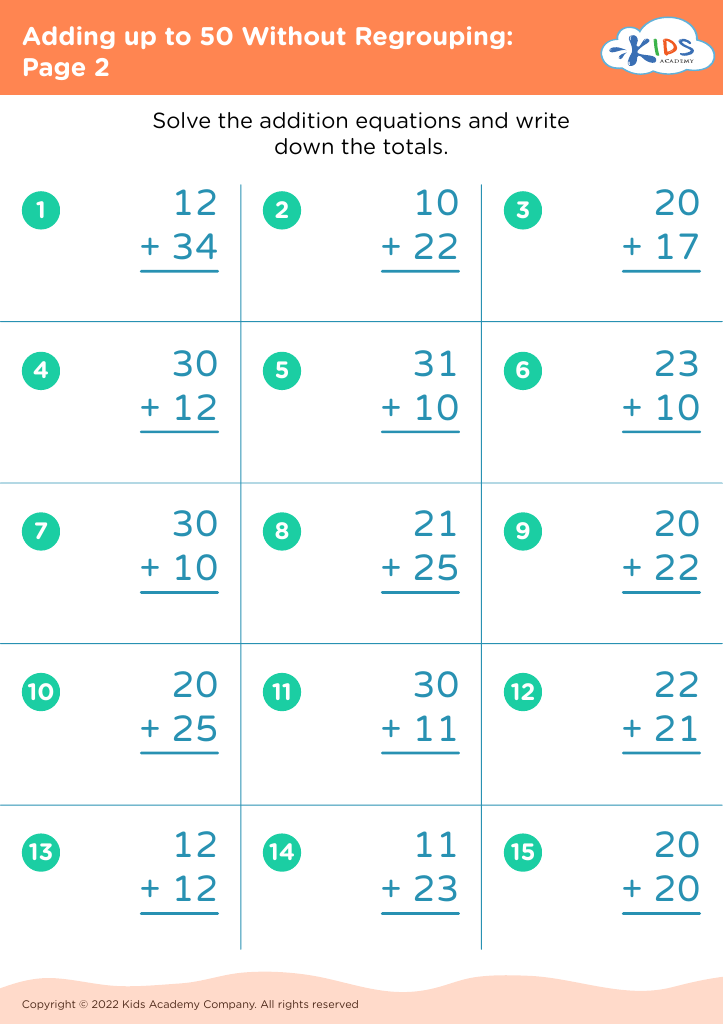
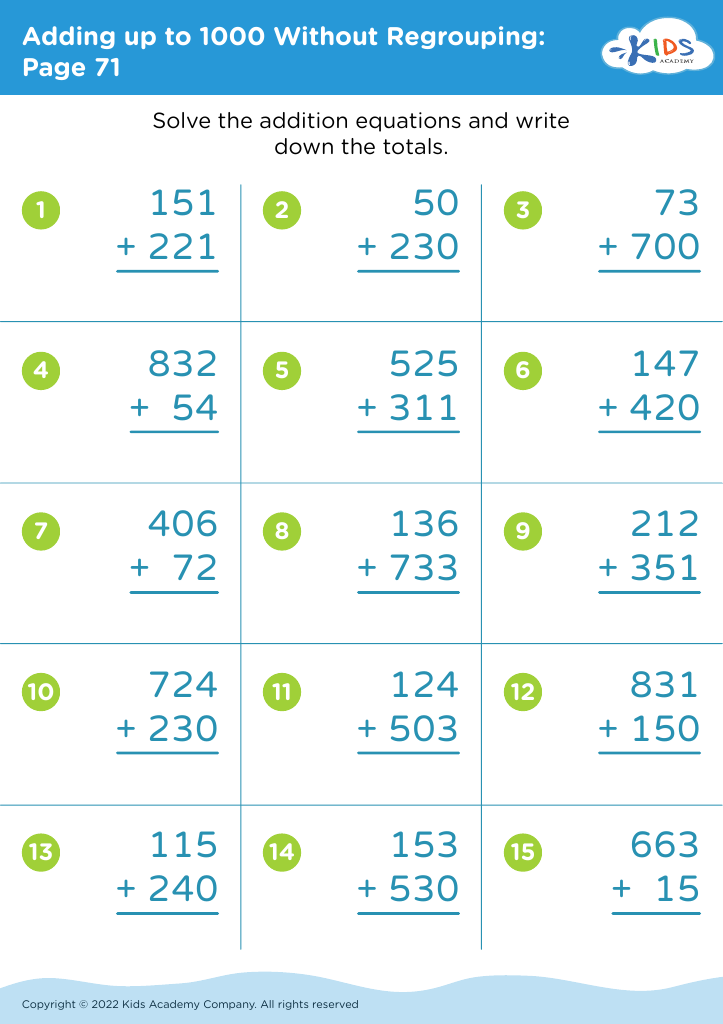
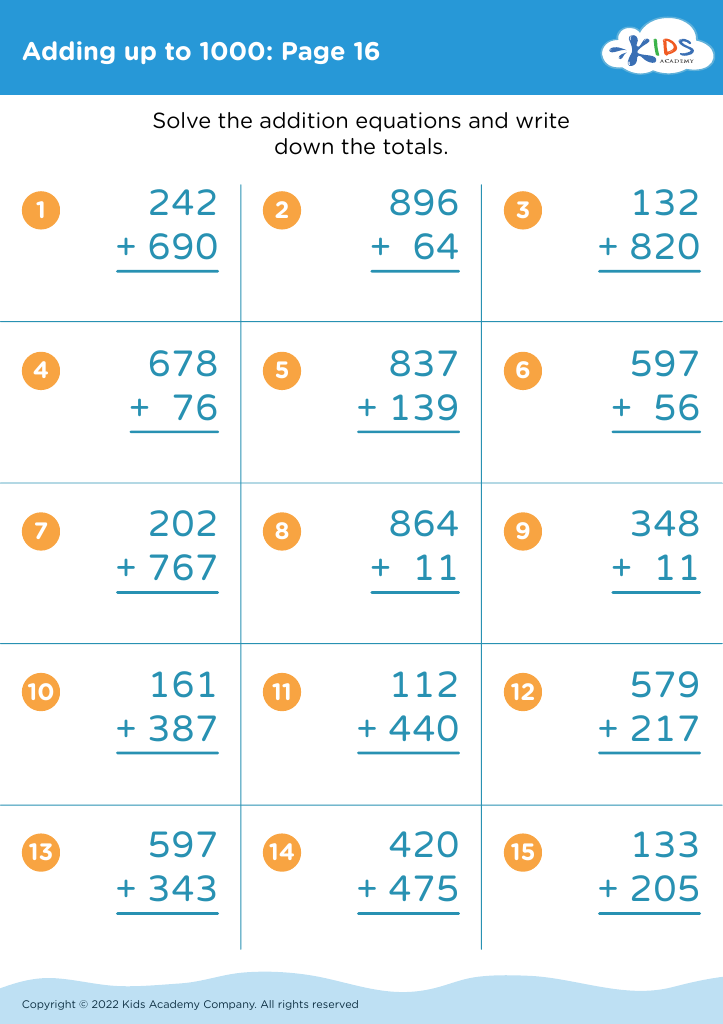
Enhance your child's counting skills with our engaging "Improve Counting Worksheets" designed specifically for ages 7-8. These worksheets provide a fun way to help young learners practice essential math skills through interactive exercises such as counting, addition, and number recognition. With a variety of captivating activities, children will develop a strong numerical foundation while enjoying their learning experience. Our resources cater to different learning styles and encourage critical thinking. Ideal for home or classroom use, these worksheets make mastering counting an enjoyable adventure. Boost your child's confidence in mathematics and watch them thrive! Explore our diverse collection today!
Favorites
With answer key
Interactive
Join Kids Academy for Free
Who is primarily going to use this learning content?







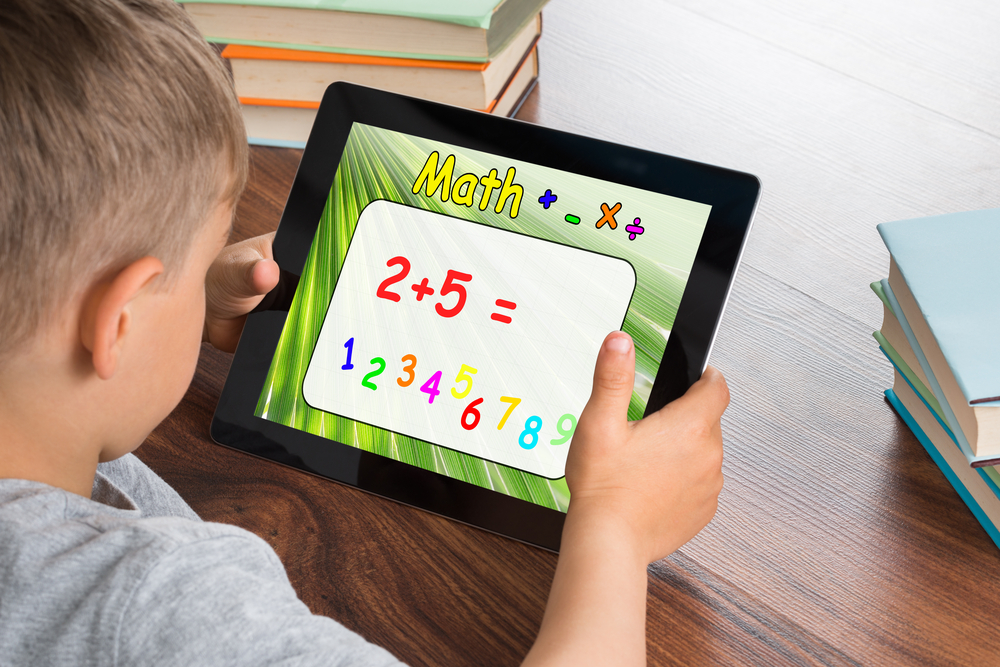
Counting is a foundational skill critical for children aged 7-8, as it paves the way for more advanced mathematics concepts. During this developmental stage, children begin to build their number sense, which influences their ability to perform operations like addition, subtraction, and eventually multiplication and division. Teachers and parents should prioritize improving counting skills in children for several reasons.
First, strong counting abilities enhance a child’s confidence and competence in math. This positive attitude can propel them into success across all academic subjects, as math often intertwines with science, logic, and critical thinking.
Second, counting skills also contribute to overall cognitive development. Recognizing patterns, understanding sequences, and grasping the concept of quantity are essential for problem-solving skills.
Moreover, improved counting skills enhance everyday practical abilities such as telling time, managing money, and measuring ingredients, essential for daily life and independence.
Parents and teachers can work together through engaging activities and games that foster counting skills, showing children that math is not just an academic requirement but also a valuable tool in their everyday lives. When parents and teachers invest in counting improvement, they lay the groundwork for a future where children are confident and proficient in mathematics.








