Improve mathematical skills Worksheets for Ages 7-8
3 filtered results
-
From - To
Enhance your child's math abilities with our expertly designed worksheets for ages 7-8. Our printable materials focus on key mathematical concepts such as addition, subtraction, multiplication, division, and more. Each worksheet is crafted to build confidence and improve problem-solving skills through engaging and interactive activities. Ideal for supplementing schoolwork or providing extra practice, these resources are perfect for keeping your child challenged and motivated. Download our fun, educational, and easy-to-use math worksheets today and watch your child's skills bloom. Give them the tools they need to succeed in math with Kids Academy!
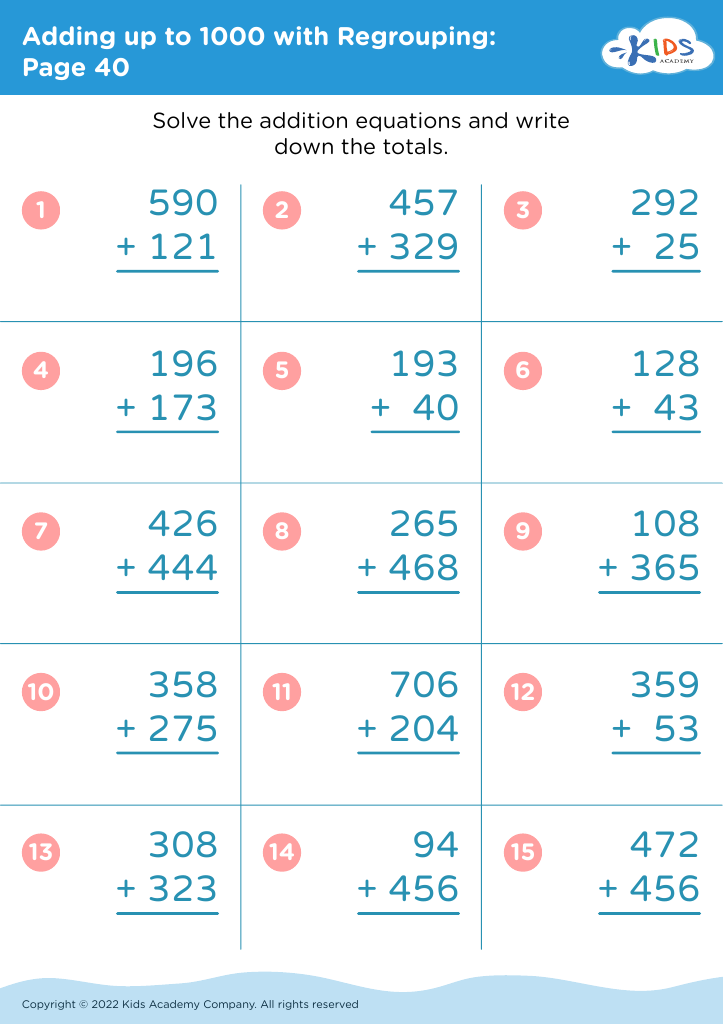
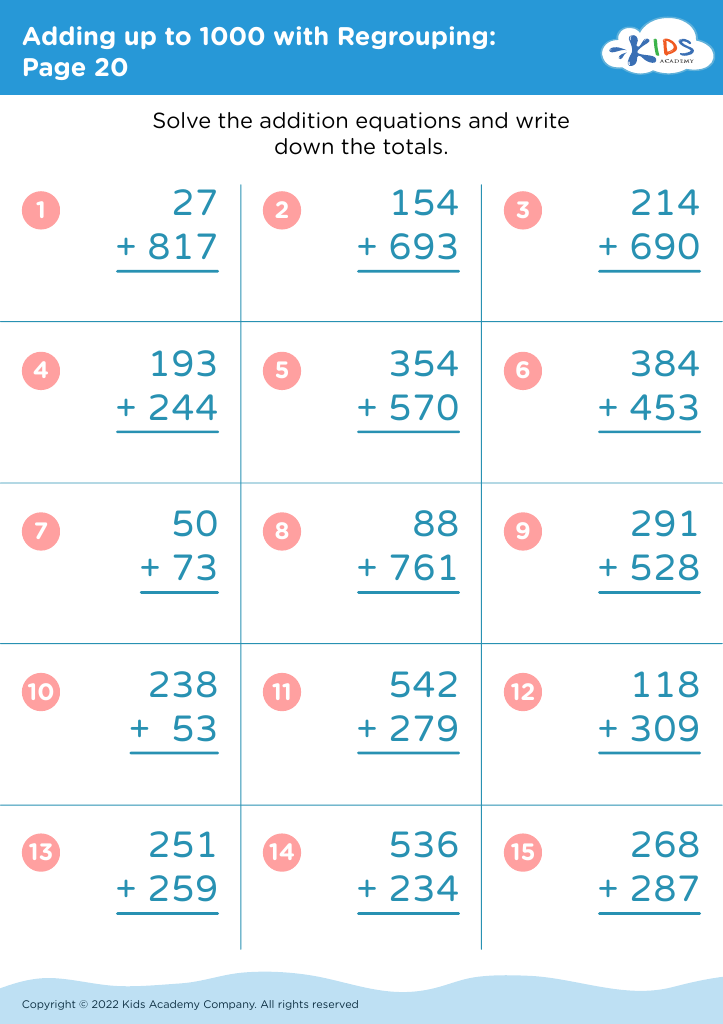
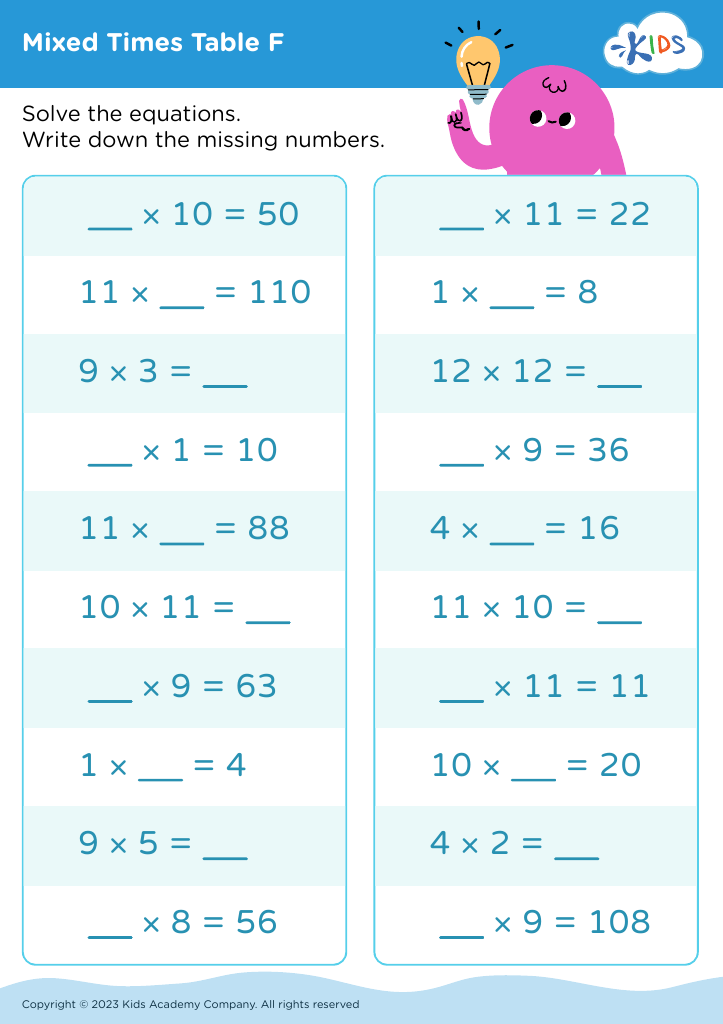






Improving mathematical skills for children aged 7-8 is crucial because it forms the foundation for their future academic success and daily life problem-solving abilities. At this formative age, developing strong numeracy skills enhances cognitive growth, which contributes positively to other subjects like science, technology, and even reading comprehension. Early mastery of basic concepts such as addition, subtraction, multiplication, and division helps children build confidence and reduces math anxiety as they progress to more complex problems in later grades.
Moreover, solid mathematical understanding fosters critical thinking and analytical skills. It enables children to make logical connections, think abstractly, and approach problems methodically. These skills are indispensable, not just in academic contexts but also in everyday activities, such as handling money, telling time, and measuring ingredients in a recipe.
Parents and teachers should care about enhancing mathematical skills at this age because it cultivates a strong academic foundation that supports lifelong learning. Interactive and engaging activities, such as puzzles, games, and real-world problem-solving tasks, make math enjoyable and meaningful for young learners. By prioritizing math education during these early years, adults can help ensure children develop into well-rounded individuals capable of facing future challenges with confidence and resilience.








