Improve problem-solving abilities Worksheets for Ages 7-8
3 filtered results
-
From - To
Unlock the potential of your young learners with our "Improve Problem-Solving Abilities Worksheets for Ages 7-8". Carefully designed by educational experts, these engaging worksheets provide a fun and interactive way to develop critical thinking skills in children. Suitable for grade school students, each activity is crafted to challenge and stimulate their problem-solving abilities through puzzles, math problems, logic games, and creative exercises. Perfect for both classroom use and home practice, our resources encourage independent learning and help build a strong foundation for future academic success. Equip your child with the skills they need to think critically and solve problems with confidence.
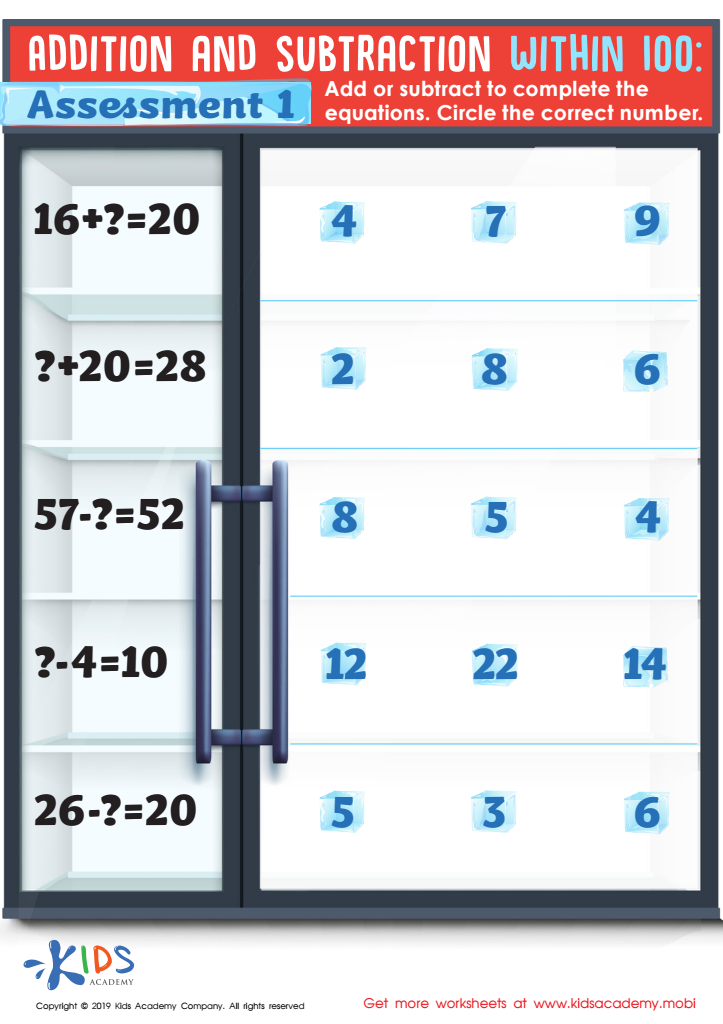
Addition and Subtraction within 100: Assessment 1 Worksheet
 Assign to My Students

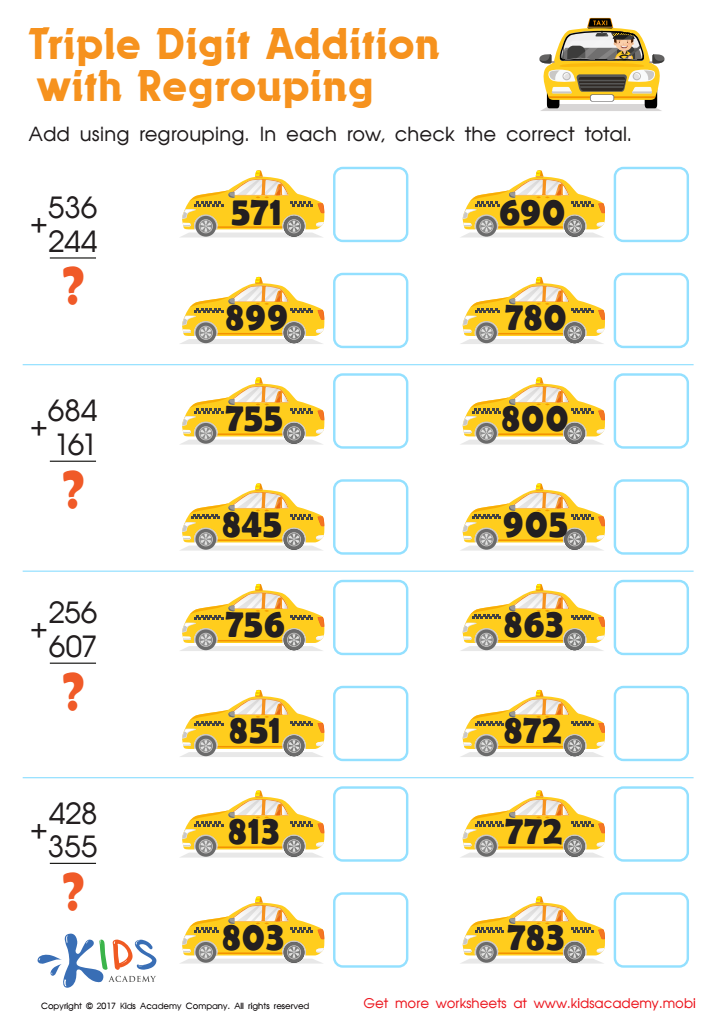
Triple Digit Addition with Regrouping Worksheet








Developing problem-solving skills in children aged 7-8 is crucial for their overall growth. At this age, kids are beginning to navigate more complex social situations and academic challenges. Enhancing problem-solving abilities helps them become more resilient, adaptable, and independent thinkers. For parents and teachers, focusing on these skills not only supports academic success but also prepares children for real-world scenarios.
Problem-solving fosters critical thinking, allowing children to analyze situations, make decisions, and foresee potential outcomes. It equips them with the ability to tackle math problems, understand scientific concepts, and manage reading comprehension more effectively. These abilities are foundational for future learning across all subjects.
Socially, good problem-solvers navigate relationships more effectively. They learn to share, cooperate, and resolve conflicts, which strengthens their interactions and friendships. Emotionally, mastering problem-solving reduces frustration and builds confidence, as children feel empowered to handle challenges independently.
By nurturing problem-solving skills, parents and teachers can help cultivate a growth mindset. Children learn that obstacles are opportunities rather than setbacks, which fosters lifelong learning and perseverance. Therefore, prioritizing the development of these skills sets a strong foundation for children's academic, social, and emotional well-being.








