
Improve problem-solving skills Worksheets for Ages 7-8
8 filtered results
Difficulty Level
Grade
Age
-
From - To
Subject
Activity
Standards
Enhance your child's critical thinking with our "Improve Problem-Solving Skills Worksheets for Ages 7-8." Specially designed by educators, these engaging and interactive worksheets focus on developing essential problem-solving abilities. Children will strengthen their logical reasoning, math skills, and creativity through various challenges that encourage out-of-the-box thinking. Activities include puzzles, story problems, and games that make learning fun and effective. Ideal for classroom use or at-home practice, our worksheets provide a solid foundation for future academic success. Discover the joy of learning and help your 7-8 year old child excel with our expertly crafted problem-solving worksheets!
Favorites
With answer key
Interactive
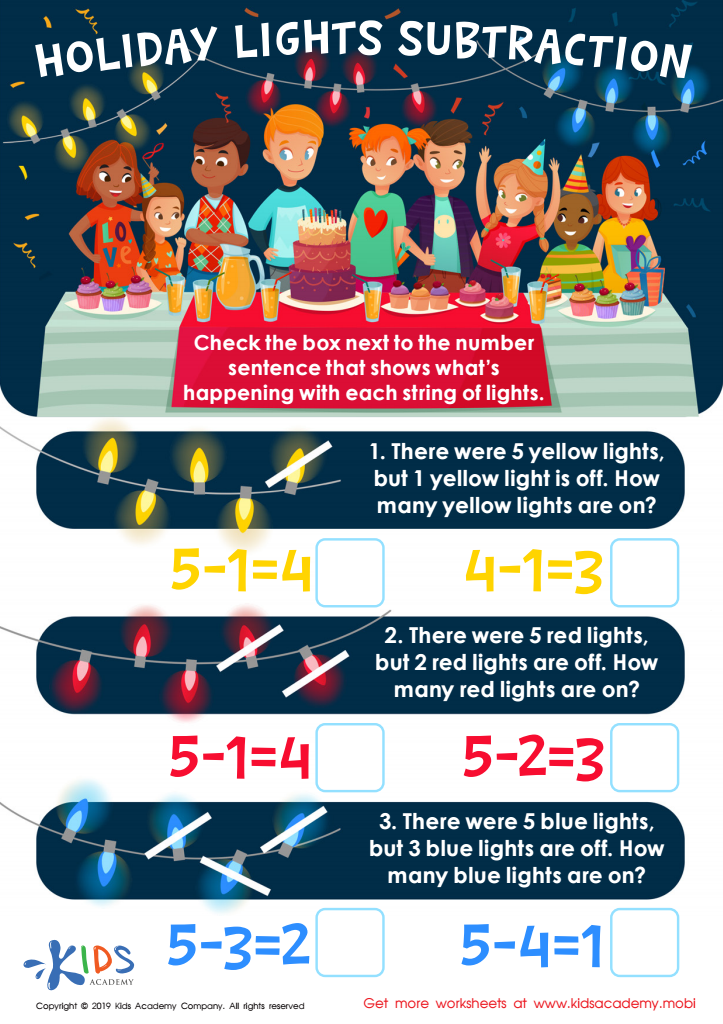
Holiday Lights Subtraction Worksheet
Before tackling the math problem, get your kids ready by asking them to share their favorite holiday and why. Then, look at the picture on the worksheet with them. Help them examine the numbers and problems, and select the number sentence that shows what's happening with each string of light. 80 words.
 Assign to My Students
Holiday Lights Subtraction Worksheet
Worksheet
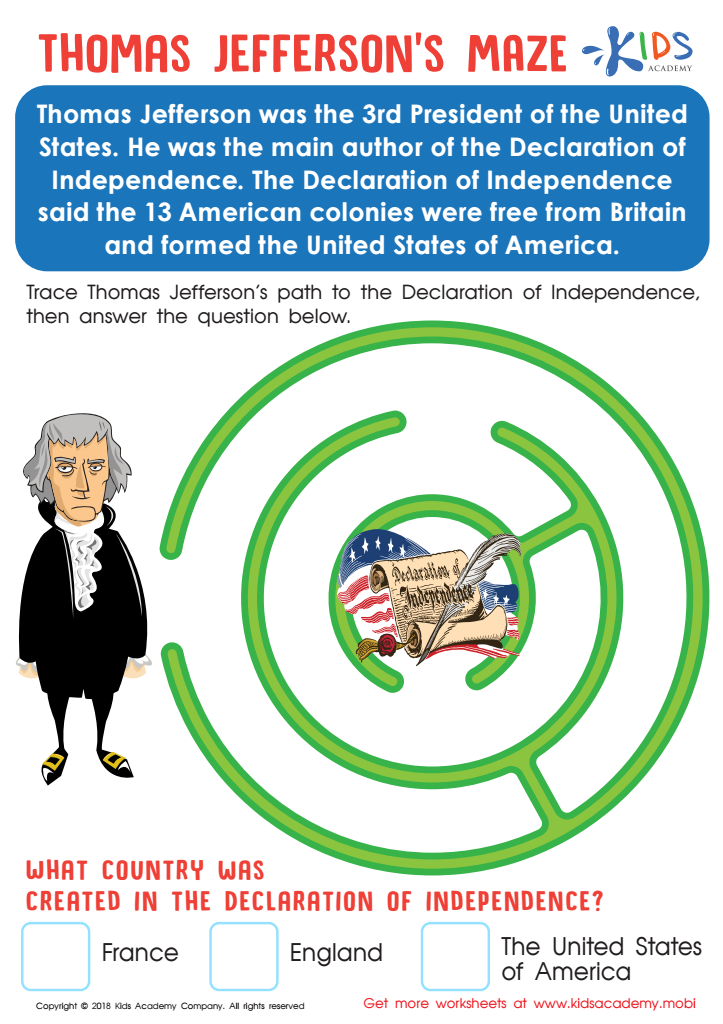
Thomas Jefferson's Maze Worksheet
Do your students know who Thomas Jefferson was? He was the 3rd US president and wrote the Declaration of Independence, setting the 13 Original Colonies free from British rule. This momentous act shaped American history and helped build the nation we know today.
Thomas Jefferson's Maze Worksheet
Worksheet
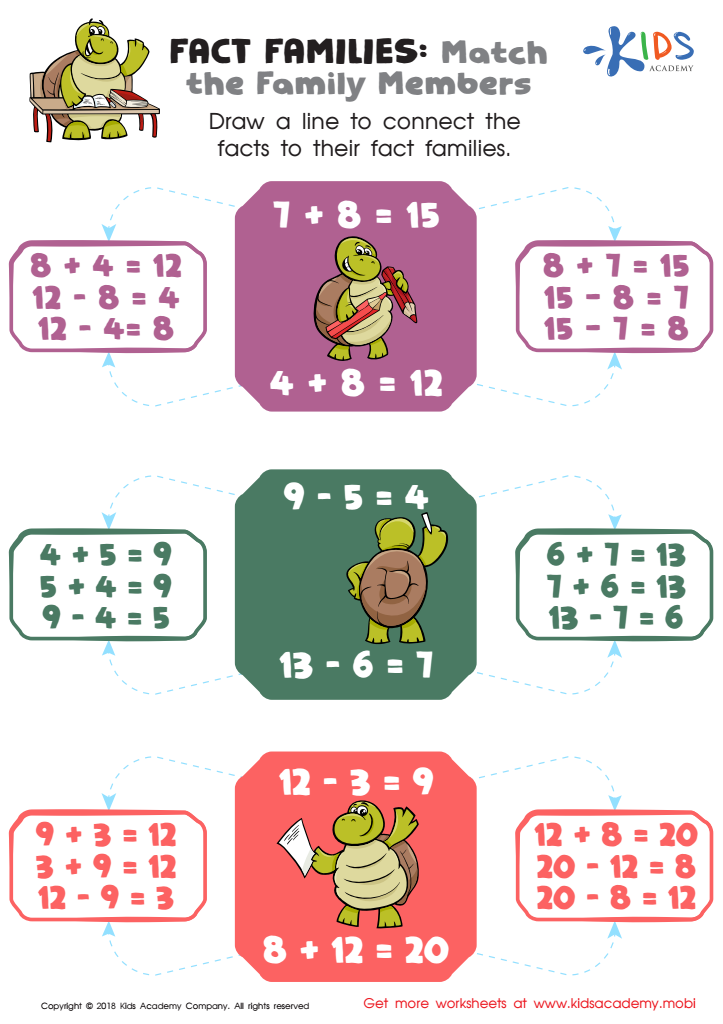
Fact Families: Match Family Members Worksheet
Give your kids a hand at solving this math pdf! Have them figure out the missing numbers and then draw lines to connect the correct fact families. This worksheet will help your students practice addition skills while aiding the turtle in the picture. Let's get those brains working!
Fact Families: Match Family Members Worksheet
Worksheet

Developing Solution Worksheet
Facing a challenge? Boost your child's problem-solving skills with this science worksheet from Kids Academy! Kerry is eating an ice cream cone and it's melting too fast. Read through the suggested solutions and help your child pick the best one! With this activity, your child will understand the cause of the problem and learn to act accordingly.
Developing Solution Worksheet
Worksheet
Join Kids Academy for Free
Who is primarily going to use this learning content?








Parents and teachers should prioritize improving problem-solving skills in children aged 7-8 for several compelling reasons. At this developmental stage, kids are becoming more independent thinkers and learners. Enhancing problem-solving abilities equips them with essential life skills early on.
Firstly, solving problems boosts critical thinking, enabling children to analyze situations, break them down into manageable parts, and devise effective solutions. This analytical approach fosters a growth mindset, where kids view challenges as opportunities to learn rather than obstacles.
Secondly, problem-solving skills bolster academic performance. When children can navigate tricky math problems or untangle complex story plots, they have a better grasp of subjects in school. This not only improves their grades but also builds confidence, motivating them to tackle more difficult tasks.
Moreover, these skills are vital for social development. Children learn to negotiate, share, and collaborate with peers, which helps them build stronger, more cooperative relationships. They become better equipped to handle conflicts, reducing instances of frustration and enhancing their social interactions.
Lastly, fostering problem-solving skills helps children become more self-reliant. They gain the ability to make informed decisions independently, preparing them for future challenges both in and out of the classroom. In sum, nurturing problem-solving abilities in young kids lays a strong foundation for their lifelong learning and personal growth.








