Improving observation skills Worksheets for Ages 7-8
7 filtered results
-
From - To
Enhance your child’s observation skills with our engaging worksheets designed for ages 7-8! Our curated activities promote critical thinking and attention to detail through fun tasks that captivate young learners. Each worksheet encourages exploration and interaction, allowing children to identify patterns, colors, shapes, and other visual elements in a hands-on way. By sharpening their observation skills, kids will improve their ability to notice important details in their surroundings, fostering a greater appreciation for the world around them. Perfect for classroom or home use, our worksheets seamlessly blend education with fun, ensuring your child develops essential learning skills while enjoying the process. Start observing today!
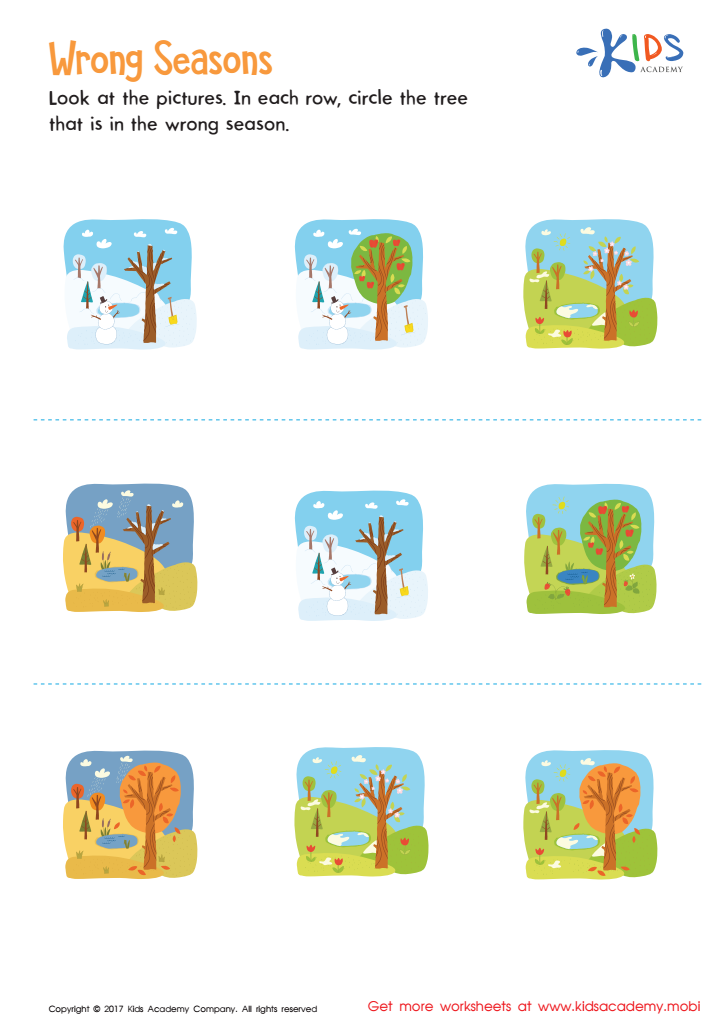
Wrong Seasons Worksheet
 Assign to My Students
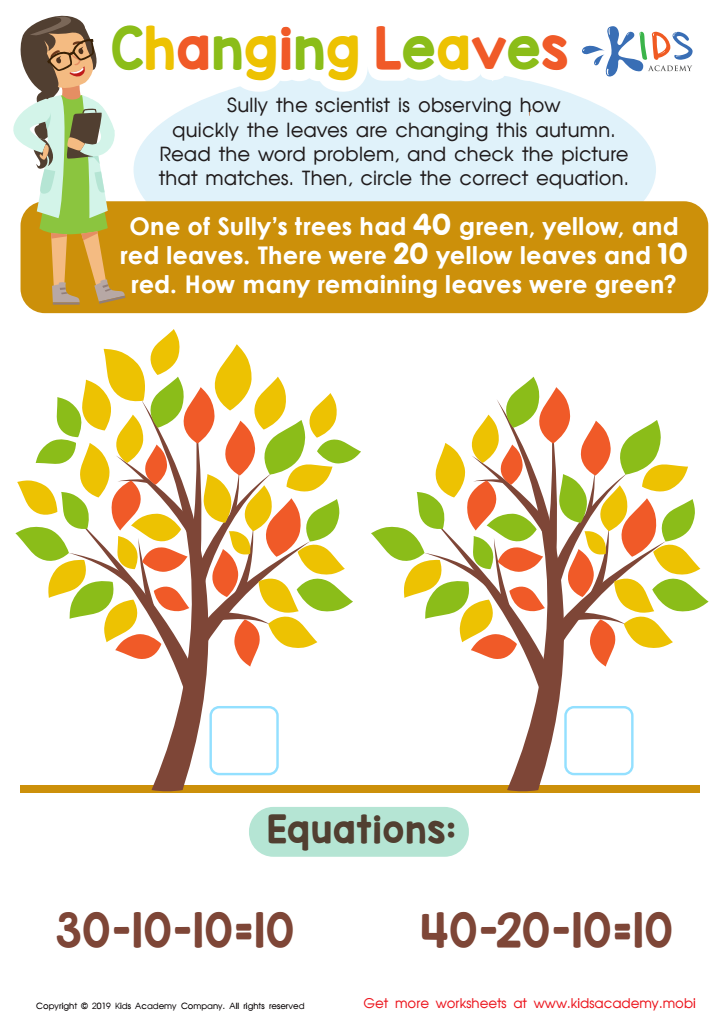
Changing Leaves Worksheet
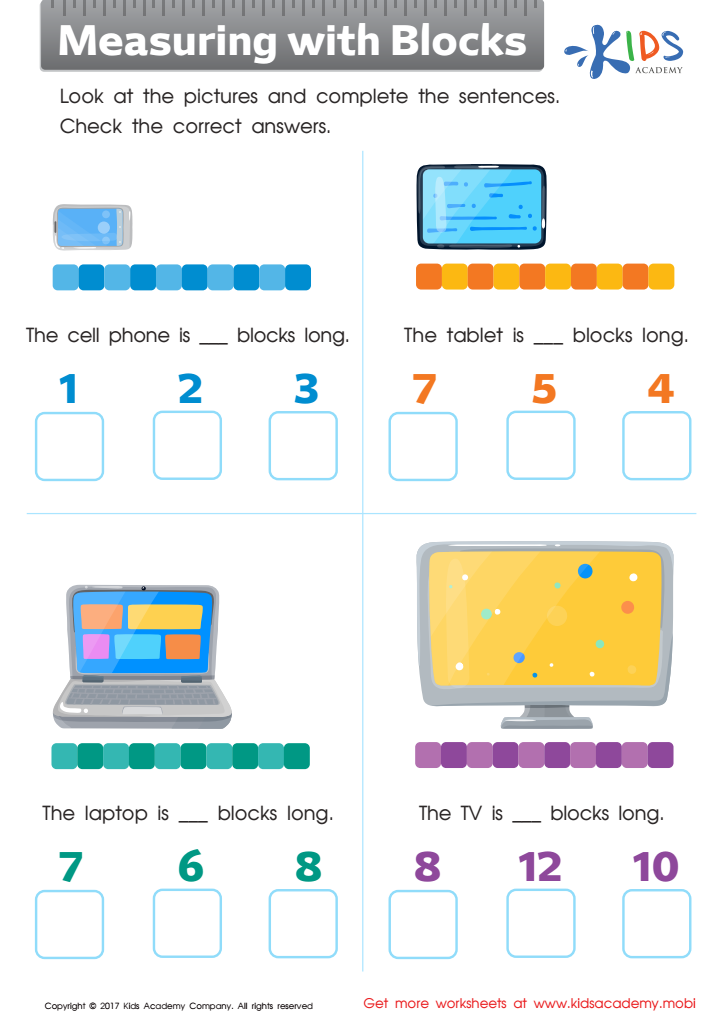
Measuring with Blocks Worksheet
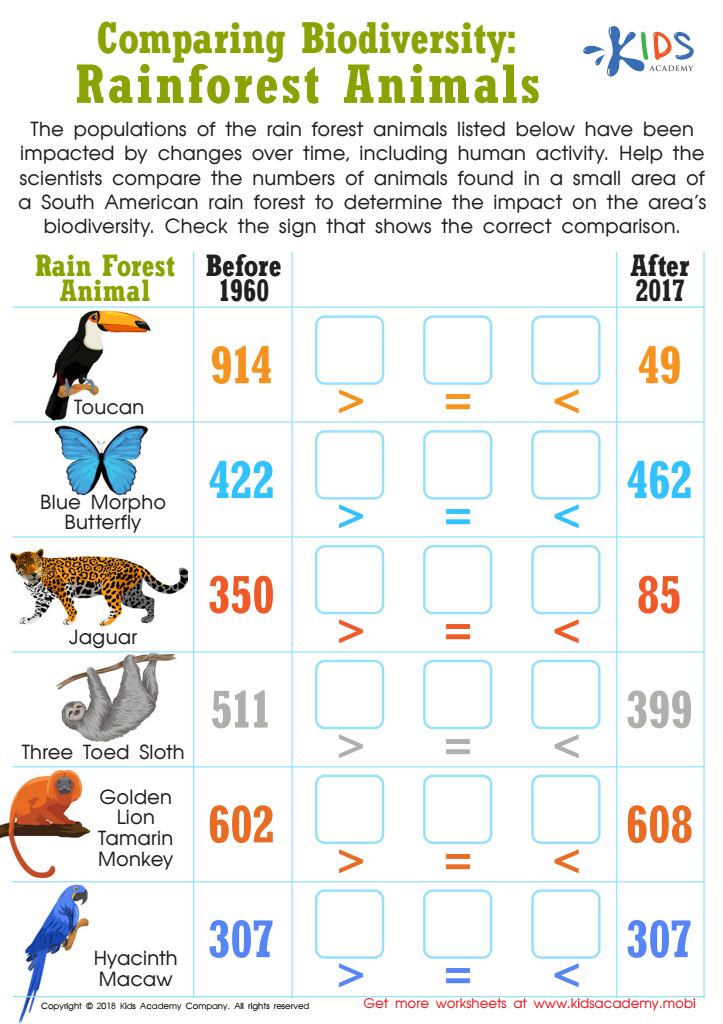
Comparing Biodiversity: Rainforest Animals Worksheet
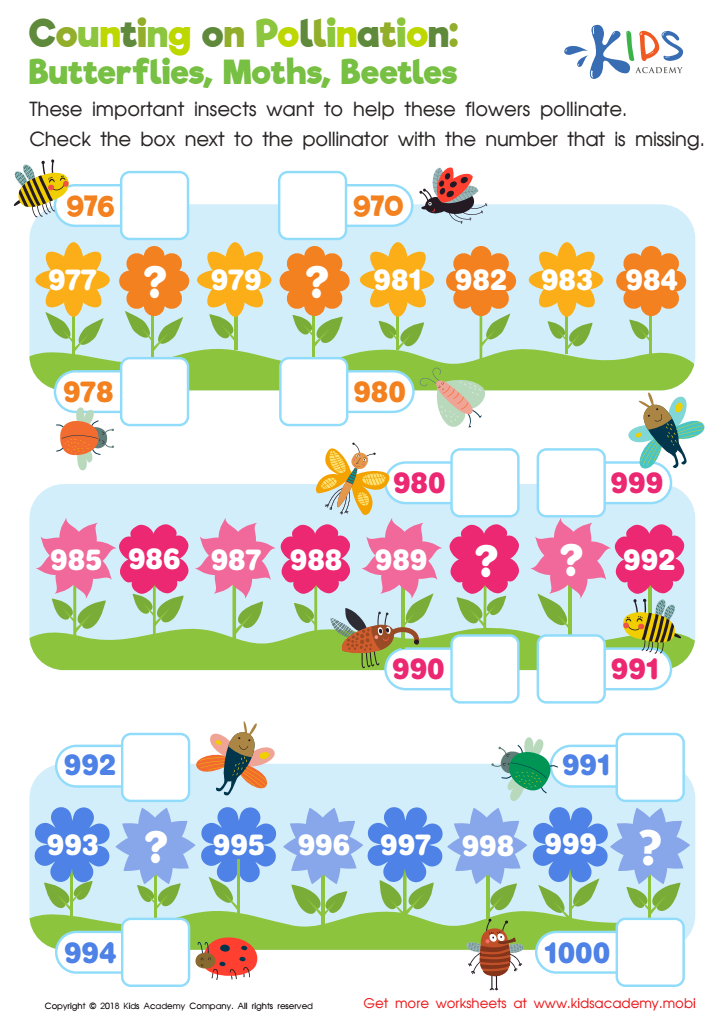
Counting on Pollination: Butterflies, Moths, Beetles Worksheet






Improving observation skills in children aged 7-8 is crucial for their overall development and learning. At this age, children are naturally curious and eager to explore their surroundings, making it the perfect time to enhance their ability to notice details and patterns. Strong observation skills help children acquire information more effectively, enabling them to analyze and interpret their experiences.
By honing these skills, children become better learners; they can engage fully in science experiments, critical thinking discussions, and even social interactions. Enhanced observation helps them distinguish between facts and opinions, make connections between concepts, and develop problem-solving abilities. Additionally, these skills foster creativity and imagination, as children learn to appreciate the nuances of what they see.
For parents and teachers, encouraging observational skills means nurturing a cultivating environment where children can ask questions, share insights, and explore ideas. This can be achieved through activities such as nature walks, interactive storytelling, and art projects, which stimulate interest in the world around them.
Ultimately, improved observation skills contribute to a child’s confidence, independence, and enthusiasm for learning, empowering them to navigate their educational journeys successfully. Investing in these skills lays the groundwork for academic and lifelong success.








