Improving observational skills Worksheets for Ages 7-8
4 filtered results
-
From - To
Enhance your child's attentiveness with our "Improving Observational Skills Worksheets" designed for ages 7-8. These engaging worksheets from Kids Academy strategize on refining visual and cognitive observation through fun activities. From spotting differences and matching games to identifying patterns and details, each exercise is meticulously crafted to boost concentration, memory, and analytical skills. Ideal for young learners, these printable resources support critical development in a captivating and educational way. Equip your child with the tools to stay focused and observant in their everyday learning journey with Kids Academy's expertly designed materials.
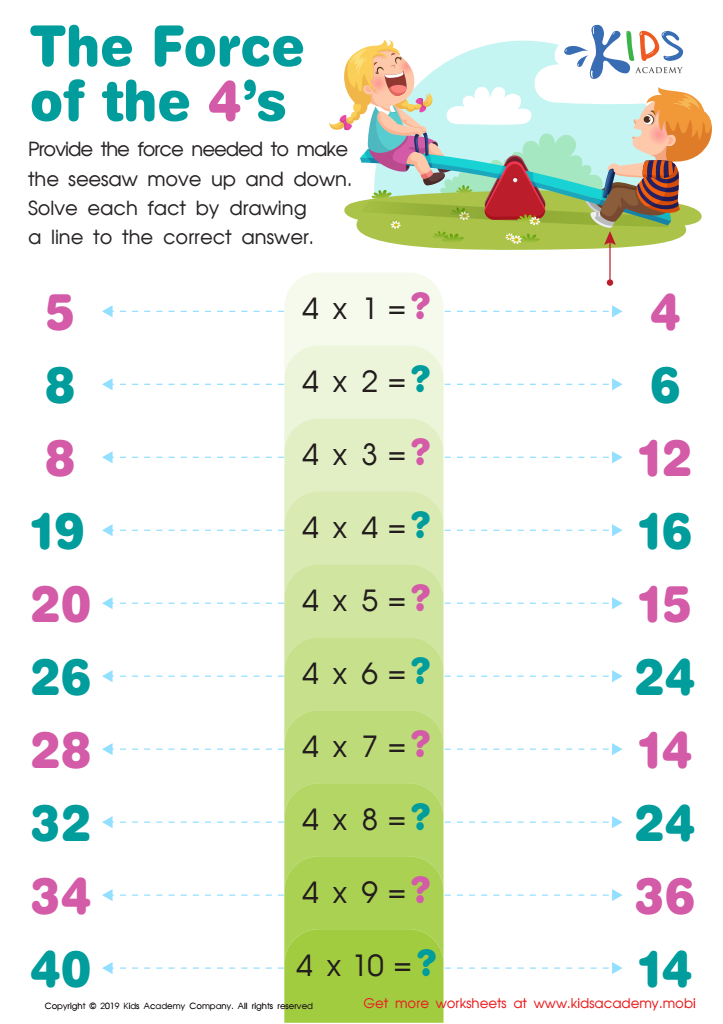
The Force of the 4's Worksheet
 Assign to My Students
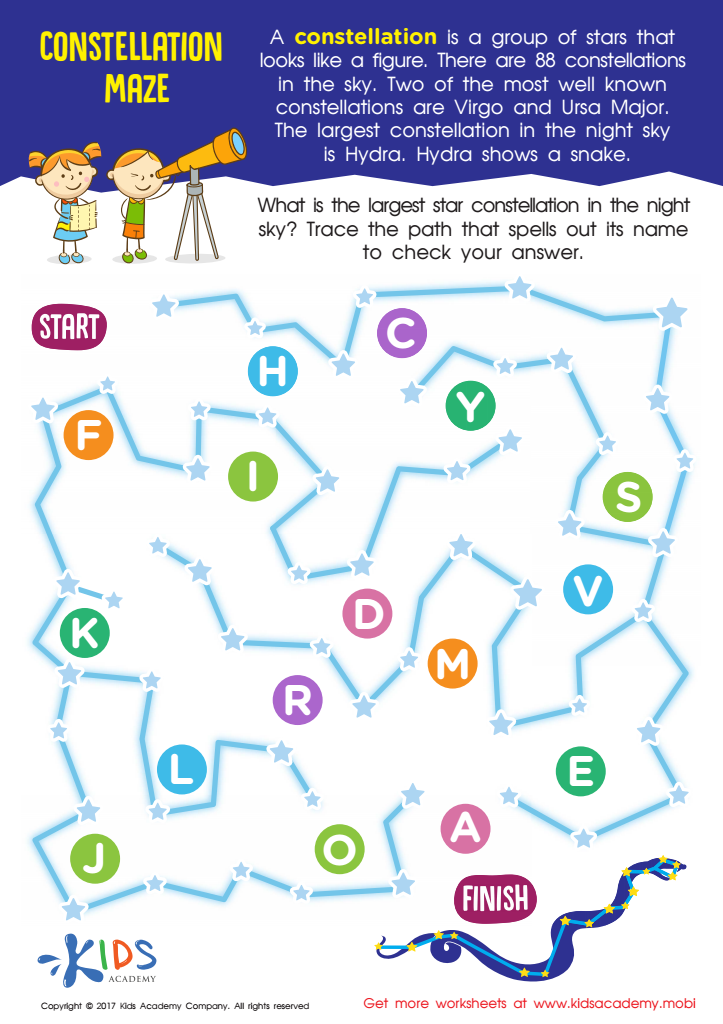
Constellations Worksheet







Improving observational skills in children aged 7-8 is crucial for multiple aspects of their development. At this age, kids are highly curious and begin to understand the world through interaction and observation. Enhancing these skills helps lay a strong foundation for academic achievements and personal growth.
Firstly, improved observational skills can have a significant positive impact on academic performance. For example, in subjects like science and mathematics, the ability to notice details and patterns is critical for problem-solving and hypothesis testing. Children who develop these skills early are better equipped to grasp complex concepts as they progress in their education.
Secondly, robust observational abilities promote better social interactions. Children learn a great deal about social cues, body language, and emotional expressions through observation. By fine-tuning these skills, they can become more empathetic and effective communicators, building stronger relationships with their peers and adults.
Furthermore, honing observational skills can fuel creativity and imagination. Whether engaged in art, writing, or play, the ability to observe can inspire more nuanced and original creations.
Teachers and parents play a pivotal role in nurturing these skills through activities like nature walks, interactive games, and discussions that encourage children to notice and describe the world around them. By prioritizing the development of observational skills, we can help children become more aware, thoughtful, and resourceful individuals.








