Map reading Worksheets for Ages 7-8
3 filtered results
-
From - To
Our Map Reading Worksheets for Ages 7-8 are designed to boost young adventurers' spatial thinking and geographic awareness. Through engaging activities and vibrant illustrations, children will learn to read and understand different types of maps, identify cardinal directions, and interpret map symbols and keys. These worksheets align with educational standards and make geography fun and accessible. Perfect for both classroom and at-home learning, our worksheets aim to build foundational map-reading skills that will aid children in navigating their world more confidently. Printable and easy to use, they ensure an enriching and enjoyable learning experience for all young explorers.
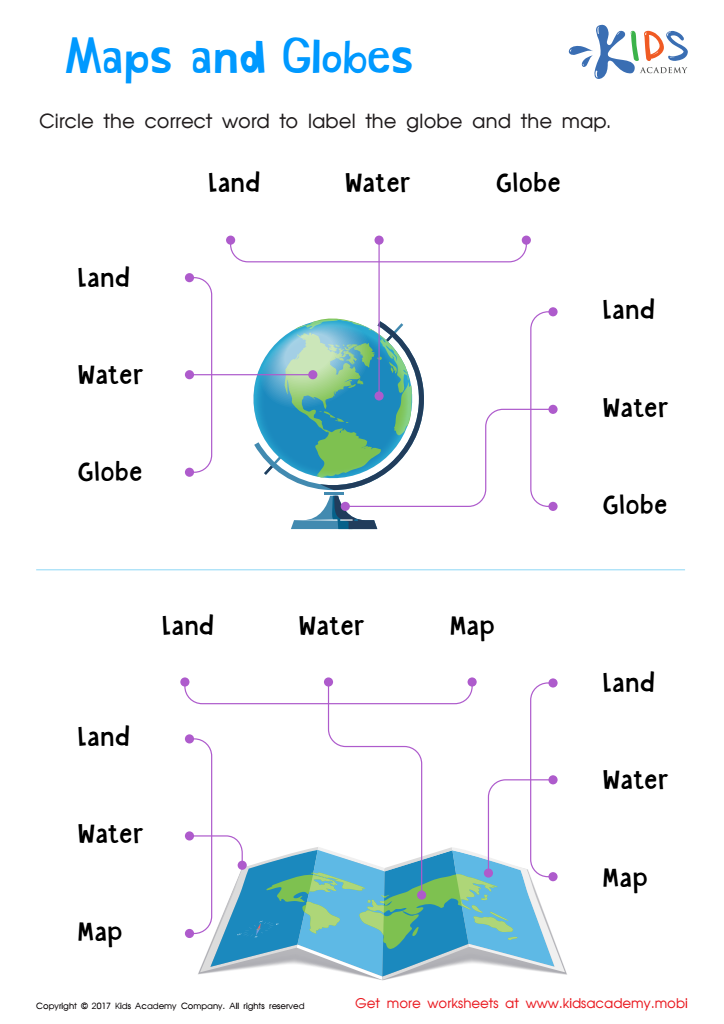
 Assign to My Students
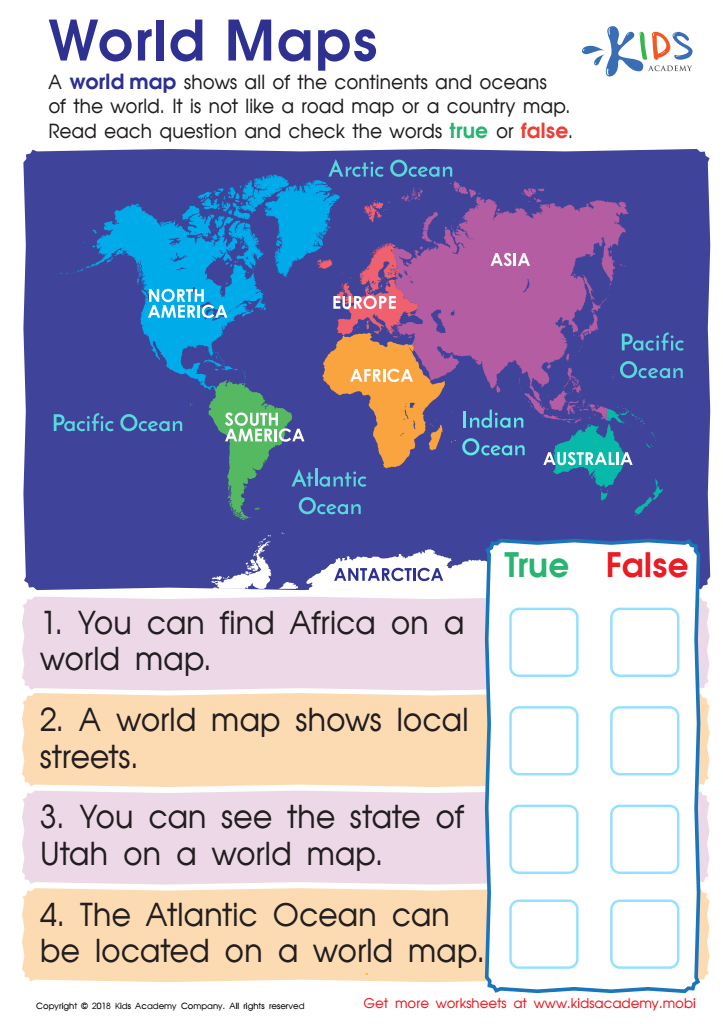
World Maps Worksheet
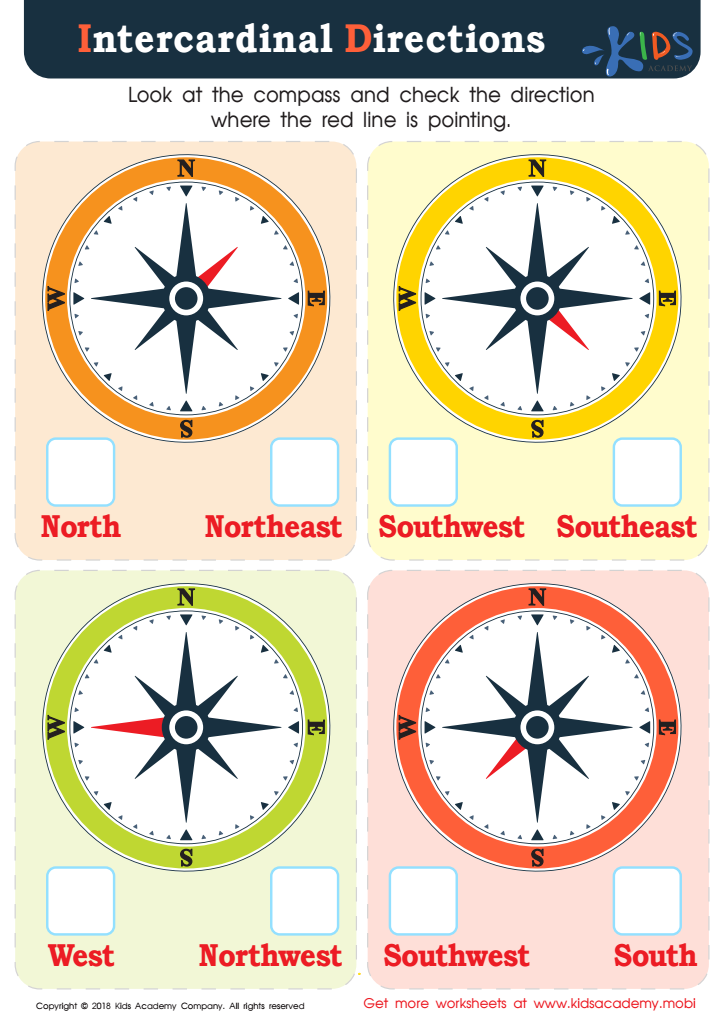
Intercardinal Directions Worksheet







Map reading is a fundamental skill that holds significant educational value, even for young children aged 7-8. Introducing these kids to the basics of map reading can enhance their cognitive development by fostering spatial thinking and problem-solving abilities. When children learn to read maps, they develop an understanding of representation and scale, which translates into better comprehension of mathematical concepts and geometry.
Additionally, map reading cultivates critical thinking and decision-making skills. Kids learn to plan routes and understand directions, which boosts their ability to think logically and make informed decisions based on visual information. These are essential life skills that extend beyond the confines of geography.
Moreover, engaging children with maps can spark their curiosity about the world around them. It can be an exciting gateway to learning about different cultures, countries, and ecosystems, promoting a broader worldview and encouraging global awareness. This seeds an appreciation for diversity and geography.
Lastly, map reading can be a fun, interactive way for parents and teachers to bond with children. Activities like treasure hunts or creating their own maps can make learning enjoyable and effective. In sum, map reading equips young minds with essential skills and enhances their understanding of the world in an enjoyable way.








