Recognizing number patterns Worksheets for Ages 7-8
5 filtered results
-
From - To
Help your child master the world of numbers with our "Recognizing Number Patterns Worksheets for Ages 7-8". Our carefully crafted worksheets engage young learners by developing essential math skills through fun and interactive activities. These unique resources simplify learning as students recognize, predict, and extend number patterns, fostering critical thinking and problem-solving abilities. With a variety of challenges ranging from simple sequences to more complex progressions, our worksheets are ideal for classroom use or at-home practice. Cultivate a solid mathematical foundation today and make numbers an adventure with Kids Academy’s expertly designed worksheets. Join the journey to number pattern mastery!
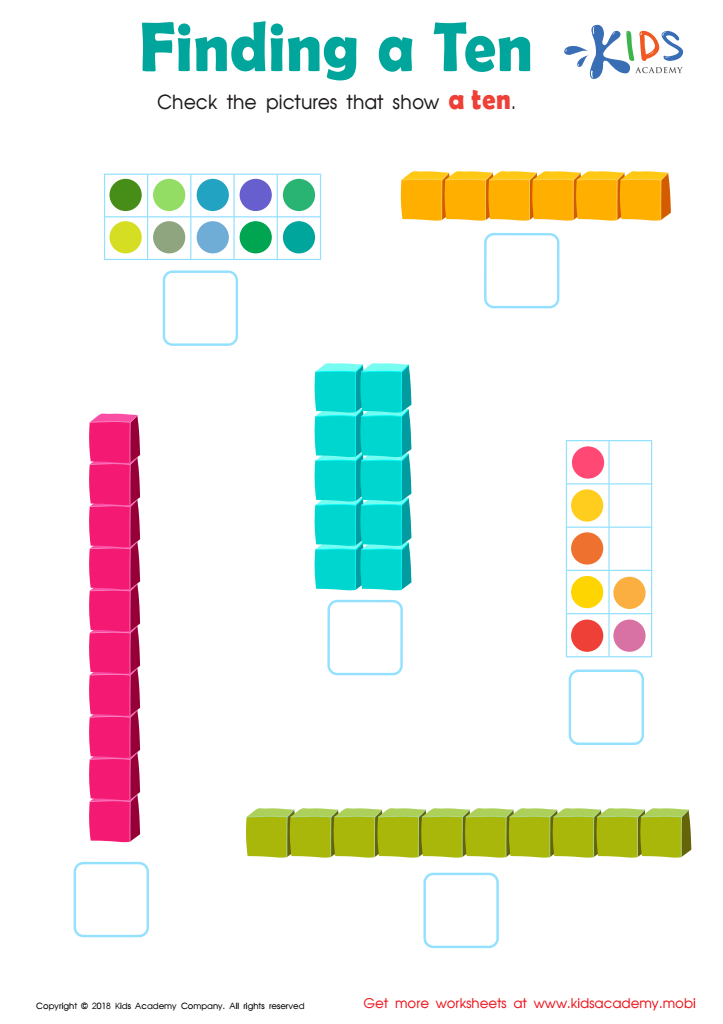
Finding a Ten Worksheet
 Assign to My Students
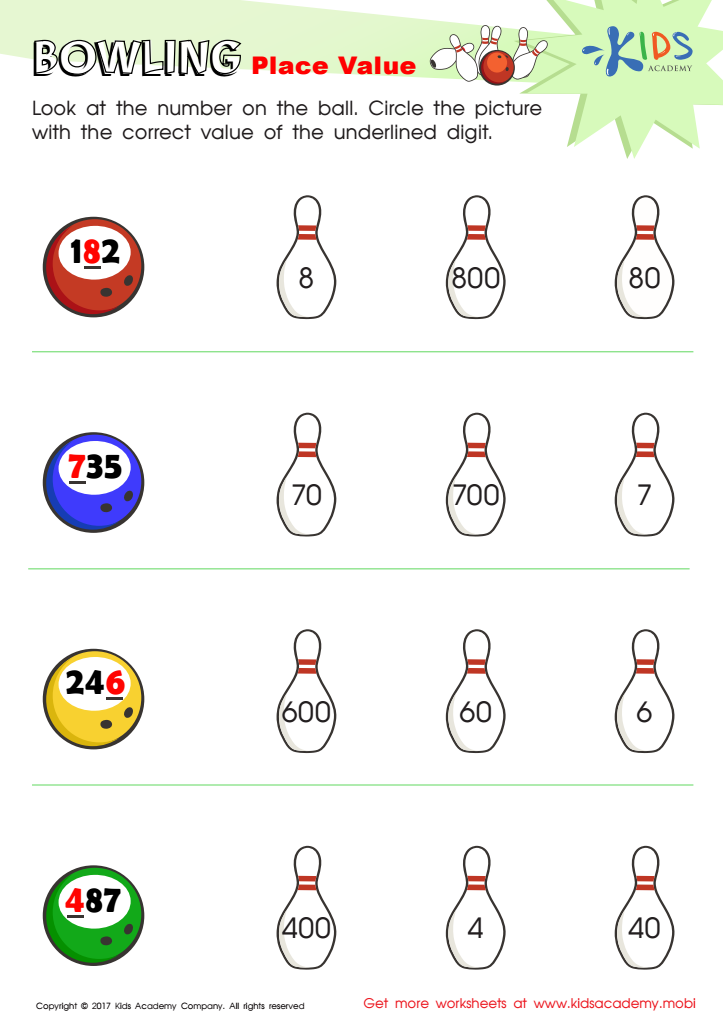
Place Value Worksheet
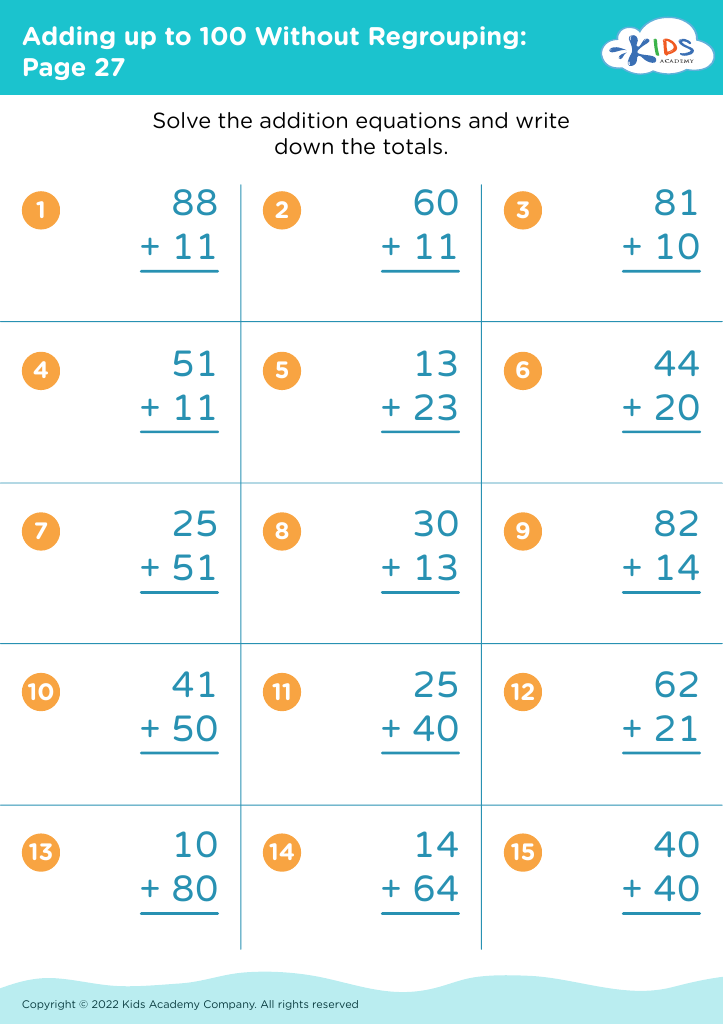
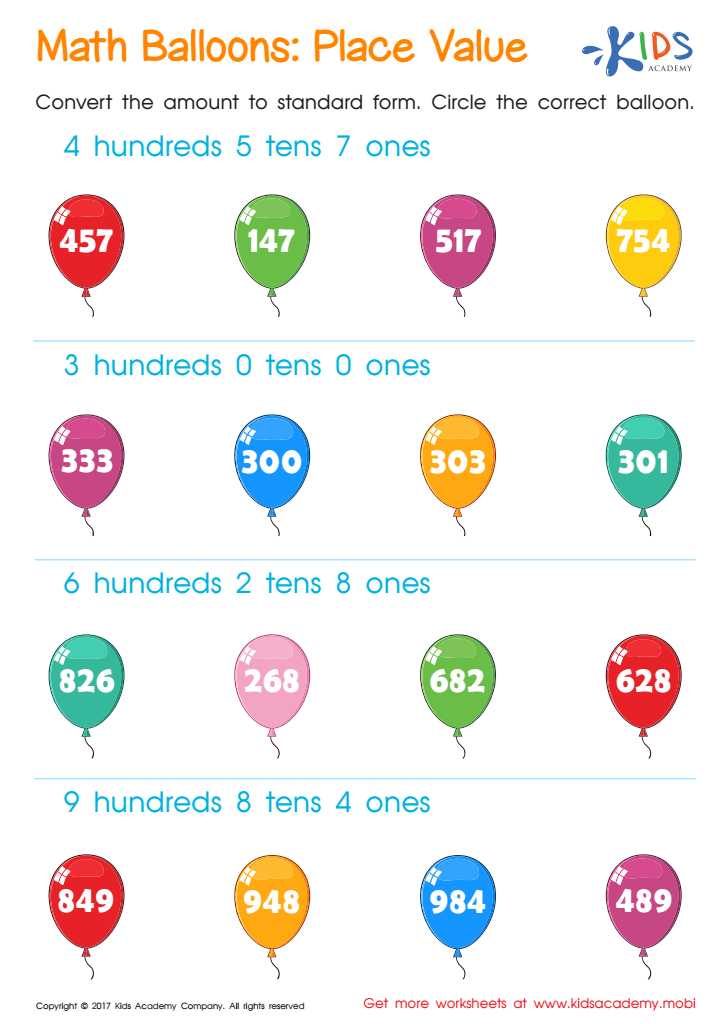
Place Value Printable Worksheet
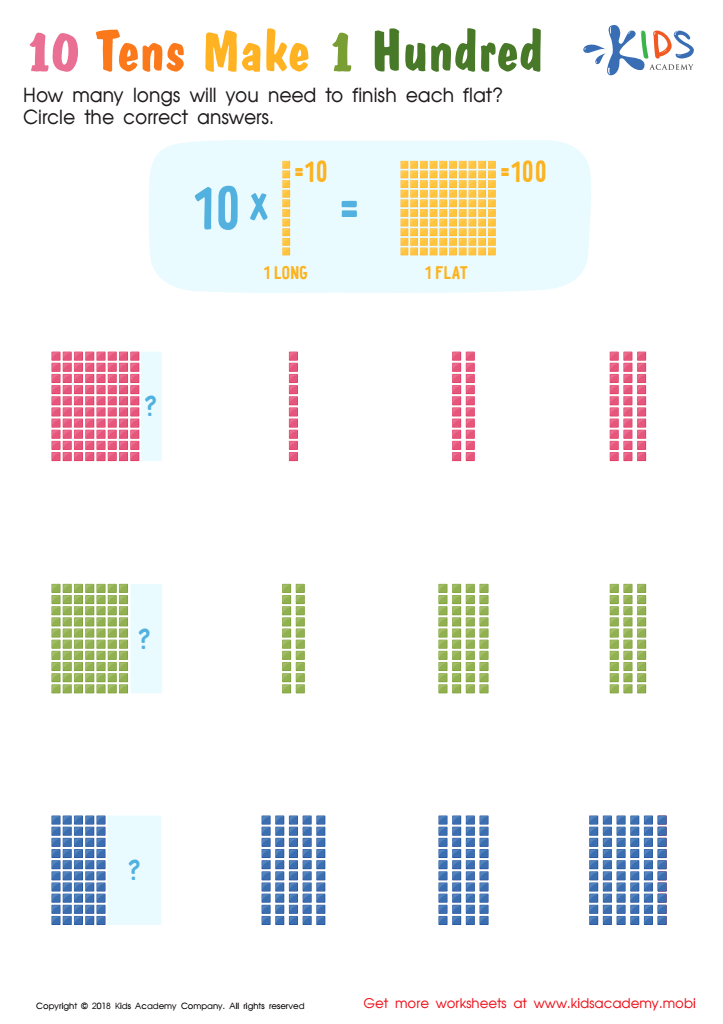
10 Tens Make 1 Hundred Worksheet







Recognizing number patterns is a critical foundational skill for children aged 7-8, influencing their overall mathematical development and cognitive growth. At this age, children begin to understand abstract mathematical concepts, and identifying patterns helps them internalize order, predictability, and logical thinking. Pattern recognition enhances problem-solving skills because it allows children to make educated guesses based on observed sequences, fostering more effective and efficient sharp reasoning.
For parents and teachers, encouraging the identification of number patterns in young learners lays the groundwork for advanced math topics, such as multiplication, division, and algebra. For example, understanding even and odd sequences or arithmetic progressions makes grasping more complex ideas less daunting. This skill naturally extends beyond math into everyday life and other academic areas, such as reading (where patterns in storytelling or sentence structures become evident) and science (observing natural cycles and rhythms).
Moreover, recognizing patterns also enhances memory and attention to detail. It can spark a child's curiosity and engagement with materials, making learning experiences more enjoyable. For parents and teachers, focusing on this skill means nurturing a critical component of a child’s intellectual toolkit, ultimately supporting their academic success and life-long learning abilities.








