Syllable identification Worksheets for Ages 7-8
5 filtered results
-
From - To
Enhance your child's reading skills with our Syllable Identification Worksheets, tailored for ages 7-8. These engaging worksheets help young learners break down words into manageable parts, fostering better pronunciation and vocabulary development. Perfect for early readers, each exercise features fun and interactive content designed to make syllable learning easy and enjoyable. Our expertly crafted materials align with educational standards, ensuring your child gains crucial language skills in a structured manner. Start your learner on the path to reading proficiency with our comprehensive worksheets and watch their confidence soar. Download now from Kids Academy and make learning a fun adventure.
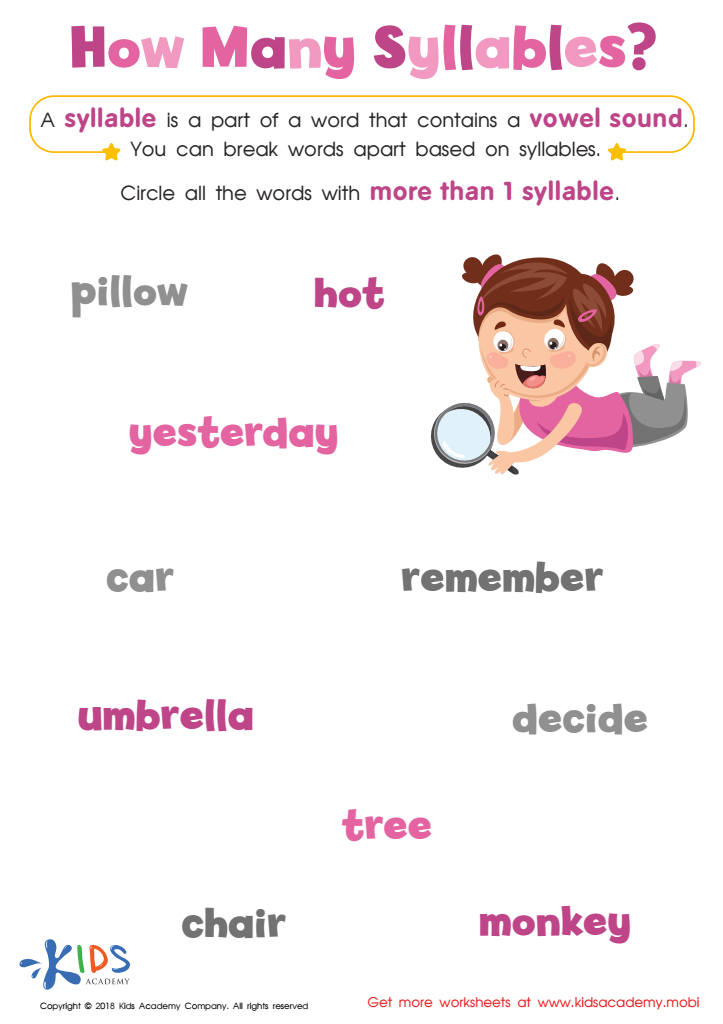
Reading: How Many Syllables Worksheet
 Assign to My Students
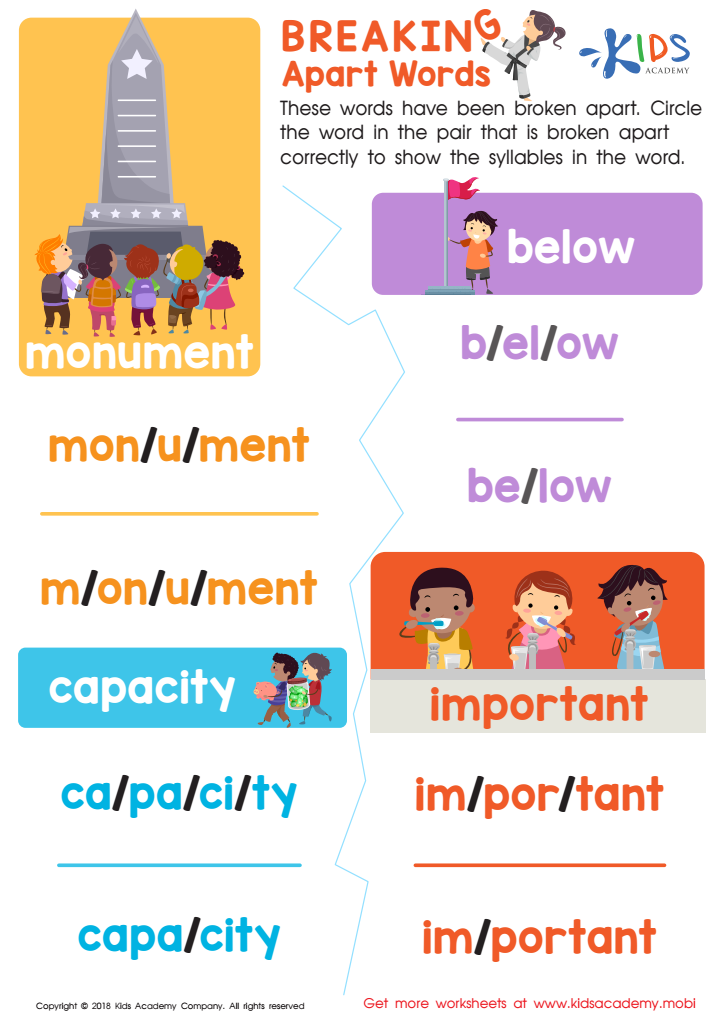
Breaking Apart Words Worksheet
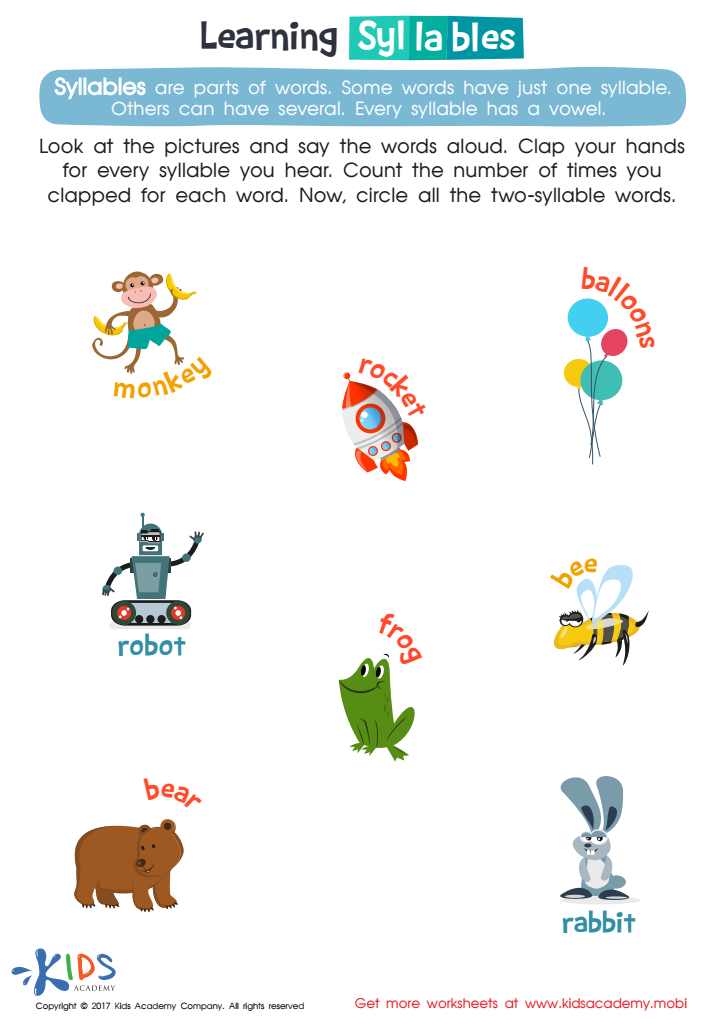
Learning Syllables Word Structure Worksheet
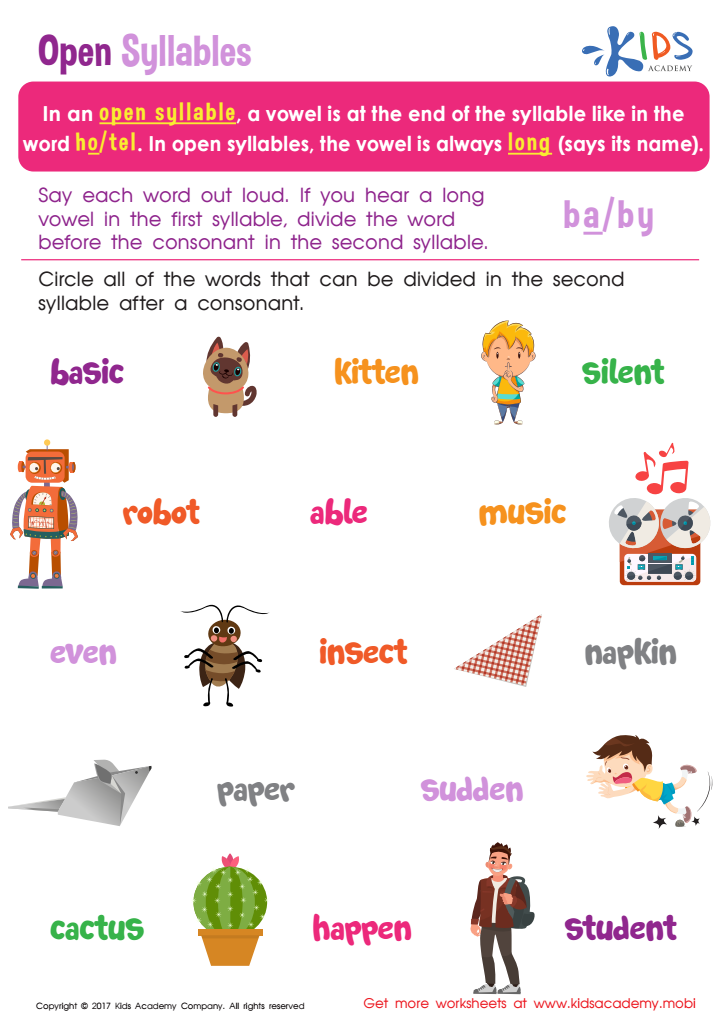
Open Syllable Printable Worksheet
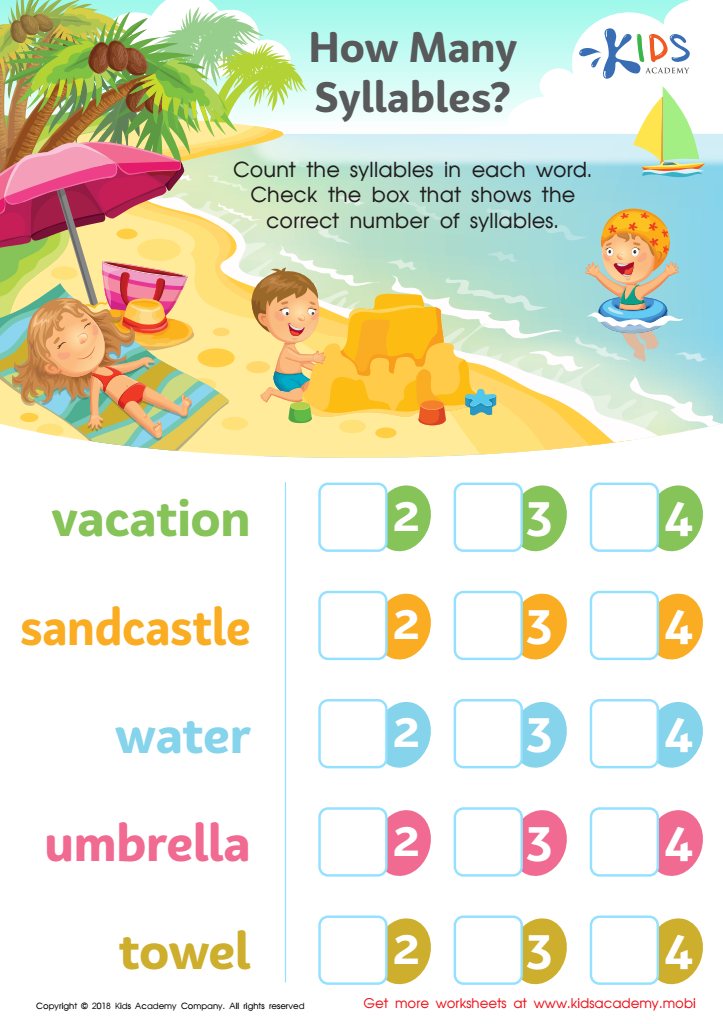
How Many Syllables Worksheet







Syllable identification is a crucial skill for children aged 7-8, as it forms a foundation for reading and writing proficiency. At this age, kids transition from learning basic phonics to more complex reading skills, and understanding syllables aids in this process greatly. By learning to identify syllables, children can break down words into manageable chunks, making it easier to decode and pronounce longer or unfamiliar words. This not only enhances their reading fluency but also boosts comprehension since they can focus more on the meaning of the text rather than getting stuck on individual words.
Moreover, syllable counting and segmentation improve spelling skills. When children learn that words are composed of syllables, they can better understand spelling patterns and rules. For example, they can apply the concept of open and closed syllables to spell words correctly. This understanding also supports their writing abilities, enabling them to construct words and sentences more confidently.
Additionally, syllable awareness benefits speech development. Pronouncing multisyllabic words accurately aids in clearer and more effective communication. Thus, parents and teachers should prioritize syllable identification activities, games, and exercises, as these not only fortify essential literacy skills but also contribute to overall language development in young learners.








