
Understanding community roles Worksheets for Ages 7-8
3 filtered results
Difficulty Level
Grade
Age
-
From - To
Subject
Activity
Standards
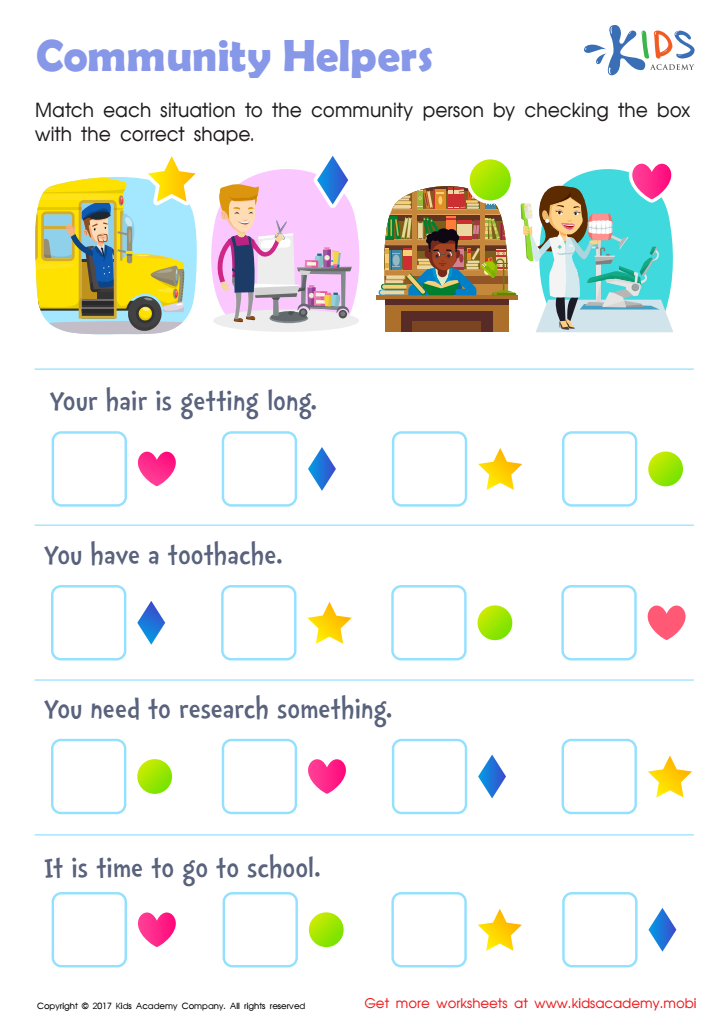
Discover our "Understanding Community Roles Worksheets for Ages 7-8," designed to help young learners grasp the essential roles that make up our communities. These engaging and educational worksheets encourage kids to identify and appreciate the work of community helpers like firefighters, teachers, doctors, and more. By using fun activities such as coloring, matching, and simple quizzes, these worksheets provide a practical introduction to civic awareness and responsibility. Ideal for classroom or at-home learning, these resources ensure that children ages 7-8 gain a foundational understanding of how different professions contribute to the well-being and functioning of society.
Favorites
With answer key
Interactive
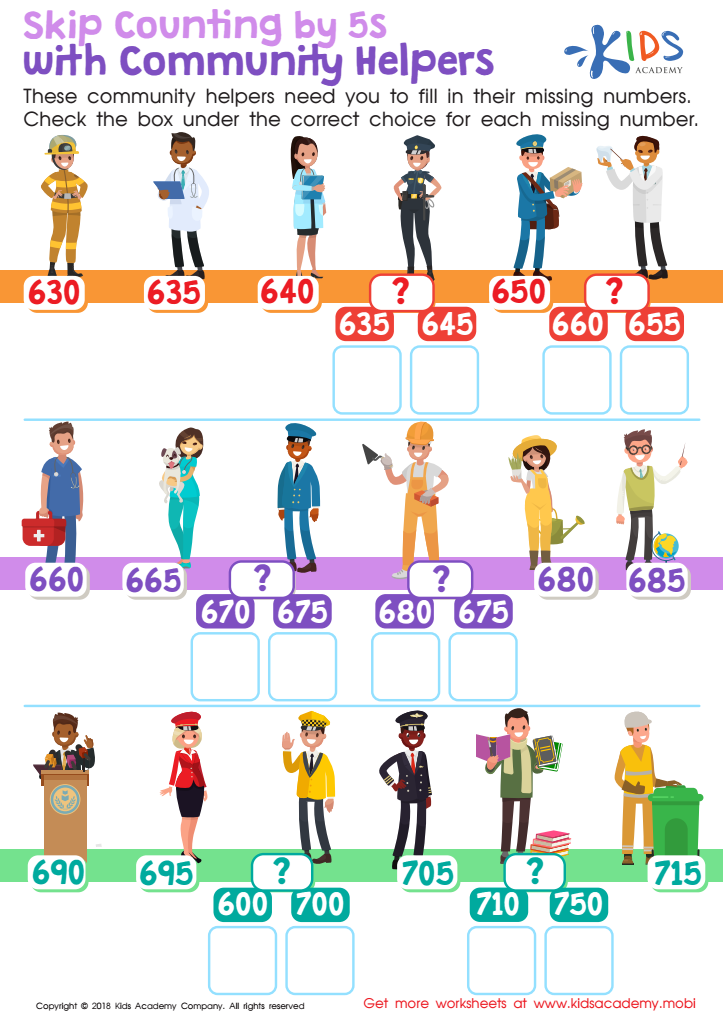
Skip Counting by 5s With Community Helpers Worksheet
This free worksheet combines social studies with math! Kids will practice counting by 5s, rounding numbers and honing their computation skills while also familiarizing themselves with community helpers. Develop your child's number sense and strengthen their math skills - all through a fun and interactive activity.
 Assign to My Students
Skip Counting by 5s With Community Helpers Worksheet
Worksheet
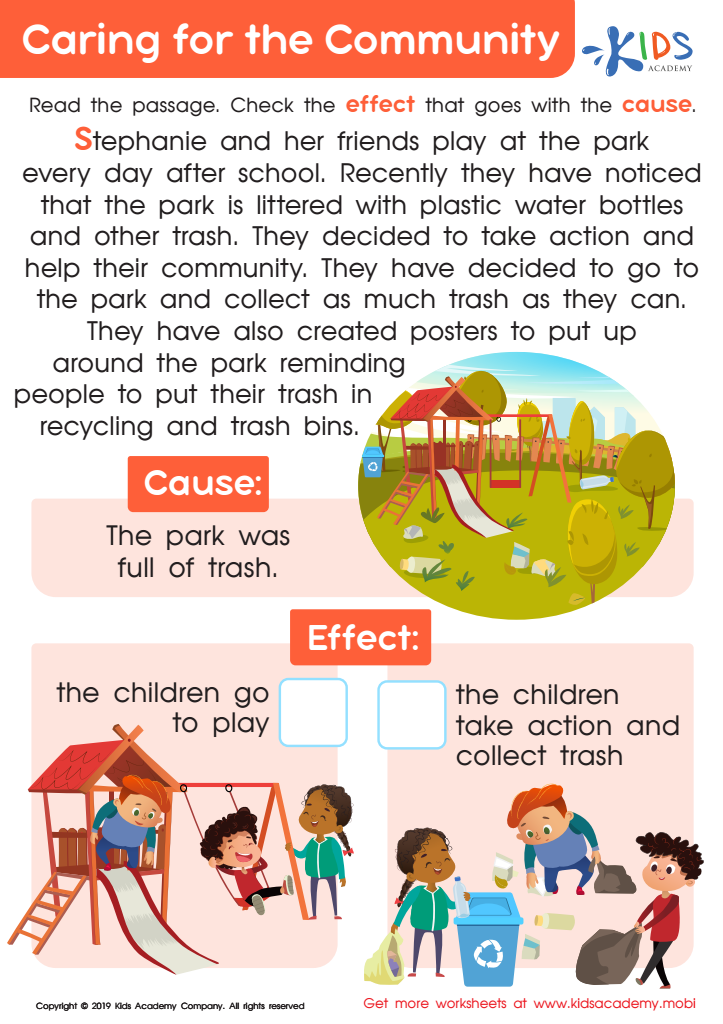
Caring for the Community Worksheet
Before beginning, get your kids in the right mind-set by having them name ways to care for their community. Read the passage with them, pointing at pictures, then ask them to match the ‘cause’ with the ‘effect’ on the worksheet. This will help them learn more about how to care for their community.
Caring for the Community Worksheet
Worksheet
Join Kids Academy for Free
Who is primarily going to use this learning content?







Understanding community roles is vital for children aged 7-8 because it helps them make sense of the world around them. At this age, kids are naturally curious about how things work and begin to take a keen interest in their surroundings. By learning about different roles within a community, children develop an appreciation for how people depend on each other. They start to understand the importance of jobs like teachers, firefighters, doctors, and store clerks. This fosters a sense of gratitude and respect for the various subjects they interact with daily.
Teaching community roles also promotes empathy. For example, when children understand what a police officer or a nurse does, they can better appreciate the efforts and challenges these professionals face. This empathetic understanding becomes a foundation for respectful and caring behavior in the future.
Understanding these roles enhances social skills, too. Role-playing activities in the classroom allow children to practice sharing, cooperating, and problem-solving. Knowing about various jobs can also inspire them to think about what they might like to do when they grow up, igniting their dreams and aspirations.
In short, educating children about community roles enriches their cognitive, social, and emotional development, preparing them to become more thoughtful, responsible, and engaged members of society.








