Understanding measurement Worksheets for Ages 7-8
3 filtered results
-
From - To
Explore our collection of "Understanding Measurement Worksheets" designed specifically for ages 7-8! These engaging worksheets help young learners grasp key measurement concepts, including length, weight, and volume. Through fun activities and real-life examples, children will gain essential skills like reading measuring tools, comparing sizes, and solving measurement-related problems. Perfect for home or classroom use, these resources foster mathematical understanding while encouraging critical thinking and problem-solving skills. With colorful visuals and age-appropriate challenges, our worksheets are an enjoyable way for kids to practice measurements, making learning both effective and entertaining. Download now and watch your child's confidence in measurement grow!
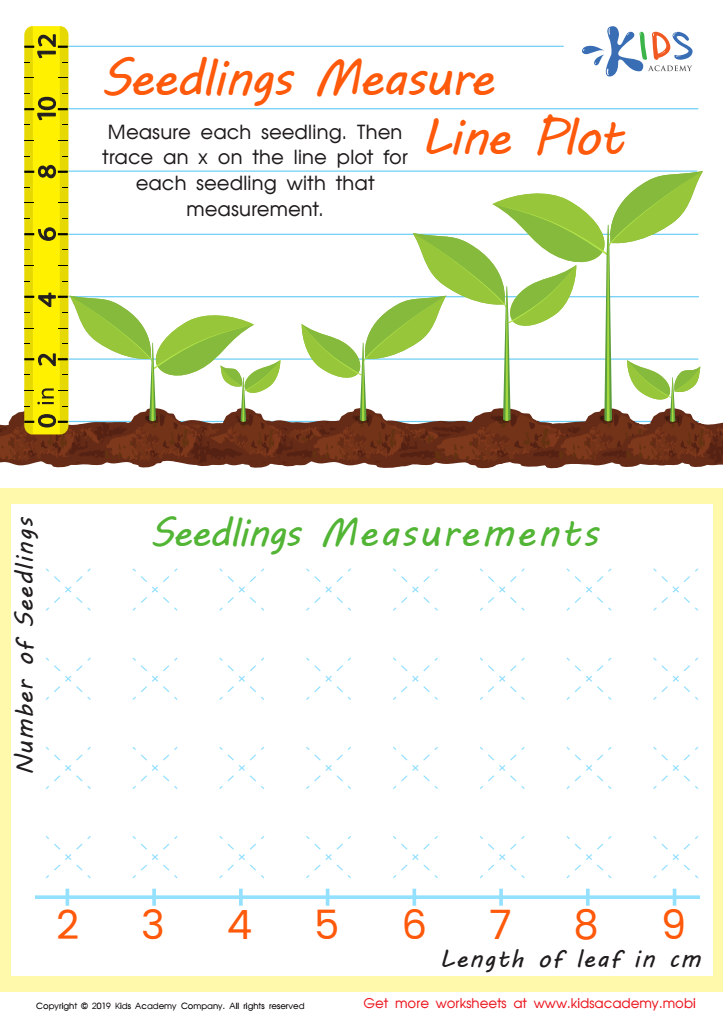
Seedling Measure Line Plot Worksheet
 Assign to My Students
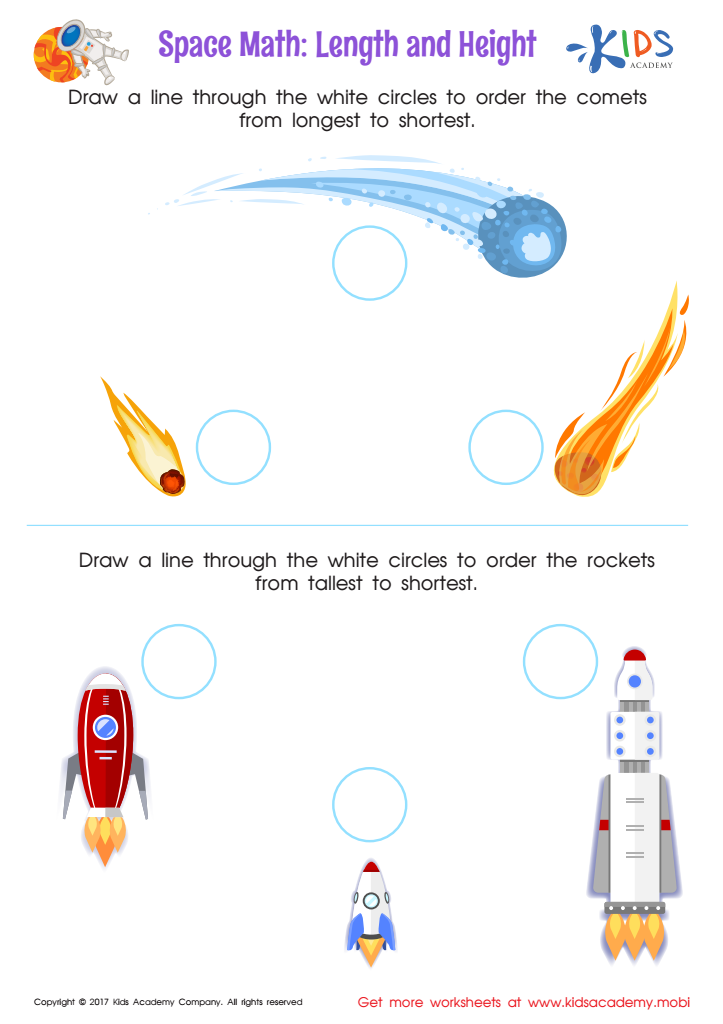
Space Math Worksheet
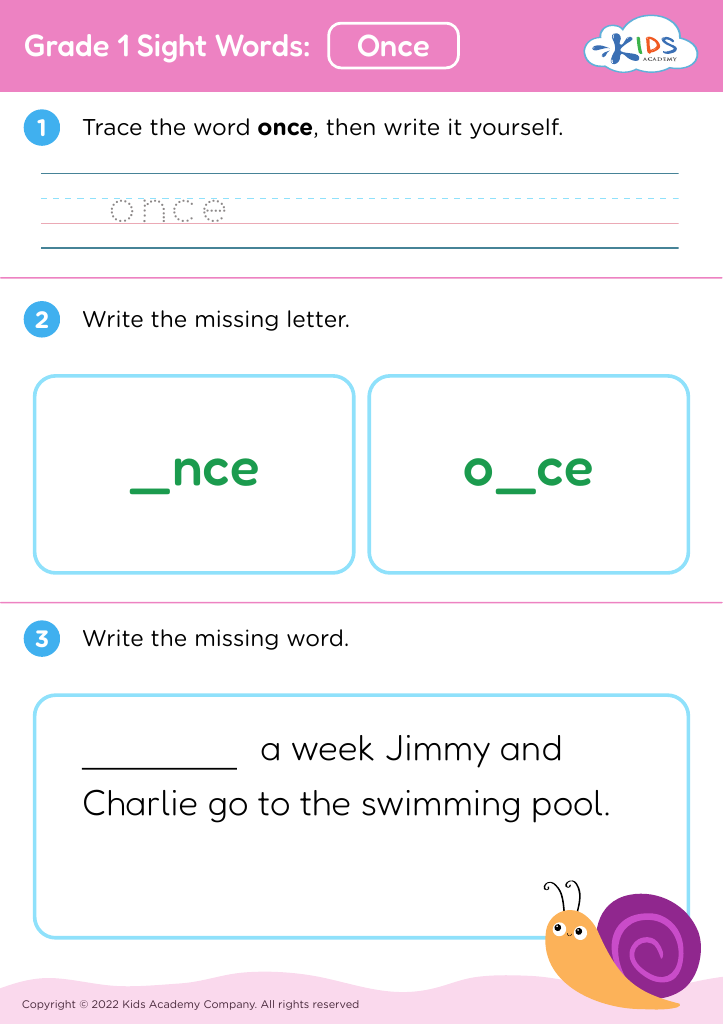






Understanding measurement is critical for children aged 7-8 as it lays the foundation for essential skills in mathematics and everyday life. At this stage, children begin to explore concepts such as length, weight, volume, and time, which not only enrich their cognitive development but also enhance their problem-solving abilities. Mastery of measurement provides students the tools to conceptualize and quantify their environments, from measuring ingredients in cooking to calculating distances when planning an outing.
For parents and teachers, fostering measurement skills is vital because it promotes critical thinking. Engaging children in measurement tasks encourages them to analyze and compare objects, fostering an understanding of numbers and their practical applications. This knowledge is crucial for later mathematical concepts, such as algebra and geometry.
Moreover, measurement is integral in developing strong reasoning skills. When children learn to estimate, measure, and reflect on their results, they gain a deeper awareness of relationships between different units and quantities. This comprehension not only prepares them for academic success but also for practical challenges in everyday situations, ensuring they grow into competent adults who can navigate everyday tasks with confidence.
In summary, supporting measurement learning in young children is a key investment in their educational journey and life skills.








