Understanding perspectives Worksheets for Ages 7-8
3 filtered results
-
From - To
Explore our "Understanding Perspectives Worksheets" designed specifically for ages 7-8, perfect for young learners to cultivate empathy and critical thinking skills. These engaging worksheets encourage children to identify and appreciate different viewpoints through relatable scenarios, enhancing their social awareness and communication abilities. Each activity is crafted to support classroom learning and home activities, making it easy to integrate into your educational plan. With a variety of fun exercises, children will learn to recognize emotions and intentions, fostering meaningful discussions about perspectives. Start building a foundation for compassionate and analytical minds today with our thoughtfully designed resources!
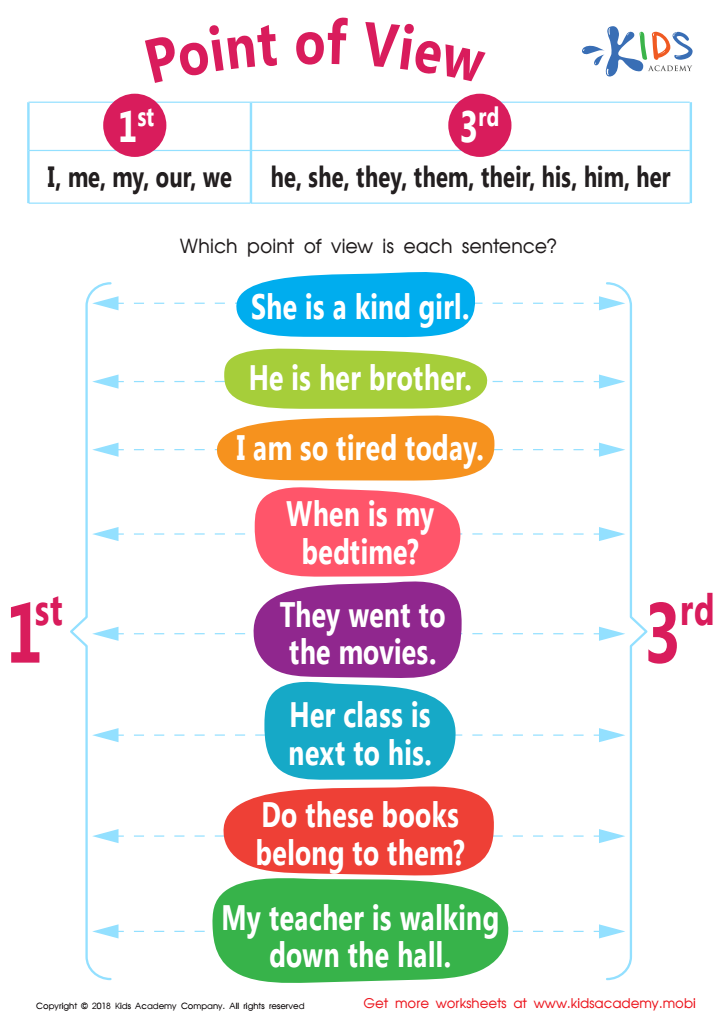
Point of View Worksheet
 Assign to My Students
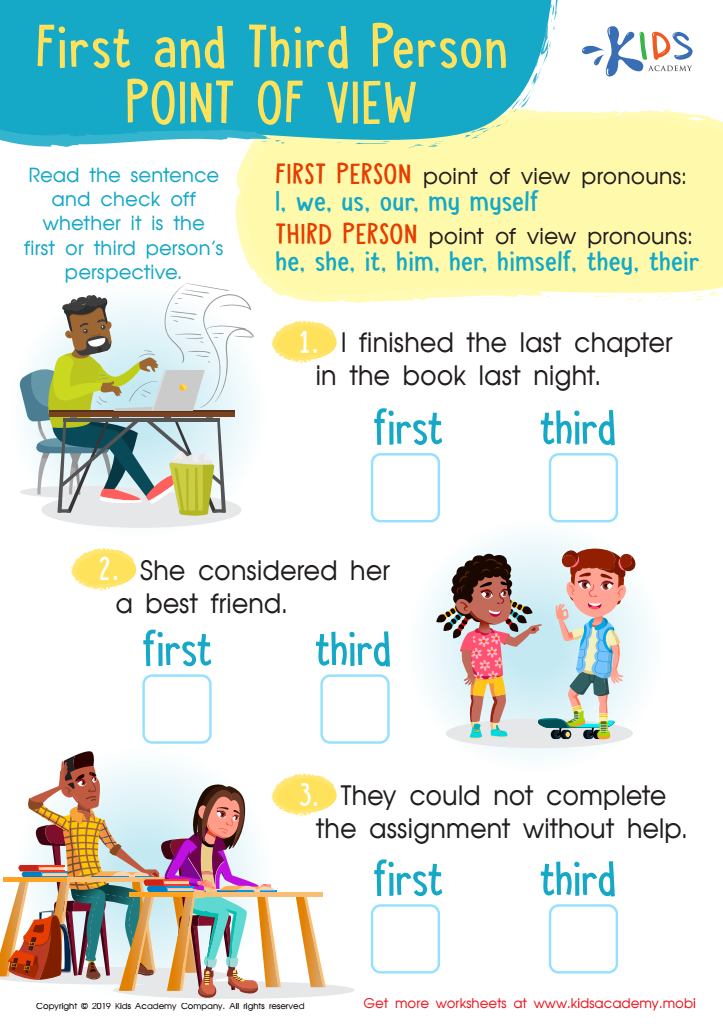
First and Third Person Point of View Worksheet
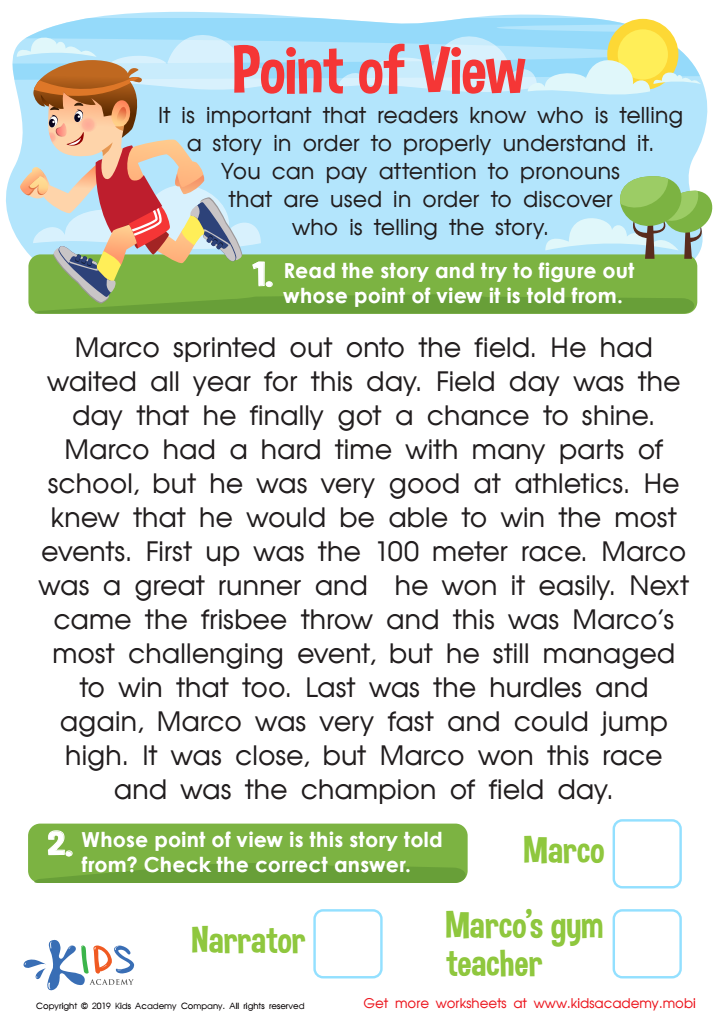
Point of View Worksheet







Understanding perspectives is an essential skill for children aged 7-8, and it's crucial for both parents and teachers to prioritize its development. At this stage, children are beginning to grasp that different people have different thoughts, feelings, and experiences. Encouraging them to see the world through others' eyes helps foster empathy, communication, and conflict resolution skills. These abilities are vital not only in their social interactions but also in creating a supportive classroom and home environment.
When children learn to understand varied perspectives, they become better listeners and collaborators. This skill enhances their ability to engage with diverse ideas and backgrounds, preparing them for an increasingly interconnected world. Moreover, it supports emotional intelligence, allowing kids to navigate their own feelings more effectively and understand how their actions impact others.
Teachers and parents can promote perspective-taking through conversations, storytelling, and role-playing activities. When adults model curiosity about others' viewpoints, children pick up on these behaviors and integrate them into their social skills. Ultimately, fostering this understanding leads to more inclusive and respectful interactions, creating a sense of community where all children feel valued and heard. In turn, this cultivates both emotional resilience and a positive learning atmosphere.








