Understanding symmetry Worksheets for Ages 7-8 - Page 2
34 filtered results
-
From - To
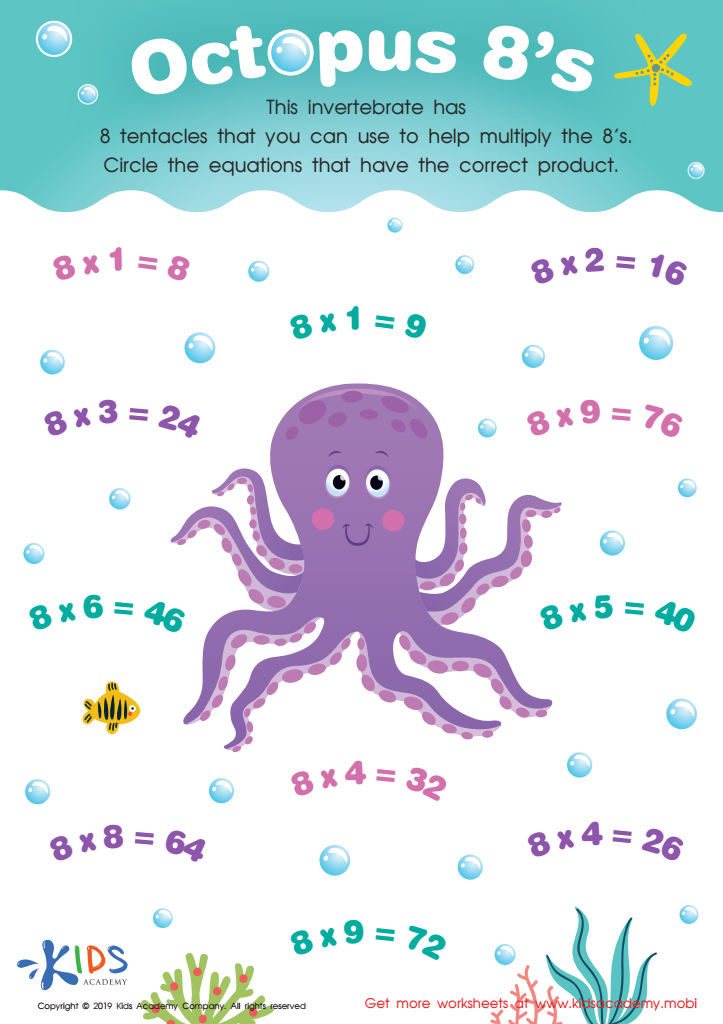
Octopus 8’s Worksheet
 Assign to My Students







Understanding symmetry is fundamental for children aged 7-8 because it plays a crucial role in their cognitive development and learning processes. Symmetry is not only a mathematical concept but also an essential part of everyday life, from nature to architecture. Introducing children to symmetry helps them develop critical thinking and spatial awareness skills.
Firstly, grasping the idea of symmetry supports children in understanding the balance and proportionality in objects, which is vital for fields like art and geometry. Recognizing symmetry helps in pattern recognition, which is foundational for problem-solving skills.
Secondly, learning about symmetry can enhance children's observational skills. Through activities like identifying symmetrical shapes or creating symmetrical drawings, kids learn to pay attention to detail, fostering a sense of precision and organization.
Additionally, understanding symmetry enables children to make connections across various subjects, including math, science, and art. This interdisciplinary approach can make learning more engaging and meaningful, sparking curiosity and promoting a love for learning.
Lastly, symmetry has cultural aspects as well. Many cultural patterns and designs are symmetrical, helping kids develop an appreciation for diversity and heritage. By recognizing and appreciating symmetry, children can better understand the world around them, laying a strong foundation for more advanced studies in the future.








