Understanding water cycle Worksheets for Ages 7-8
3 filtered results
-
From - To
Help your 7-8-year-old master the basics of the water cycle with our engaging worksheets! Designed specifically for this age group, our printable activities break down the stages of the water cycle—evaporation, condensation, precipitation, and collection—into easy-to-understand concepts. With colorful illustrations and fun exercises, these worksheets will captivate young minds while they learn the science behind this essential natural process. Perfect for classroom use or at-home enrichment, our understanding water cycle worksheets make learning interactive and enjoyable. Visit Kids Academy today to download and enhance your child's science skills!
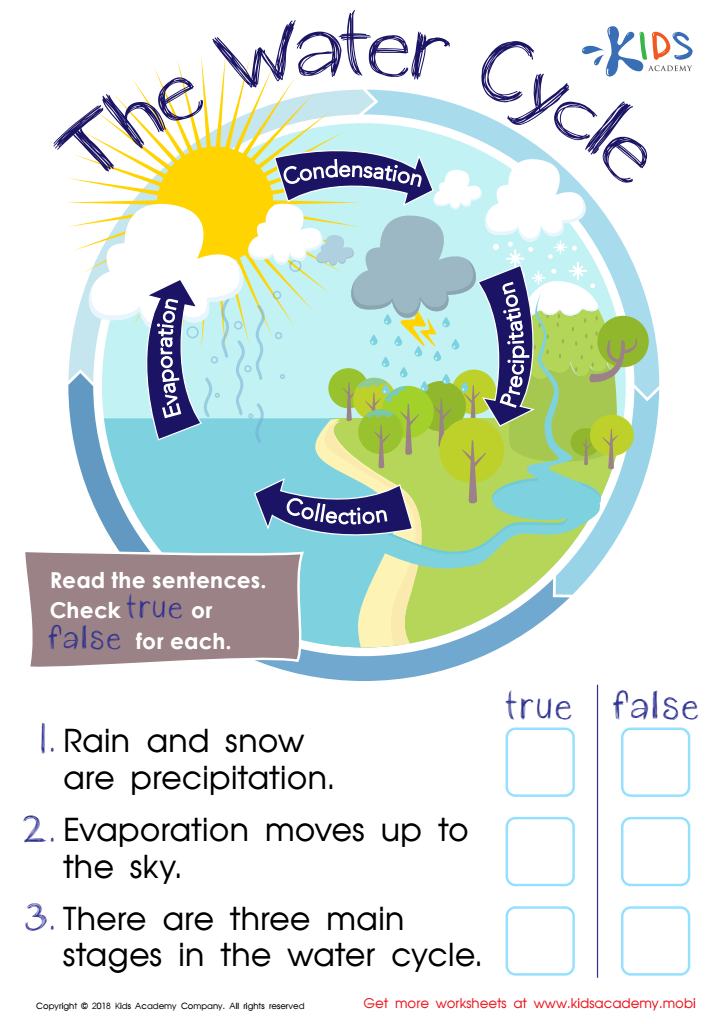
The Water Cycle Worksheet
 Assign to My Students
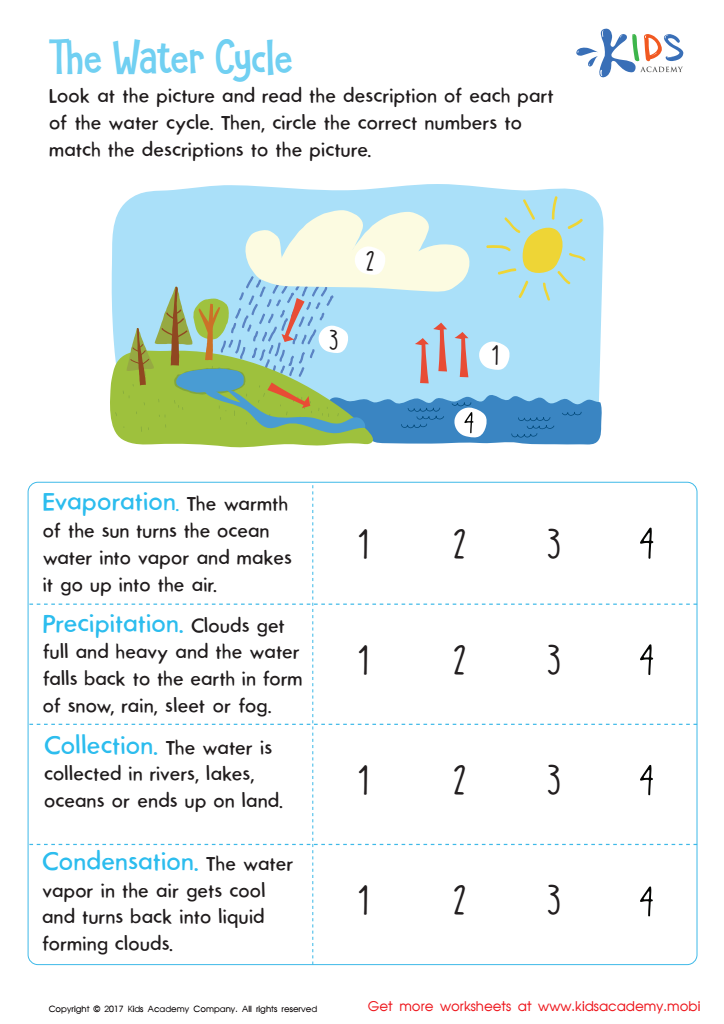
The Water Cycle Worksheet
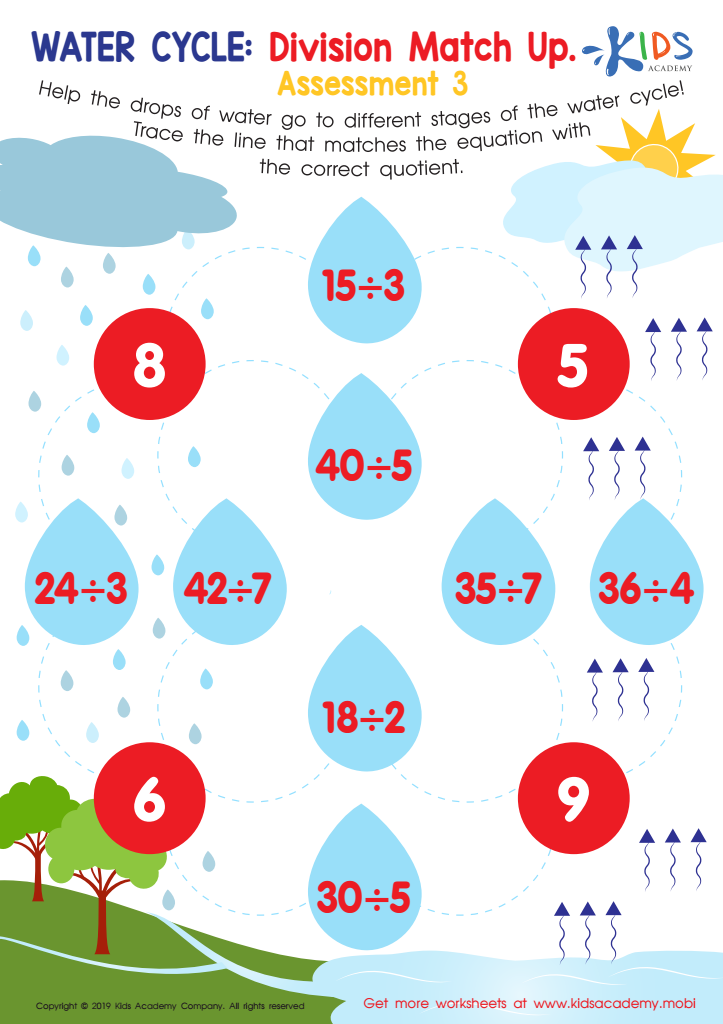
Water Cycle Division Match Up Assessment 3 Worksheet







Understanding the water cycle is essential for young learners, and it's crucial for parents and teachers to prioritize this concept for children aged 7-8. At this developmental stage, children are beginning to make sense of the world around them, and the water cycle is a key natural process that influences many aspects of their daily lives. By grasping the basics of how water evaporates, condenses, and precipitates, children can better appreciate the importance of water conservation and the environment.
Teaching the water cycle lays the foundation for scientific literacy. It helps children to understand weather patterns, plant growth, and the vital role water plays in sustaining life on Earth. Additionally, this knowledge can foster curiosity and a sense of responsibility. For instance, learning about how rain forms and why we need clean water can inspire young minds to think critically about ecology and their own water usage.
Moreover, engaging lessons on the water cycle often include hands-on activities like experiments, model-making, and outdoor observations, which make learning fun and interactive. This not only solidifies their understanding but also enhances essential skills such as observation, critical thinking, and problem-solving. Therefore, investing time in teaching and understanding the water cycle early on benefits children's educational development and awareness of environmental stewardship.








