Visual-motor skills Worksheets for Ages 7-8
3 filtered results
-
From - To
Enhance your child's hand-eye coordination and fine motor abilities with our Visual-Motor Skills Worksheets for ages 7-8 from Kids Academy. These expertly crafted activities integrate fun with fundamental exercises to promote visual tracking, spatial awareness, and accurate movement. Each worksheet is designed to challenge children's precision using engaging tasks such as tracing, drawing, and puzzles, thus boosting their overall academic performance and confidence. Perfect for home or classroom use, our sheets offer a diverse and entertaining way to develop critical skills essential for everyday life. Empower your child today with these vital learning tools!
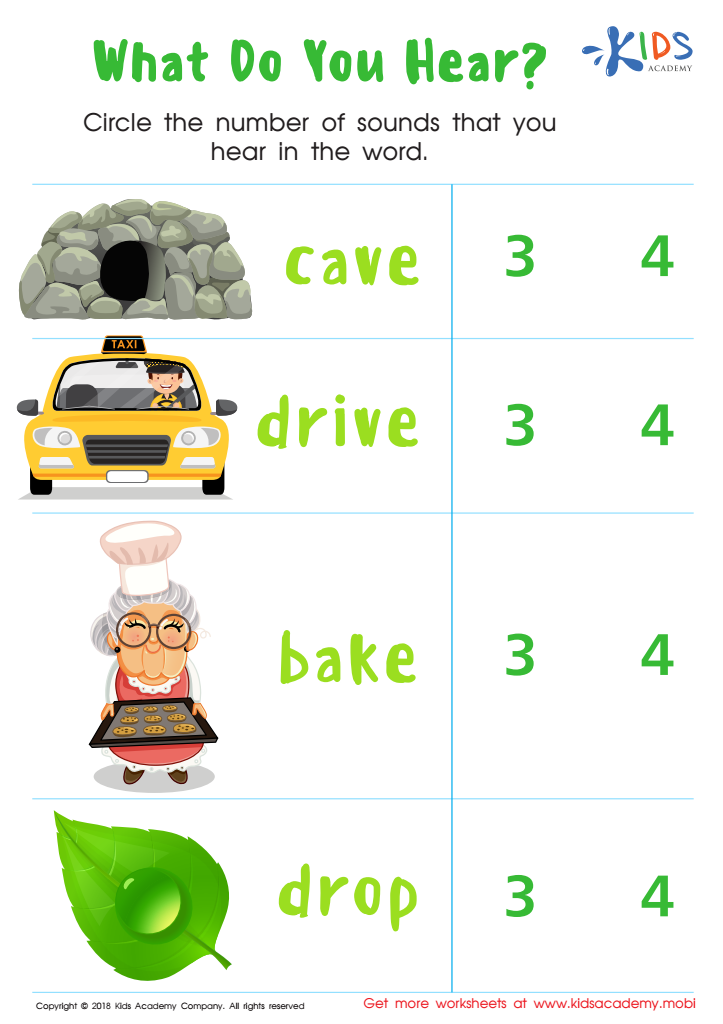
What Do You Hear? Worksheet
 Assign to My Students
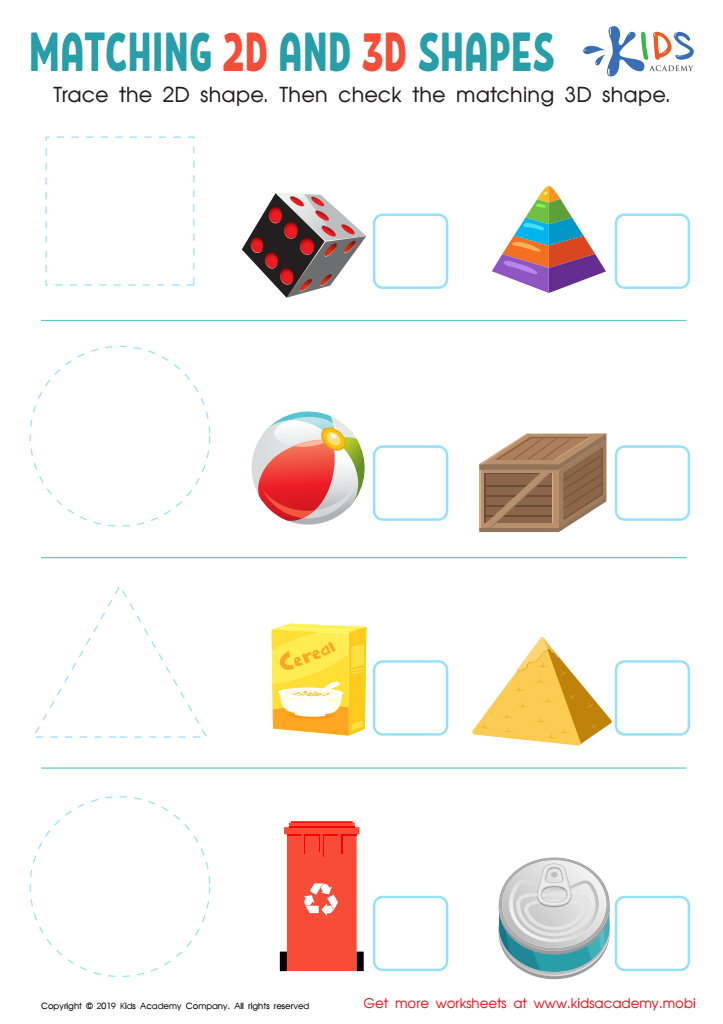
Matching 2D and 3D Shapes Worksheet
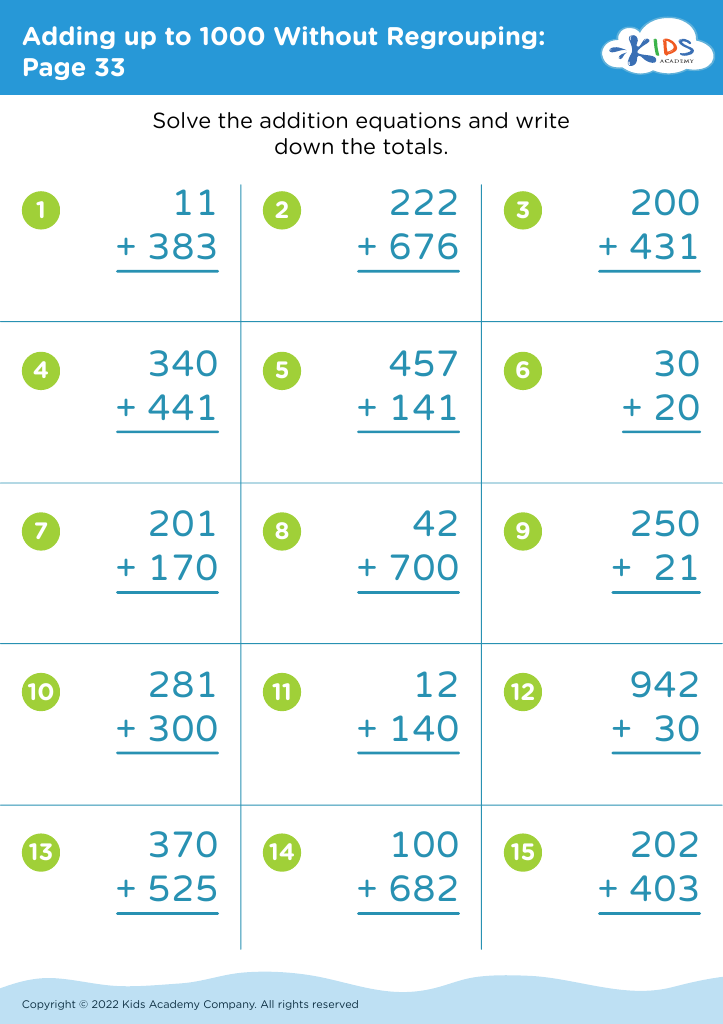







Visual-motor skills, including hand-eye coordination, are crucial for children aged 7-8 as they significantly impact their academic and daily activities. These skills allow kids to synchronize their visual perception with fine motor actions, which is essential for completing classroom tasks such as writing, cutting with scissors, and drawing. Proficient visual-motor skills enhance a child's ability to form letters correctly, adhere to lines while writing, and align numbers in math problems, thereby directly influencing their academic success.
Beyond academics, these skills are integral to everyday self-care tasks like tying shoelaces, buttoning clothes, and using utensils. Participation in sports and recreational activities also relies heavily on visual-motor coordination, affecting a child's physical health and social interactions. Developing these skills early can prevent potential frustration and boost self-esteem, enabling smoother overall growth.
A focus on visual-motor skill development is also linked to better time management and organizational abilities. By engaging in games, puzzles, and age-appropriate activities that challenge and enhance these skills, parents and teachers lay a foundation for well-rounded development—helping children achieve greater success and independence in both academic and personal spheres.








