
Visual representation Worksheets for Ages 7-8
3 filtered results
Difficulty Level
Grade
Age
-
From - To
Subject
Activity
Standards
Enhance your child's learning with our Visual Representation Worksheets designed for ages 7-8. These engaging worksheets use creative visuals to help children grasp essential concepts in math, reading, and science. By transforming complex ideas into easy-to-understand images, charts, and diagrams, our resources make learning fun and effective. Perfect for reinforcing school lessons or boosting your child's confidence in their skills, our worksheets cater to various learning styles. As your child navigates through our meticulously designed exercises, they’ll develop critical thinking abilities and better problem-solving techniques. Unlock their full potential with our educational, visually stimulating worksheets.
Favorites
With answer key
Interactive
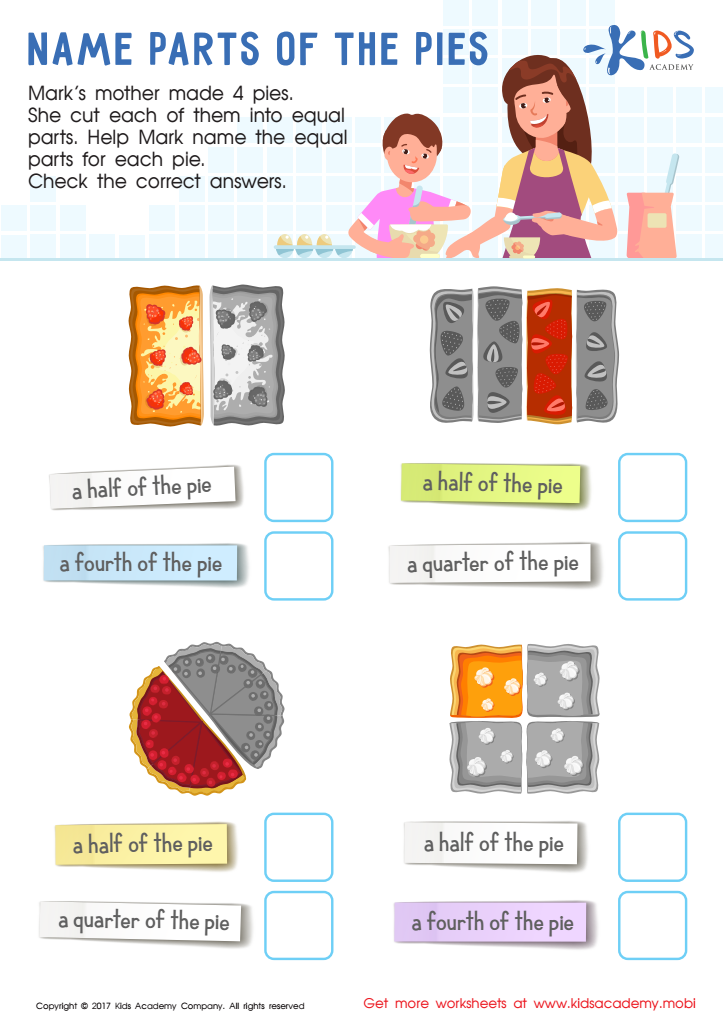
Name Parts of the Pies Worksheet
Mark and his mom are making pies. He's dividing them into equal parts and needs help to name them. Let your students aid him by checking the correct answer for each picture. Have them think of their own roles in the kitchen when they're done. How do they help their moms?
 Assign to My Students
Name Parts of the Pies Worksheet
Worksheet
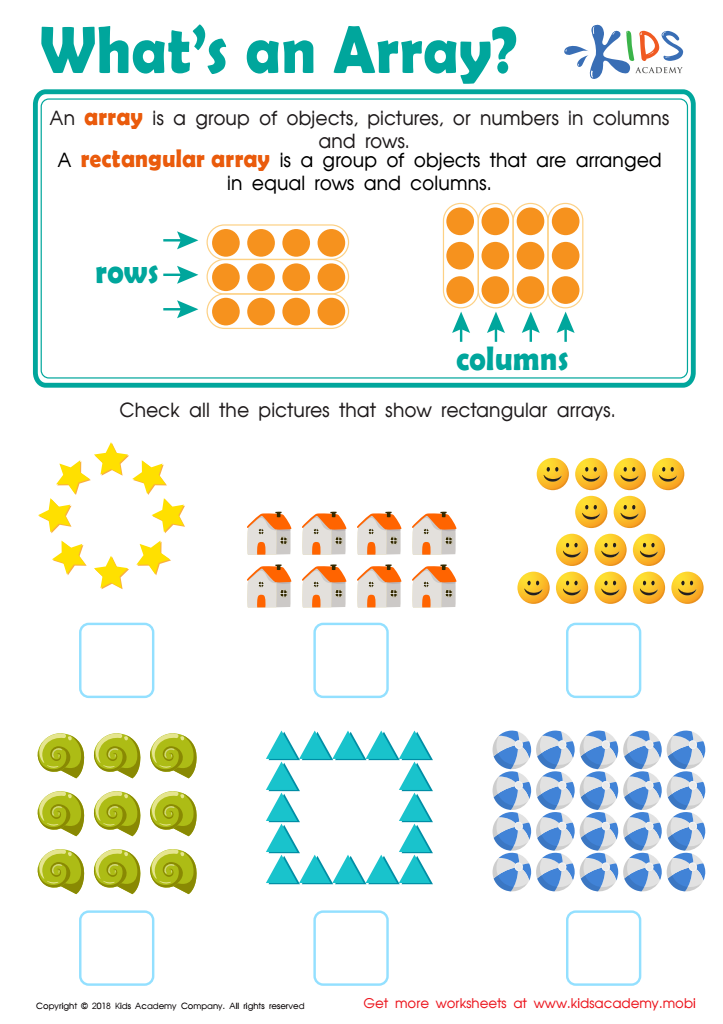
What's an Array? Worksheet
Explain to your child that an array is a group of objects, pictures, or numbers in columns and rows. Show them a rectangular array is a group of objects in equal rows and columns. Guide them to check the pictures in the worksheet to spot any rectangular arrays. Help them remember this concept.
What's an Array? Worksheet
Worksheet
Join Kids Academy for Free
Who is primarily going to use this learning content?








Visual representation is crucial for children aged 7-8 because it significantly enhances their learning and comprehension. At this age, kids transition from concrete to more abstract thinking but still rely heavily on visual clues to understand and process information. Visual aids, like pictures, diagrams, charts, and videos, make abstract concepts more concrete. This is vital because young children's cognitive development flourishes through sensory experiences—what they can see and touch.
For parents and teachers, using visual representations can keep children engaged and motivated. Bright visuals can make learning more enjoyable, capturing their attention far better than text alone. For example, a pie chart can make proportions and fractions easier to grasp than numerical explanations. This kind of representation fosters better retention and recall because children are more likely to remember colorful and engaging images.
Moreover, visuals support language development. Picture books and illustrated stories can promote better word association and comprehension, bridging the gap between spoken and written language. They also cater to varied learning styles. Some children may struggle with verbal instructions but excel when given visual information, making inclusive education more achievable. Teachers and parents can identify learning challenges earlier, thanks to children's responses to visual tasks. By integrating visuals into their learning toolkit, adults can lay a more solid foundation for children's educational journeys, ensuring they comprehend, enjoy, and retain essential knowledge.








