Word association Worksheets for Ages 7-8
7 filtered results
-
From - To
Engage young learners aged 7-8 with our fun and interactive word association worksheets! Designed to enhance vocabulary, critical thinking, and language skills, these worksheets provide a delightful way for children to connect words through exciting activities. Each worksheet encourages creativity and cognitive development while keeping learning enjoyable. Kids will explore synonyms, antonyms, and word categories, helping them build a robust language foundation. Perfect for classroom use or at-home practice, our worksheets not only foster independent thinking but also promote collaboration and discussion among peers. Download and inspire your child’s love for language today with our engaging resources!
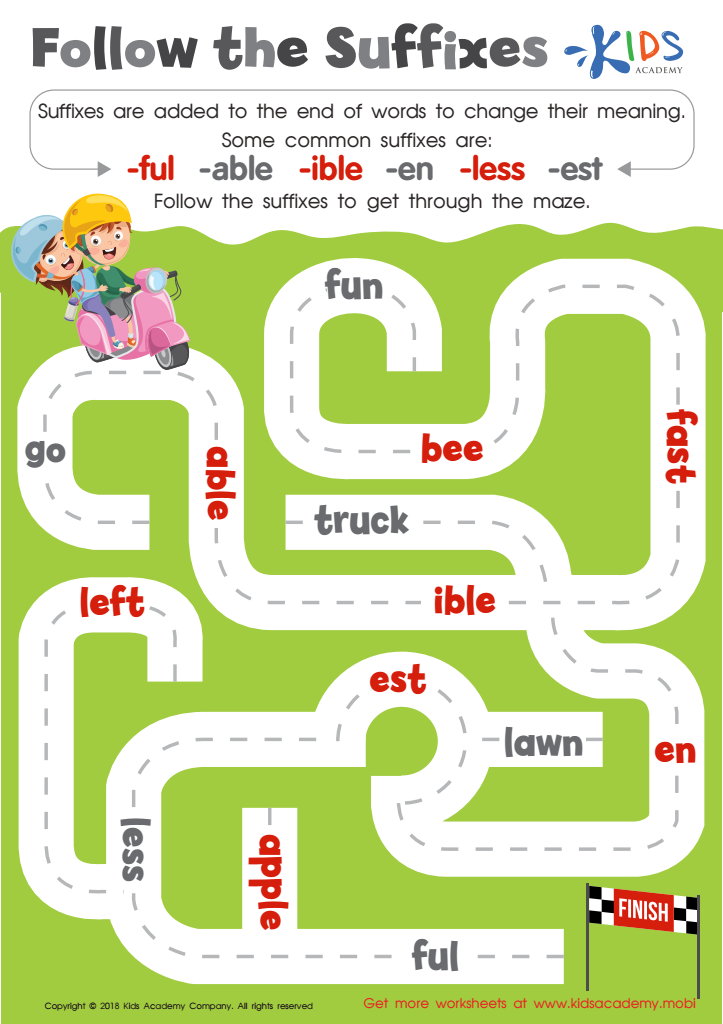
Reading: Follow the Suffixes Worksheet
 Assign to My Students
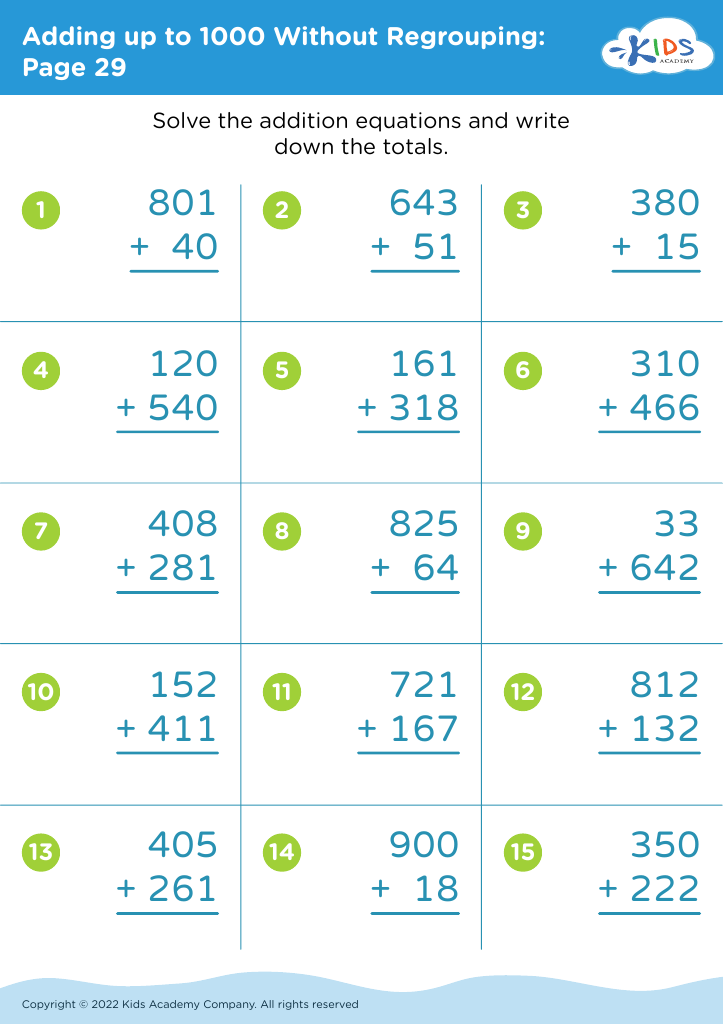
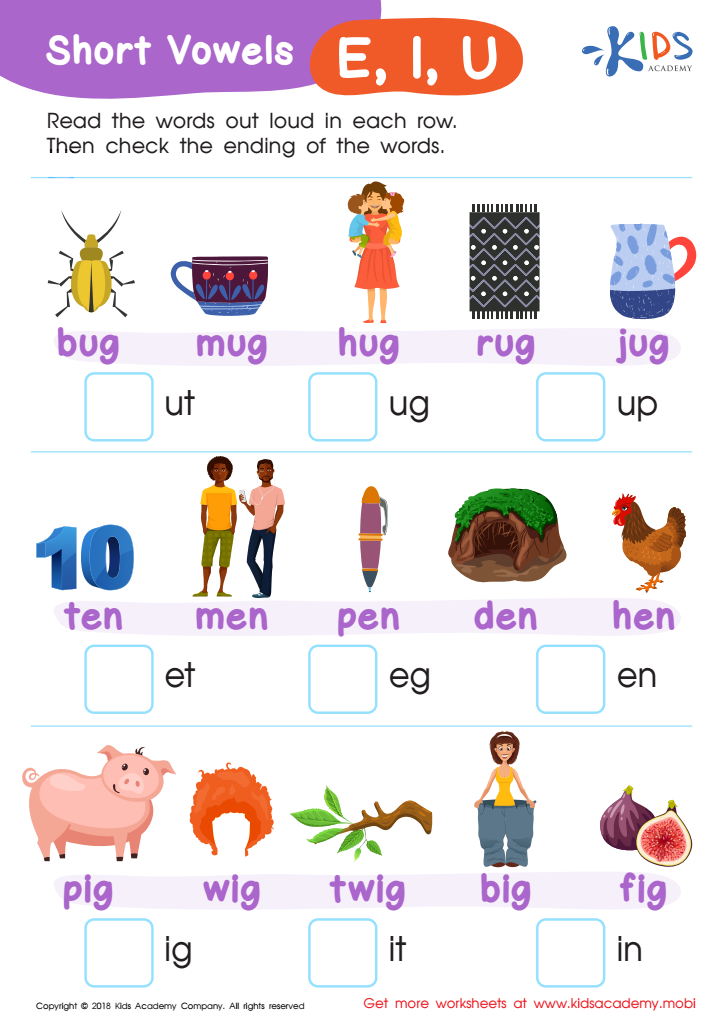
Short Vowels /e/, /i/, and /u/ Worksheet
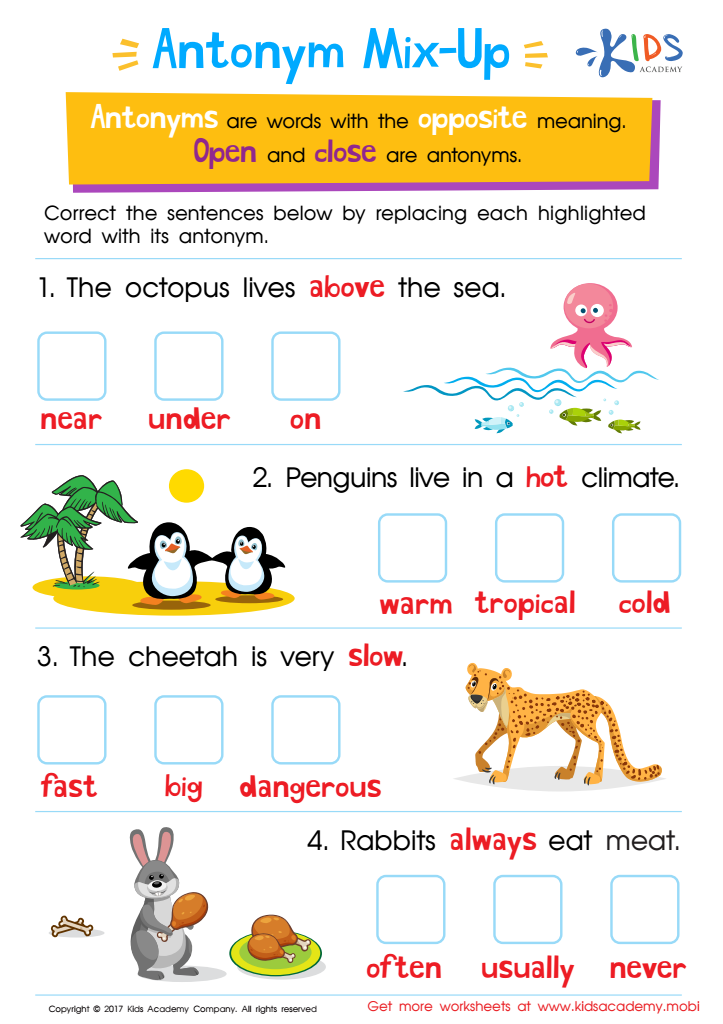
Vocabulary Antonyms Worksheet
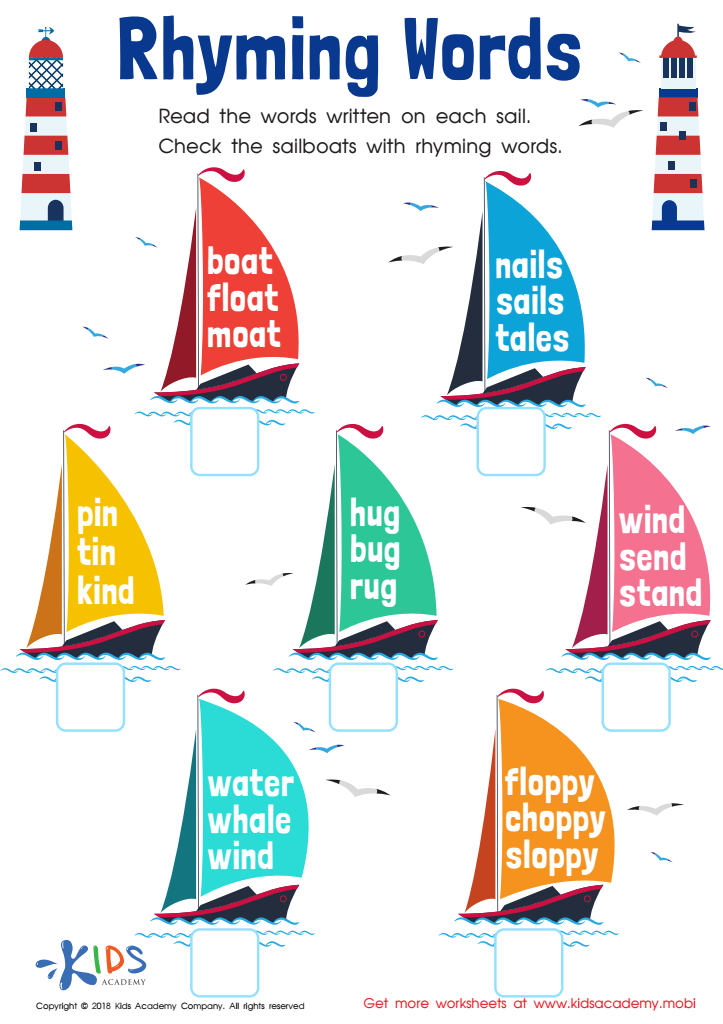
Rhyming Words Worksheet
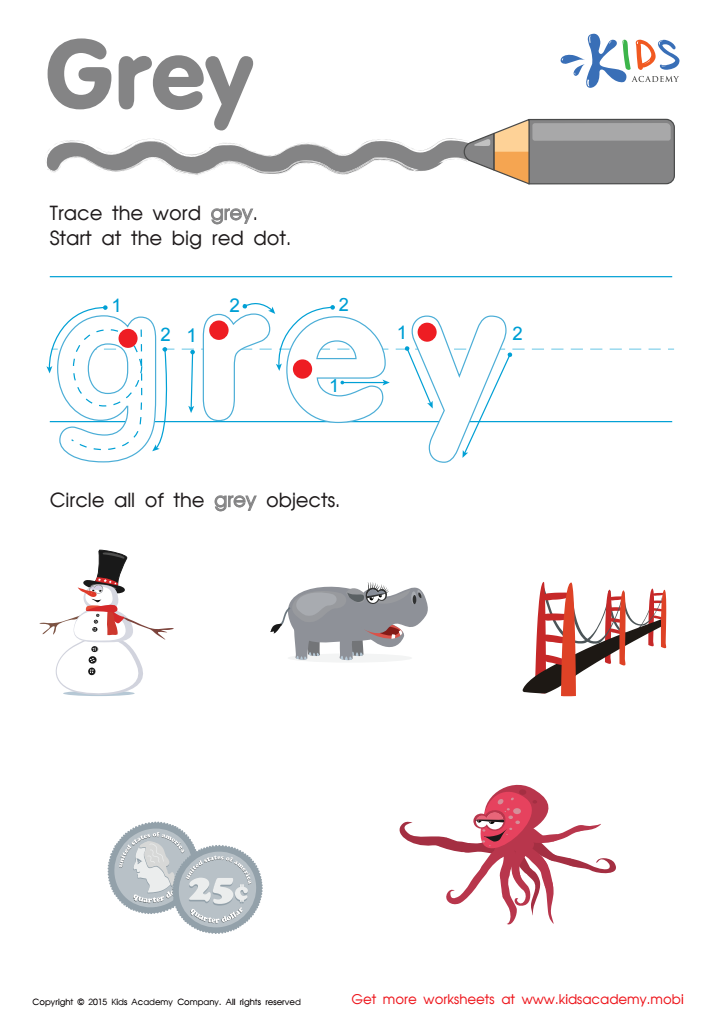
Grey Tracing Color Words Worksheet



.jpg)




Word association is a powerful tool for children aged 7-8 as it enhances language development, cognitive skills, and emotional intelligence. During this critical stage, children's vocabulary is rapidly expanding, and engaging in word association offers a fun way to introduce new terms and concepts.
When parents and teachers encourage word association activities, they stimulate critical thinking. Associating words allows children to make connections between ideas, enhancing their comprehension abilities. This practice not only builds vocabulary but also strengthens creative thinking, as kids learn to think outside the box in connecting various concepts.
Moreover, word association contributes to social-emotional development. Discussing and sharing word associations fosters collaboration, communication skills, and an understanding of diverse perspectives among peers. It creates opportunities for parents and teachers to engage meaningfully with children, thereby promoting a positive learning environment.
Incorporating word association into reading sessions, creative storytelling, or daily conversations enriches the learning experience and empowers children to express themselves more effectively. Overall, parents and teachers should prioritize word association as it lays a foundation for academic success and enhances interpersonal skills, instilling confidence in young learners as they navigate a world rich with language.








