Fraction comparison Adding 2-digit Numbers Worksheets for Ages 7-8
3 filtered results
-
From - To
Discover our engaging "Fraction Comparison Adding 2-Digit Numbers Worksheets" designed for 7-8-year-olds! These worksheets uniquely combine the concepts of fraction comparison and addition of two-digit numbers, fostering essential math skills in young learners. Children will develop their critical thinking and problem-solving abilities as they compare fractions and practice addition simultaneously. Each worksheet is designed with vibrant visuals and age-appropriate challenges to keep students motivated and excited about learning. Ideal for classroom use or home study, these resources provide valuable practice to help your child build confidence and proficiency in math. Get started today to support your child’s academic journey!
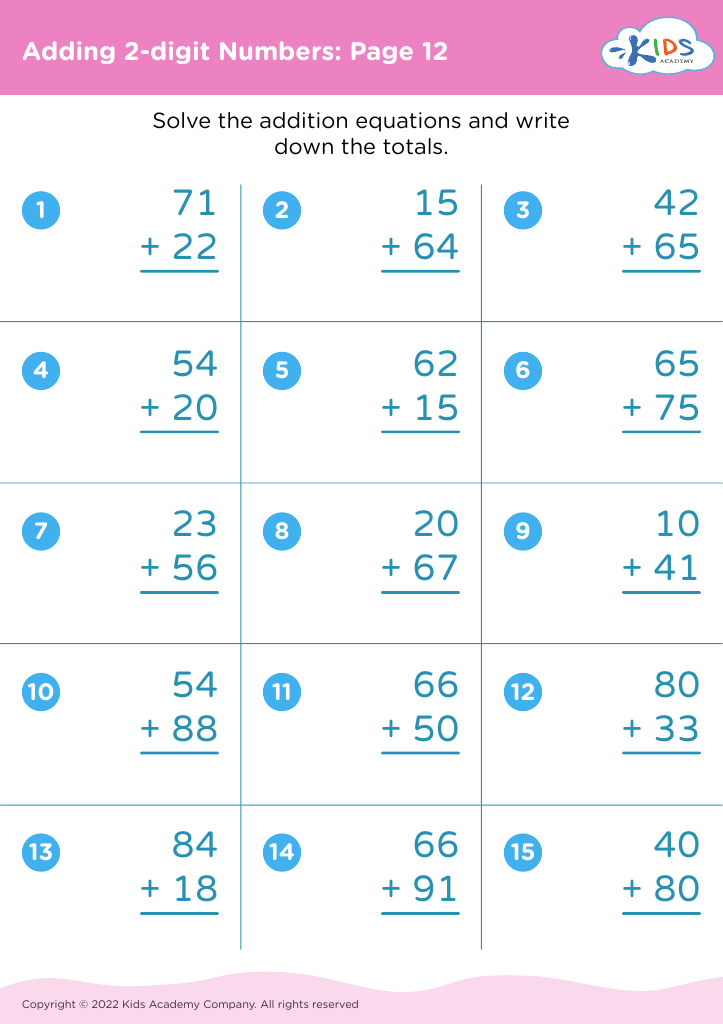
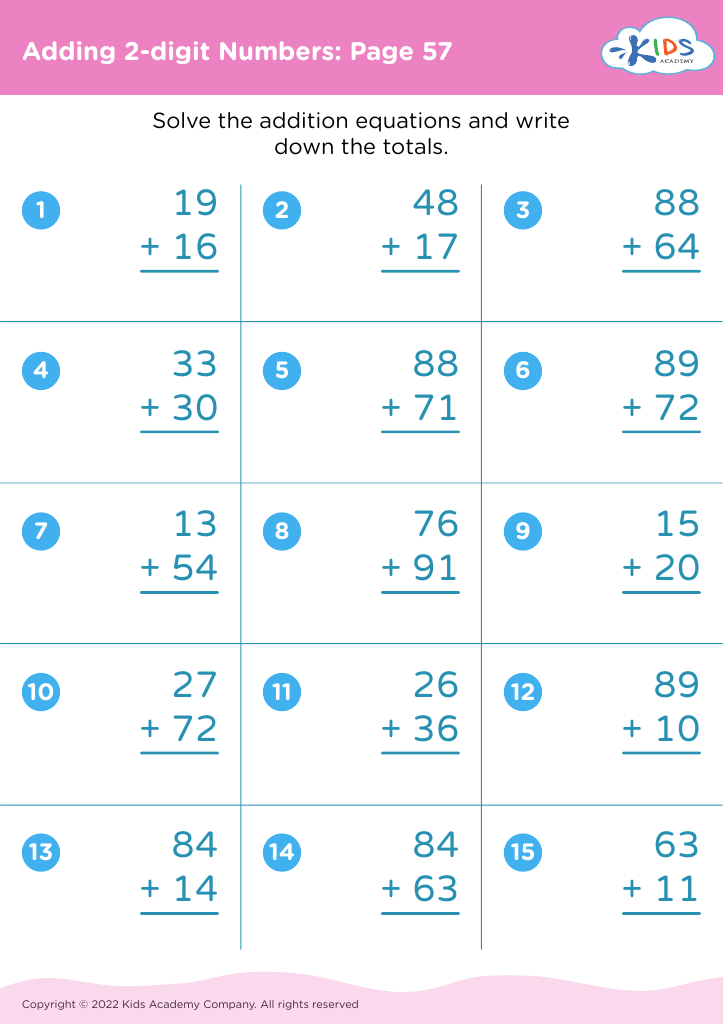
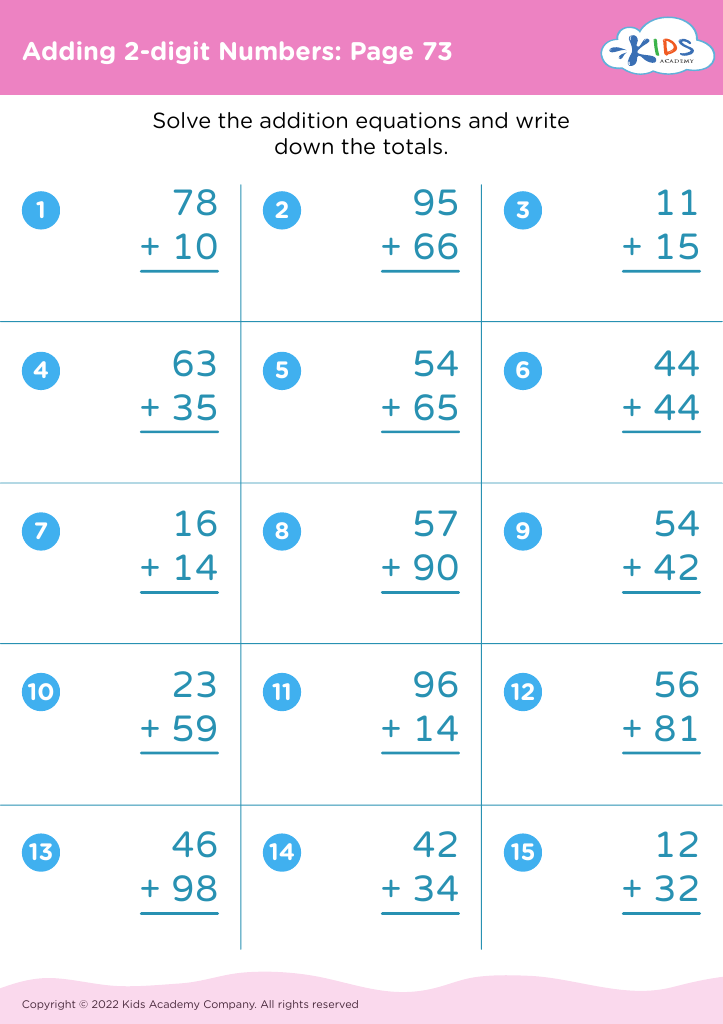








Parents and teachers should prioritize teaching fraction comparison and addition of 2-digit numbers to children aged 7-8 because these foundational math skills directly support future learning and real-life applications. Understanding fractions helps children make sense of parts of a whole, which is essential in subjects like science, cooking, or budgeting. As they compare fractions, they develop critical thinking, reasoning, and problem-solving skills, enabling them to tackle more complex math concepts later on.
Adding 2-digit numbers enhances children’s arithmetic proficiency, builds their confidence, and prepares them for more advanced operations like subtraction and multiplication. Mastery in these areas prepares students for standardized tests and lifelong learning experiences.
Furthermore, fostering mathematical literacy at this age contributes to academic success across various subjects. Engaging parents in this process also strengthens home-school connections, allowing families to support their child's learning journey effectively. By instilling a positive attitude towards math during these formative years, we can create confident learners who embrace challenges and enjoy exploring mathematical concepts. In summary, focusing on these skills equips children with vital tools for success in school and beyond.








