Develop fine motor skills Adding up to 100 Misc Worksheets for Ages 7-8
4 filtered results
-
From - To
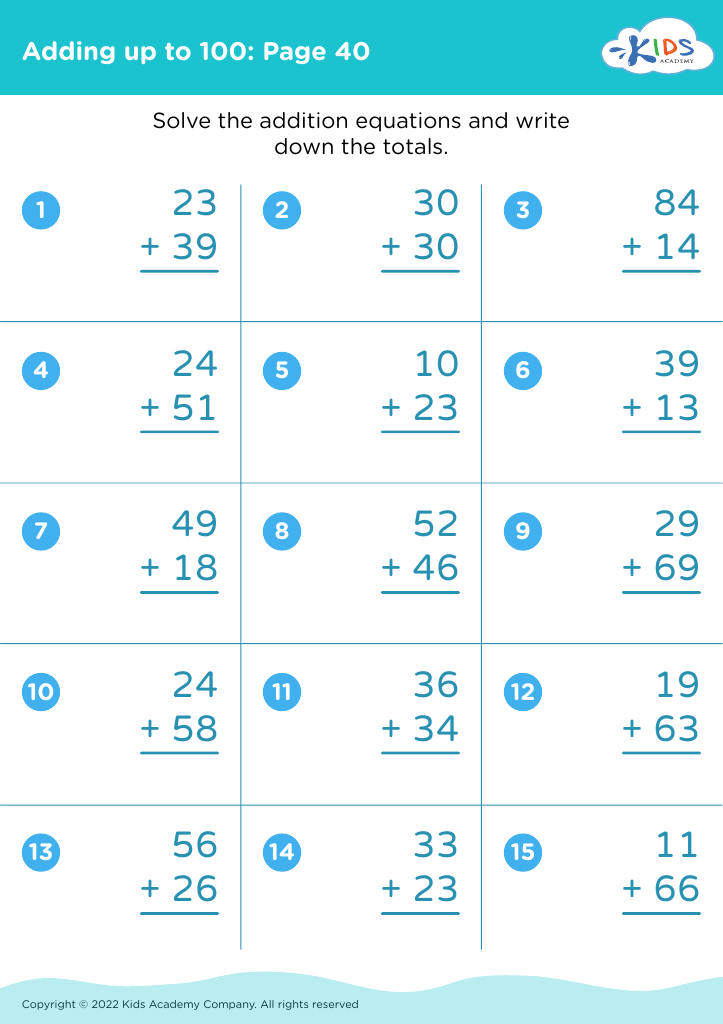
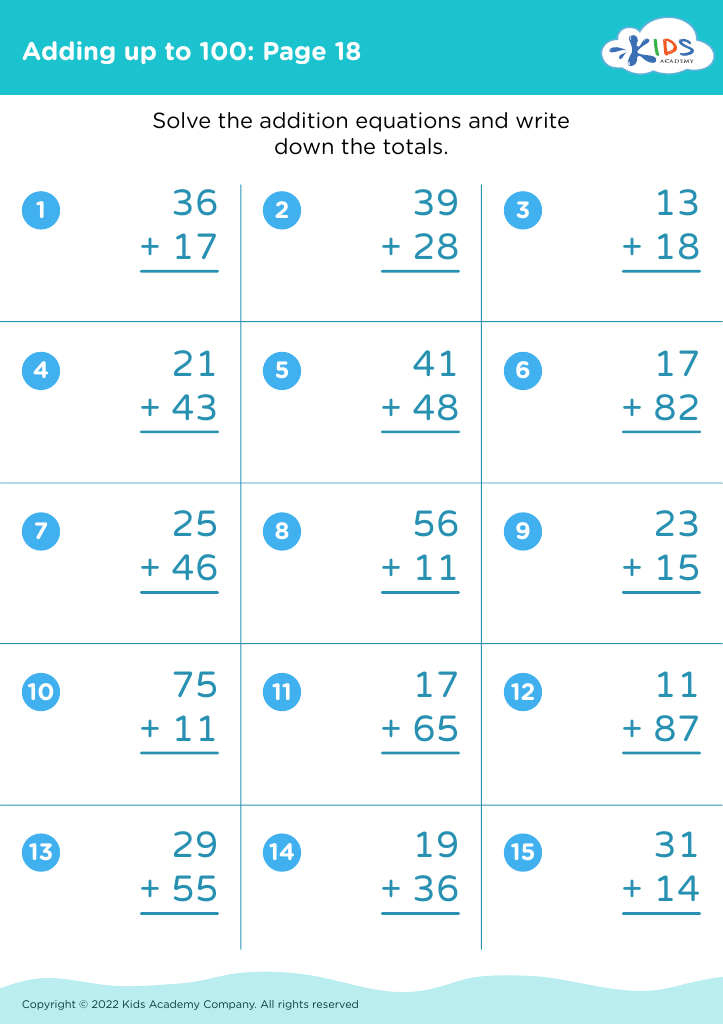
Enhance your child's fine motor skills while they master math with our "Adding up to 100 Misc Worksheets" for ages 7-8. These engaging worksheets are designed to combine essential math practice with activities that promote hand-eye coordination, dexterity, and control. As your child navigates through enjoyable exercises, they will not only improve their addition skills but also strengthen their pencil grip and finger movements. Our resources are perfect for home learning or classroom use, providing a well-rounded approach to education. Start fostering both math proficiency and fine motor development today! Explore our collection to support your child's growth effectively.
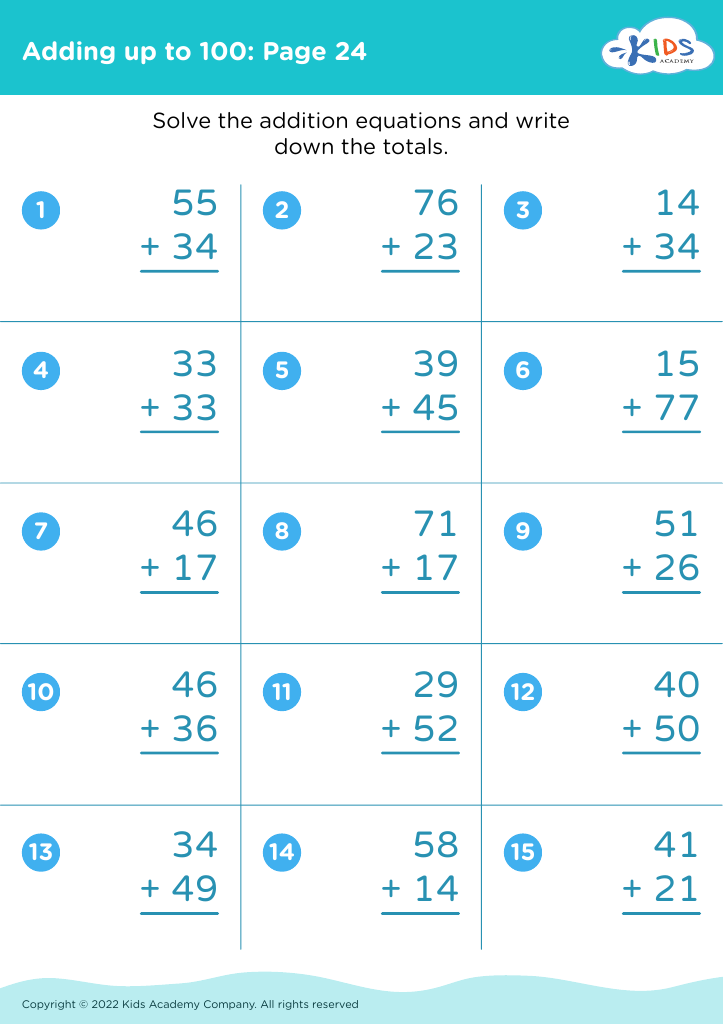
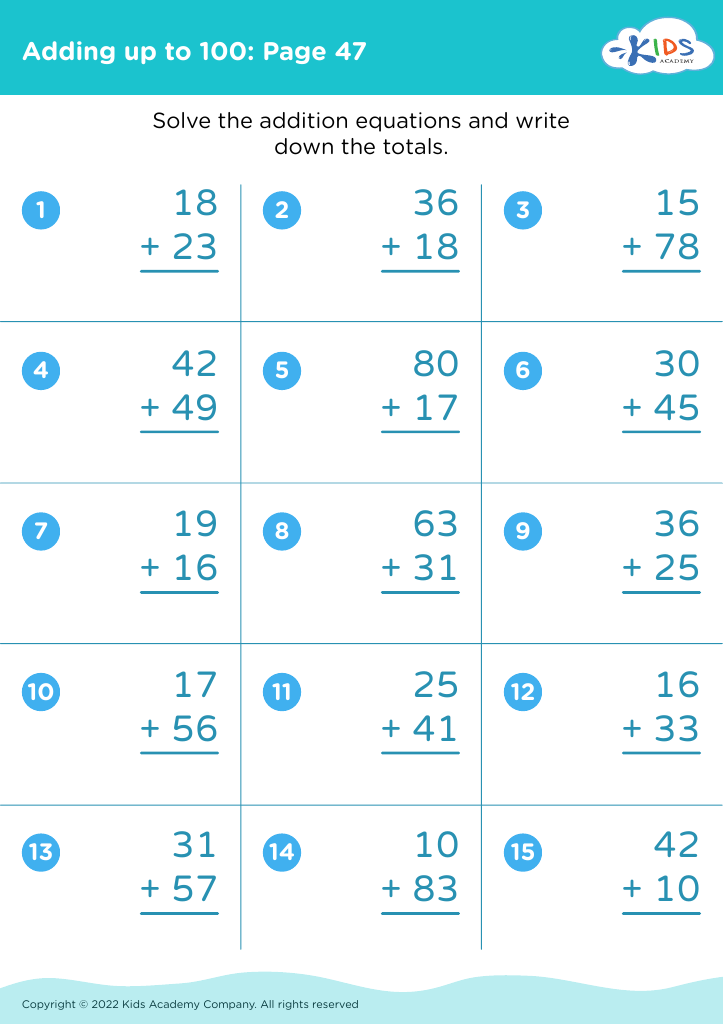


Developing fine motor skills is crucial for children aged 7-8, as these skills are foundational for academic success, confidence, and overall development. Fine motor skills involve the small muscles in the hands, fingers, and wrists which are essential for tasks like writing, drawing, and manipulating small objects. These abilities come into play in various subjects, as children engage in handwriting, art projects, and even science experiments.
Parents and teachers should prioritize fine motor skill development because these skills contribute to a child's ability to express themselves effectively. As children learn to write legibly, they can convey their thoughts and understanding more clearly. Furthermore, fine motor skills play a significant role in building cognitive skills. Engaging in activities that enhance these skills fosters problem-solving abilities and enhances focus and concentration.
Additionally, developing fine motor skills can boost a child's self-esteem. When they master tasks that require precision, they experience a sense of accomplishment. These skills also have long-term benefits, as they lay the groundwork for more complex tasks in later years, such as using technology competently or engaging in sports. Overall, nurturing fine motor skills is a vital investment in a child's future academic and personal success.