Fine Motor Skills Adding up to 100 Misc Worksheets for Ages 7-8
5 filtered results
Difficulty Level
Grade
Age
-
From - To
Subject
Activity
Standards
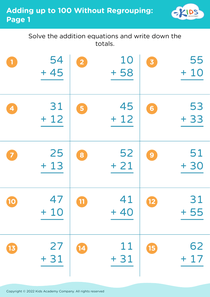
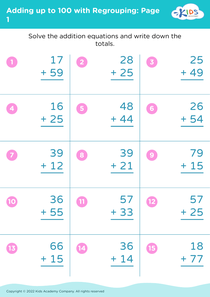
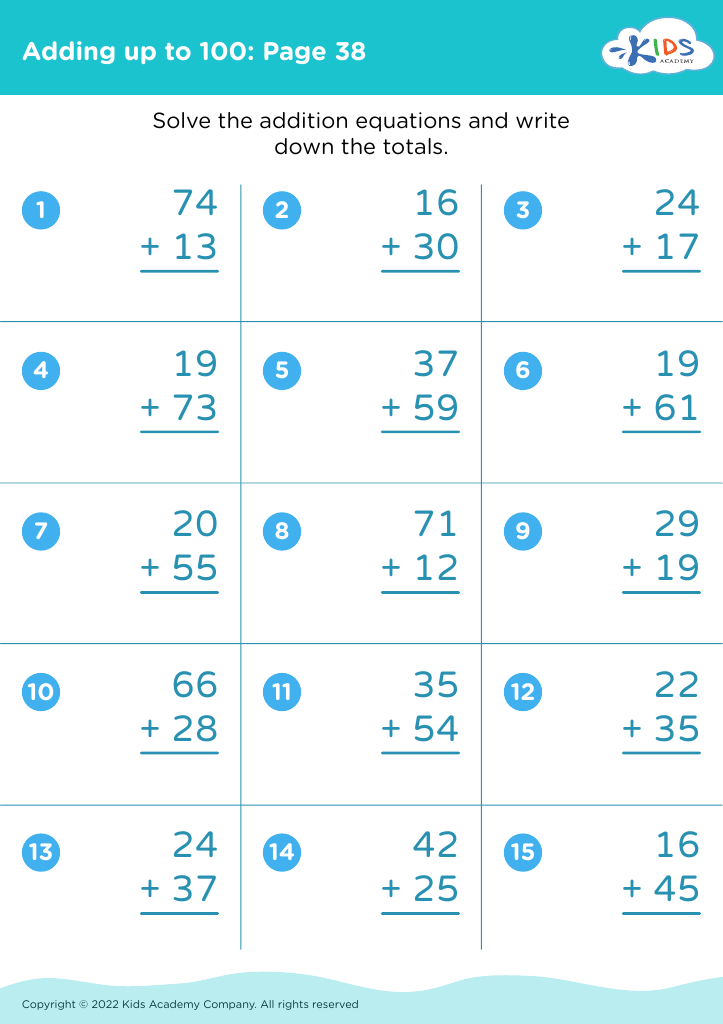
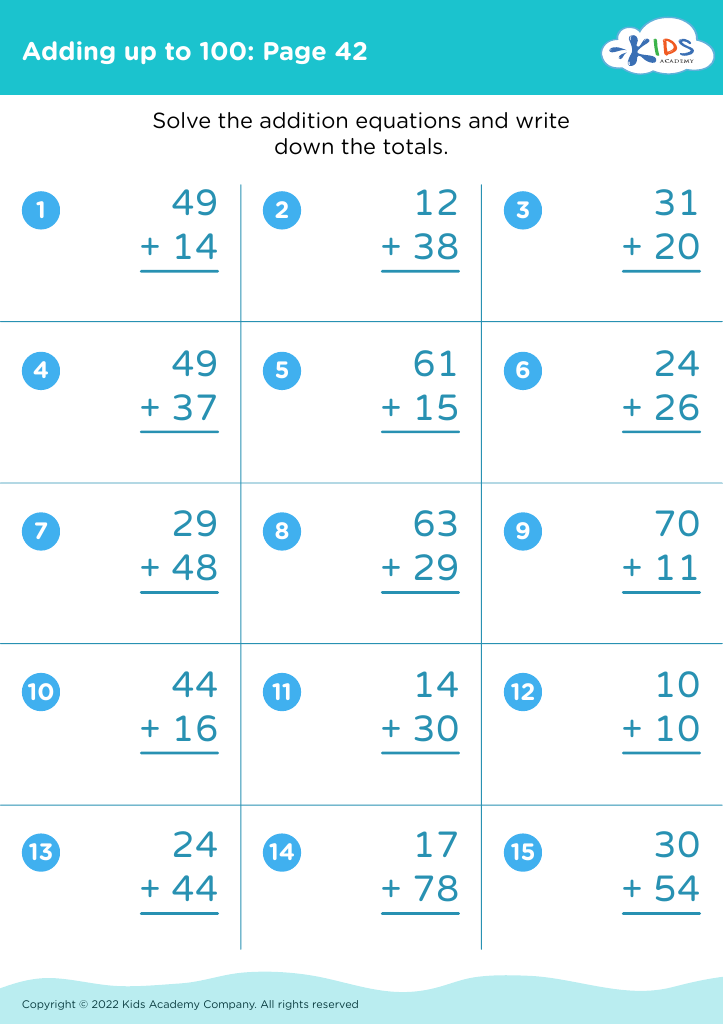
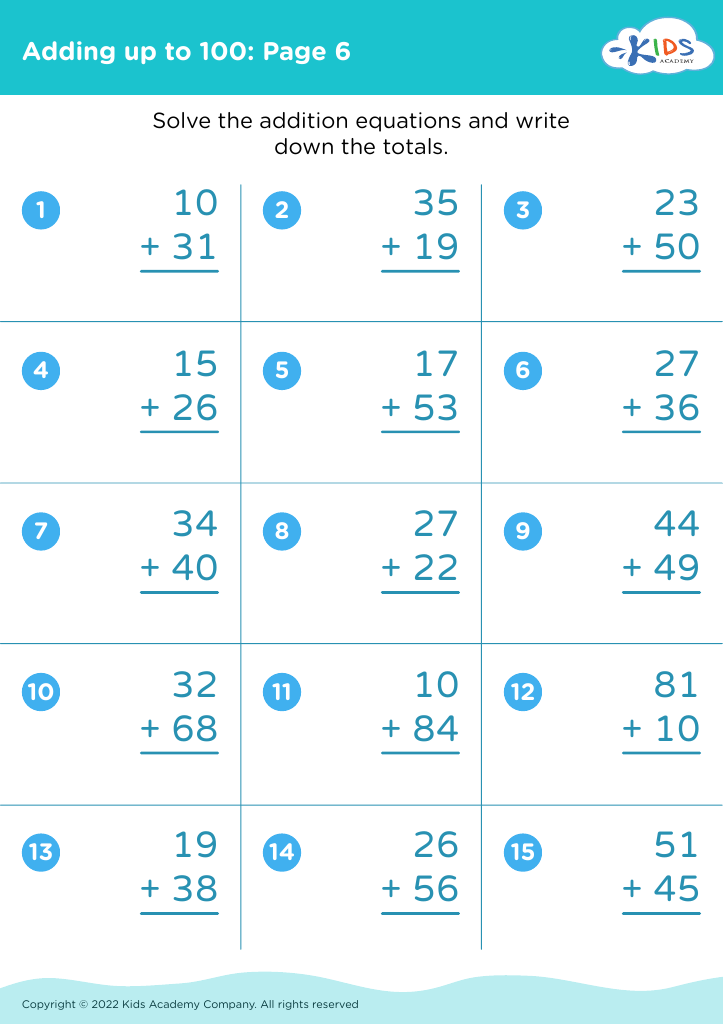
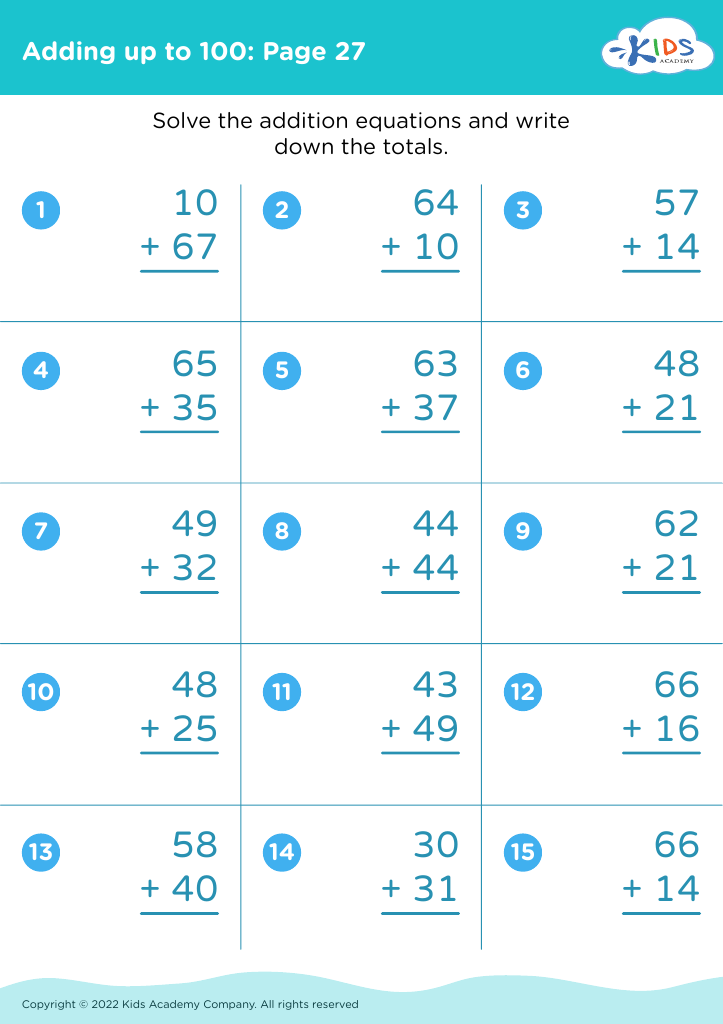
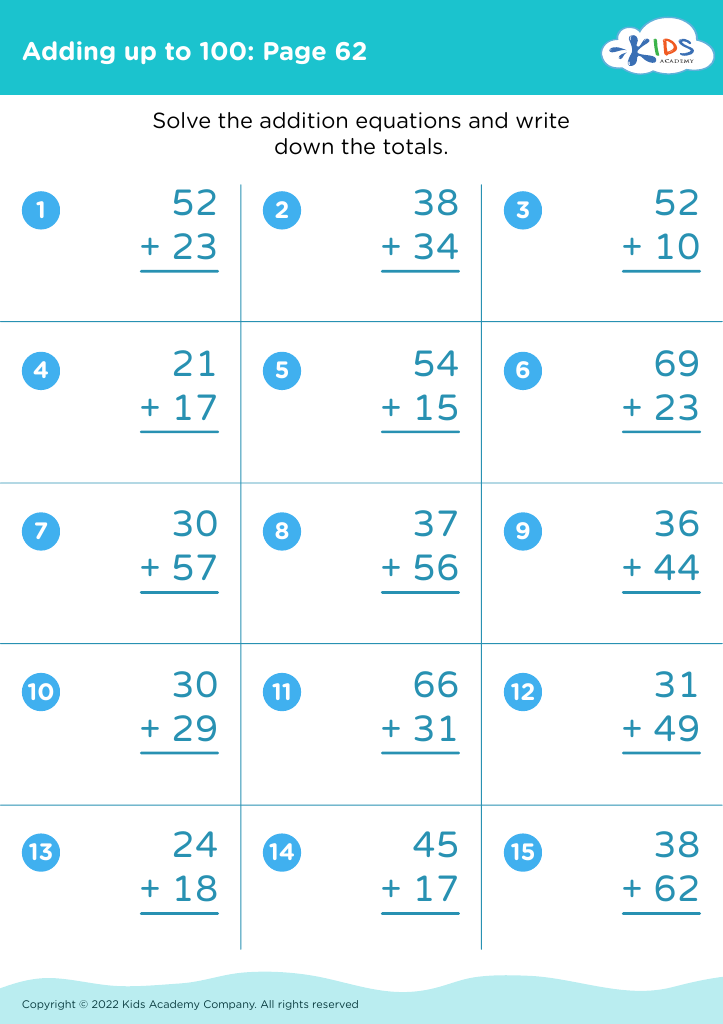
Welcome to our engaging collection of "Fine Motor Skills Adding up to 100 Misc Worksheets" tailored for children ages 7-8! This delightful assortment is designed to reinforce essential math concepts while promoting the development of fine motor skills. Each worksheet offers a variety of fun and interactive activities centered around adding numbers up to 100, perfect for enhancing your child's precision and control. Mixing joy with learning, these worksheets make practicing math enjoyable and effective. Ideal for home use or classrooms, they are perfect for boosting confidence and improving writing dexterity. Download now to inspire your child on their educational journey!
Favorites
With answer key
Interactive
Join Kids Academy for Free
Who is primarily going to use this learning content?


Fine motor skills are essential for a child’s development and learning, particularly for those aged 7-8, which is a critical period for refining these abilities. Parents and teachers should care about these skills because they are foundational for a variety of daily tasks and academic skills.
Firstly, fine motor skills involve the coordination of small muscles in the hands and fingers, enabling children to manipulate objects with precision. This is vital not only for handwriting but also for arts and crafts, tying shoelaces, using utensils, and other self-care skills.
In an academic setting, well-developed fine motor skills contribute to better participation in classroom activities, boosting a child's confidence and independence. Research indicates that children with stronger fine motor abilities tend to perform better in school, especially in subjects that require writing and drawing.
Furthermore, engaging in fine motor activities fosters cognitive development, fostering problem-solving skills and creativity. Activities like cutting, coloring, and building can make learning fun and interactive.
By supporting and promoting fine motor skill development, parents and teachers nurture a child's overall growth, enabling them to become more competent and self-sufficient as they progress in their education and daily lives.