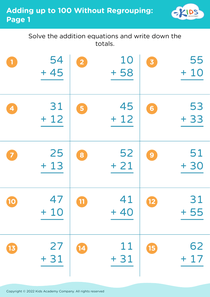
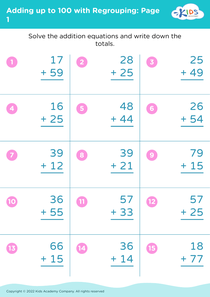
Improve number recognition Adding up to 100 Misc Worksheets for Ages 7-8
3 filtered results
-
From - To
Enhance your child's number recognition skills with our interactive worksheets designed for ages 7-8. Focusing on adding up to 100, these engaging and educational resources help young learners grasp fundamental math concepts through fun exercises. Whether practicing simple addition, identifying missing numbers, or solving problems, these worksheets offer a variety of challenges to boost confidence and proficiency. Ideal for classroom use or at-home learning, our practical tools support children in building a strong numerical foundation. Start your child on a path to math success with our "Improve Number Recognition Adding up to 100 Misc Worksheets."
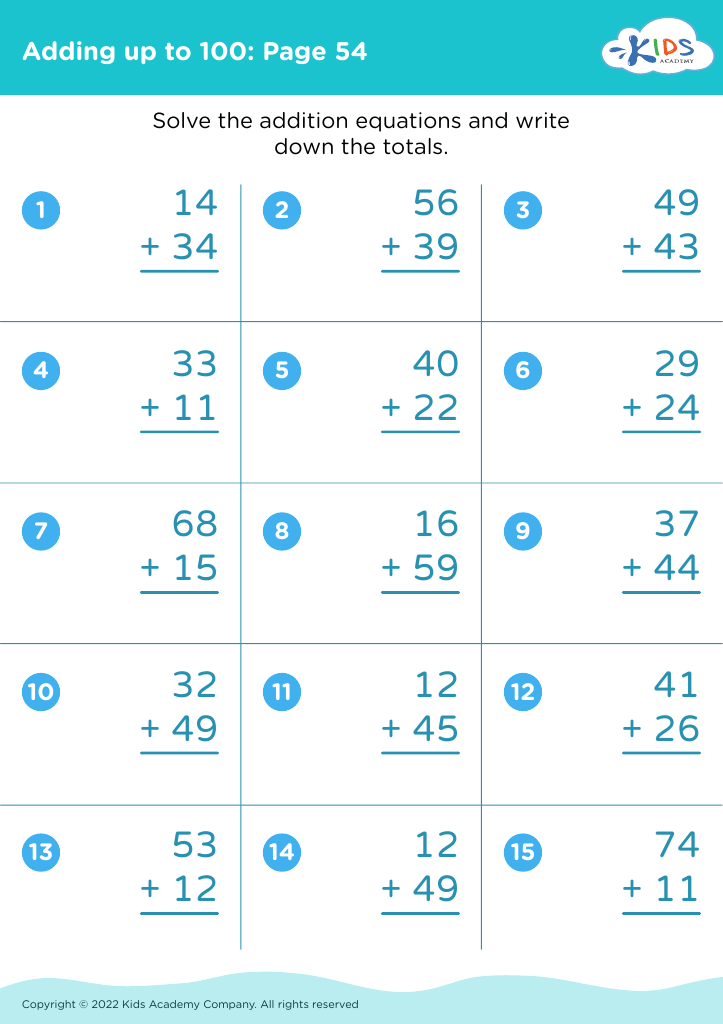
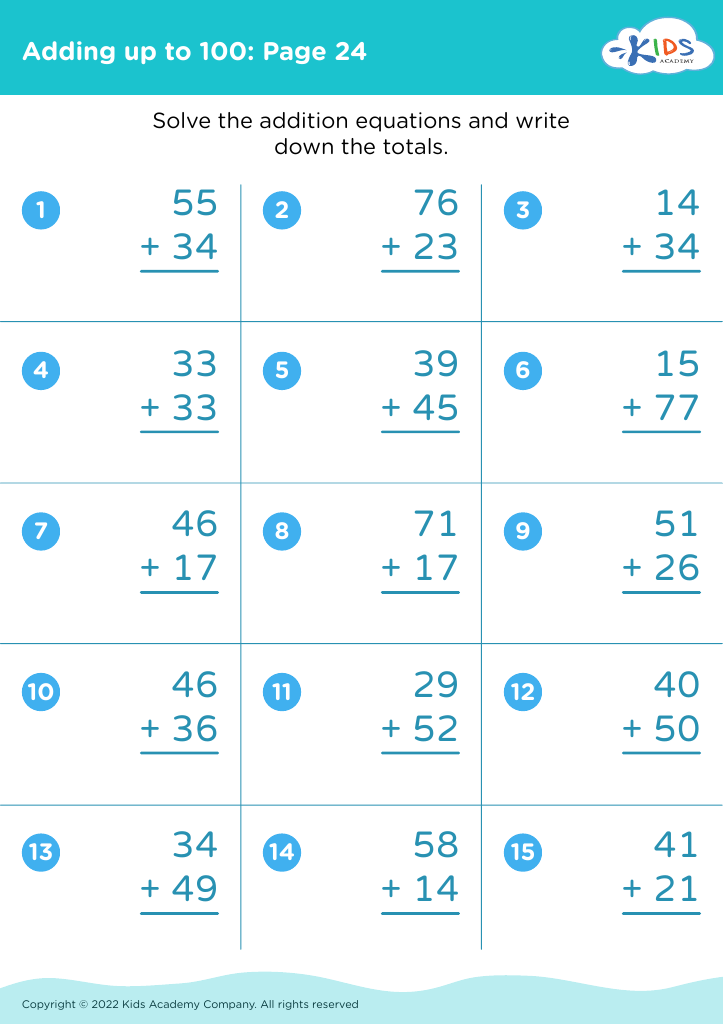
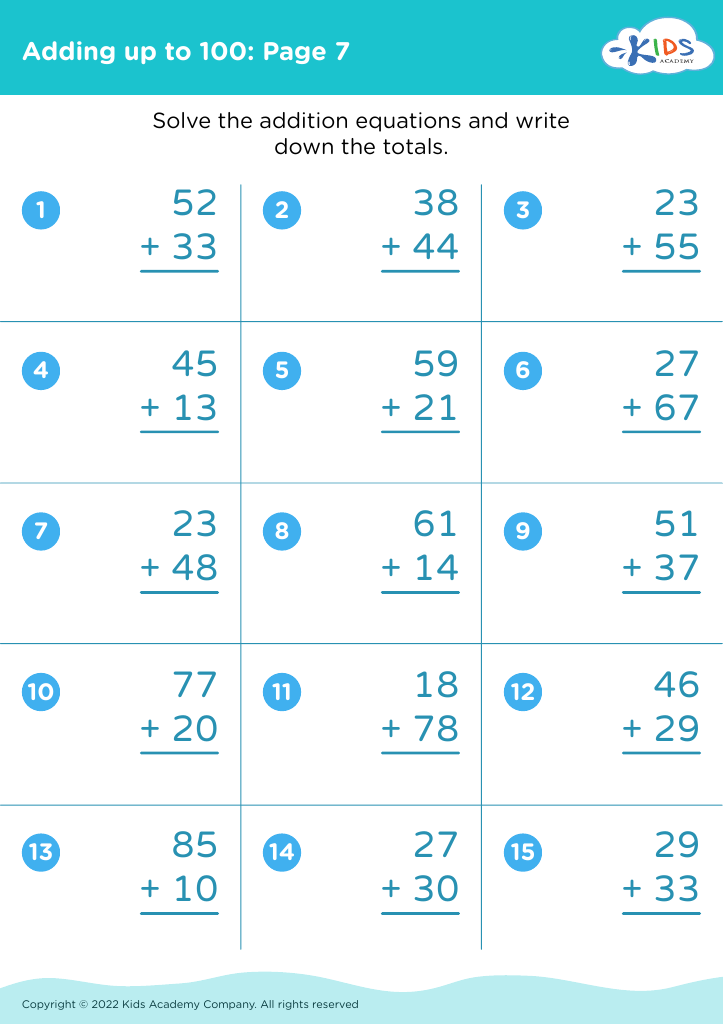


Parents and teachers should prioritize improving number recognition and adding up to 100 for children aged 7-8 because these foundational math skills are crucial for a child’s academic development. At this stage, kids transition from basic counting to more complex arithmetic operations, which form the building blocks for higher-level math concepts they will encounter later. Ensuring mastery of number recognition and the ability to sum numbers up to 100 enhances their counting fluency and precision, critical for success in other math areas such as place value understanding, subtraction, division, and problem-solving strategies.
Moreover, strong number recognition skills help children develop mental math abilities, promoting quicker calculation and reasoning skills. This encourages a positive attitude towards mathematics, reducing anxiety and fostering confidence. Visibly understanding and solving number problems also instills a sense of accomplishment and motivates continued learning.
Early competence in these areas correlates with better performance in various subjects since mathematical skills are often integrated into science, technology, and even elements of literacy learning. By focusing on these critical skills, parents and teachers are setting children up for long-term academic success and equipping them with essential problem-solving skills needed in everyday life.