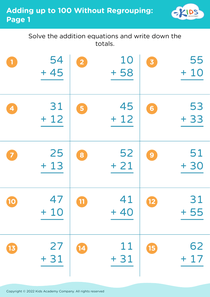
Addition Practice Adding up to 100 with Regrouping Worksheets for Ages 7-8
4 filtered results
-
From - To
Empower your 7-8-year-olds with our engaging "Addition Practice Adding up to 100 with Regrouping Worksheets." Expertly designed for kids, these worksheets make learning addition fun and effective. With a variety of exercises, students practice regrouping, enhancing their math skills and confidence. Ideal for classroom or home use, they support strong number sense and foundational math understanding. Boost your child's proficiency and watch their progress as they conquer challenging addition problems with ease and enthusiasm. Perfect for mastering addition while building essential problem-solving abilities. Access these valuable resources and unlock your child’s potential today!
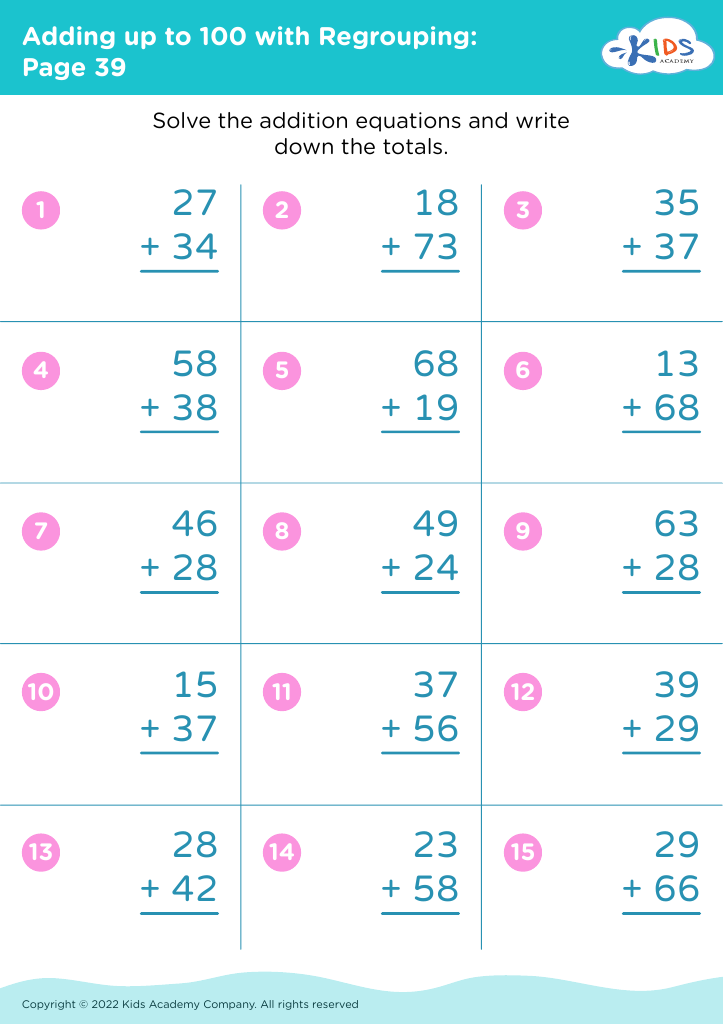
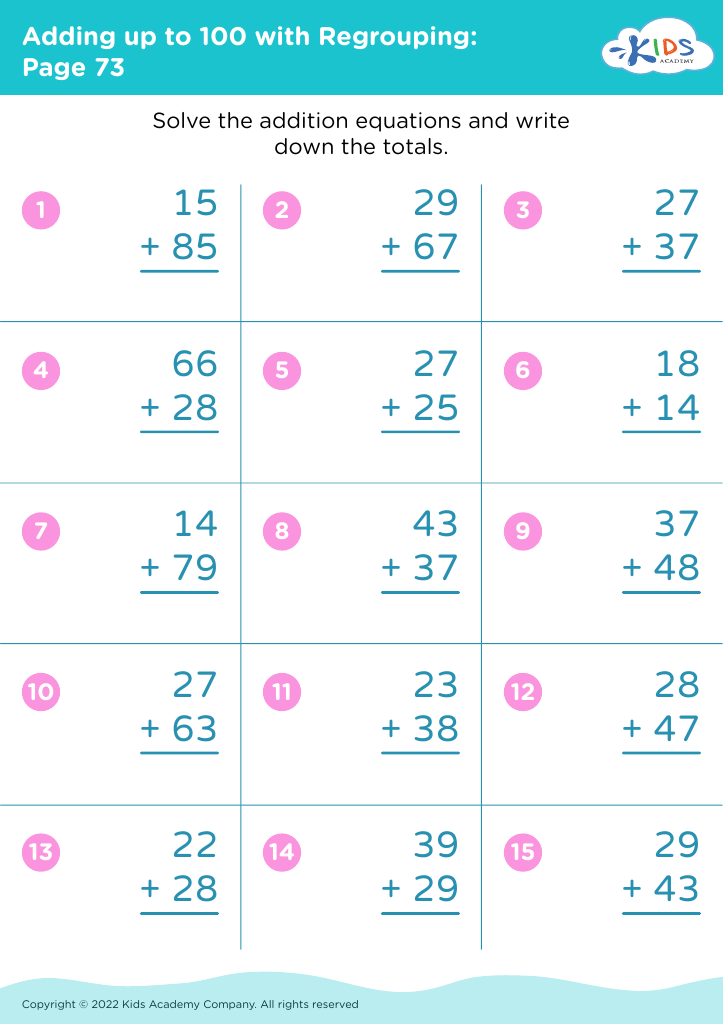
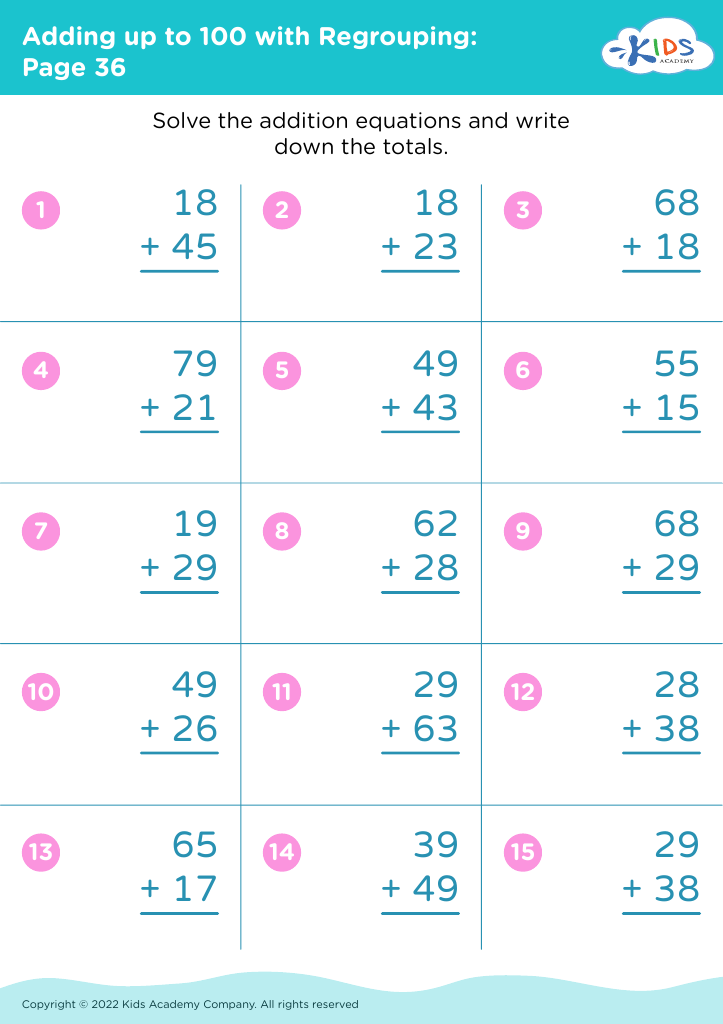
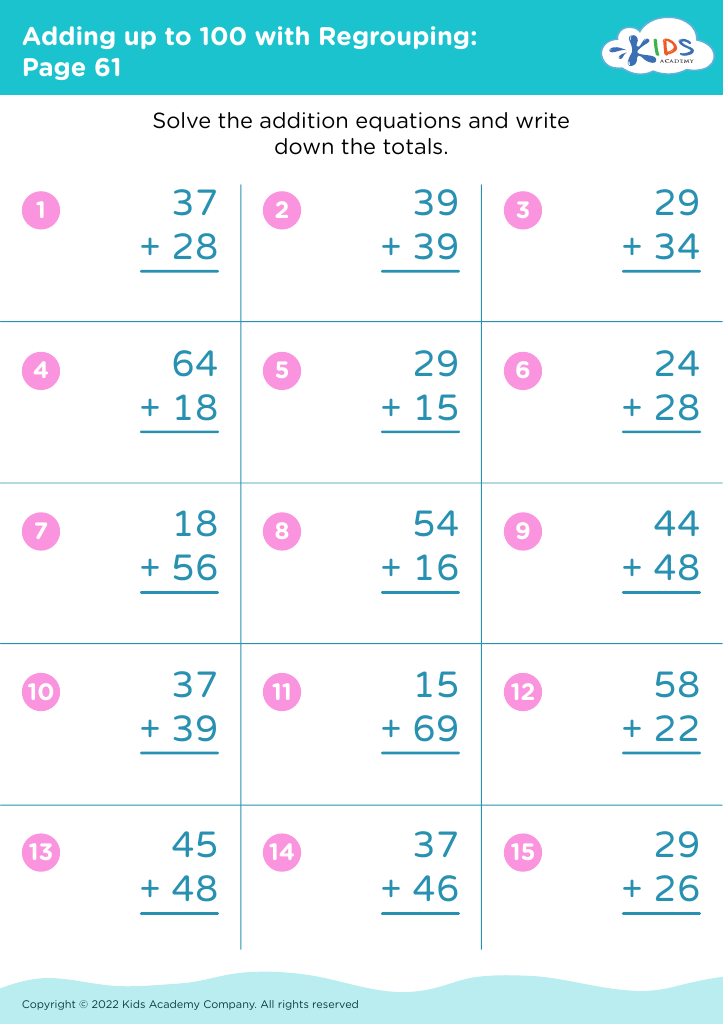




Addition practice, particularly adding up to 100 with regrouping for ages 7-8, is foundational for children’s math development. During these crucial years, kids are transitioning from basic addition to more complex operations, and understanding how to regroup, or "carry," digits is essential.
First and foremost, accuracy in addition builds confidence. When students grasp regrouping, they become more comfortable with numbers and begin to see math as a manageable and even enjoyable subject. This confidence is critical in fostering a positive attitude toward learning.
Secondly, regrouping teaches problem-solving skills. It requires students to think critically about numbers, understanding that ten units in the ones place equals one unit in the tens place. This concept underpins more advanced math topics they'll encounter in higher grades, such as subtraction with borrowing, multiplication, and division.
Moreover, math skills are cumulative. Without a solid understanding of addition and regrouping, children can struggle with future math challenges, leading to frustration and a potential aversion to the subject.
Finally, these math skills have real-world applications, whether it's counting change, measuring ingredients, or even budgeting. Mastery of basic addition facilitates these everyday activities, setting a practical foundation for adult life.
Investing time in addition practice helps ensure children are not only well-prepared for future math topics but also equipped with essential life skills.