Basic Math Skills Adding up to 100 with Regrouping Worksheets for Ages 7-8
3 filtered results
-
From - To
Enhance your child's math proficiency with our engaging "Basic Math Skills: Adding up to 100 with Regrouping" worksheets, designed specifically for ages 7-8. These resources offer a variety of interactive activities that make learning fun and effective. With clear instructions and vibrant visuals, your child will master regrouping techniques necessary for addition, laying a strong foundation for future math concepts. Perfect for home or classroom use, our worksheets boost confidence and computation speed. Let your young learner practice fundamental skills while enjoying the process, ensuring they excel in mathematics. Explore our collection and watch them thrive!
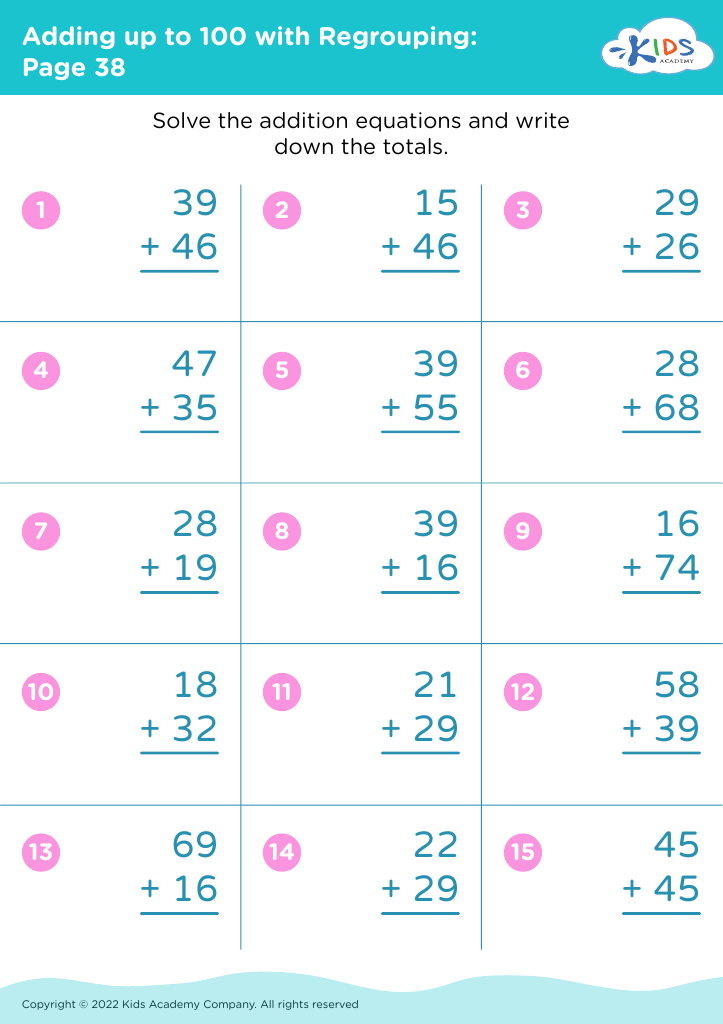
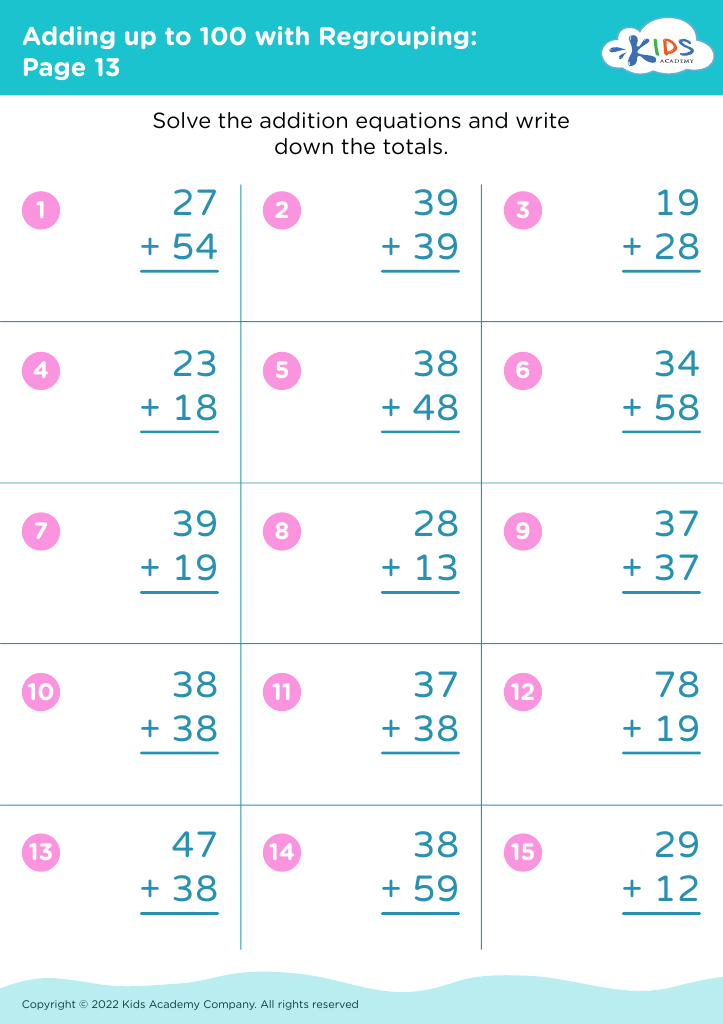
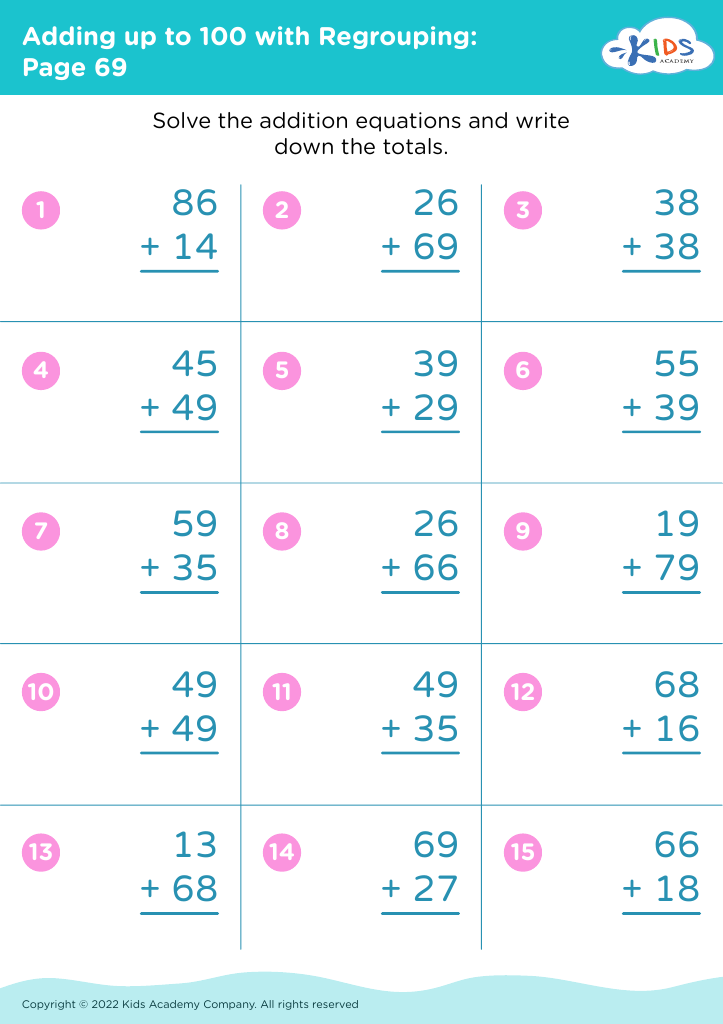




Basic math skills, particularly adding up to 100 with regrouping, are crucial for children aged 7-8 as they lay the foundation for higher-level mathematics and problem-solving abilities. Mastering these concepts not only enhances numerical proficiency but also boosts confidence in tackling math challenges.
At this age, children begin to transition from simple addition to more complex operations that require regrouping or carrying over. This skill is a vital stepping stone for larger numbers, decimal operations, and even foundational concepts of multiplication and division. Understanding how to regroup fosters critical thinking, enabling children to recognize patterns and relationships in numbers, which are essential for future math success.
Moreover, these skills have real-world applications. Helping children learn to add up to 100 with regrouping prepares them for everyday tasks, such as managing money, measuring ingredients in cooking, or calculating distances. Parents and teachers play an instrumental role in developing these skills through positive reinforcement, engaging activities, and relatable examples.
By fostering a solid grasp of basic math skills, we empower children to approach more advanced concepts confidently, ultimately promoting a lifelong love of learning and mathematics.