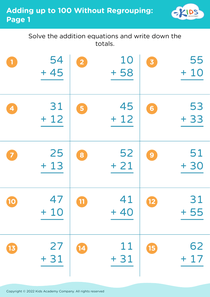
Enhance number recognition Adding up to 100 with Regrouping Worksheets for Ages 7-8
3 filtered results
-
From - To
Boost your child's number recognition skills with our engaging "Enhance Number Recognition: Adding Up to 100 with Regrouping Worksheets" designed specifically for ages 7-8. These specially crafted worksheets provide a fun and interactive way for young learners to grasp the concept of adding numbers, focusing on regrouping techniques. By working through various exercises, your child will improve their ability to identify and understand numbers up to 100, making math both accessible and enjoyable. Whether at home or in the classroom, these worksheets are an excellent resource for building a strong foundation in mathematics while promoting confidence and independent problem-solving skills.
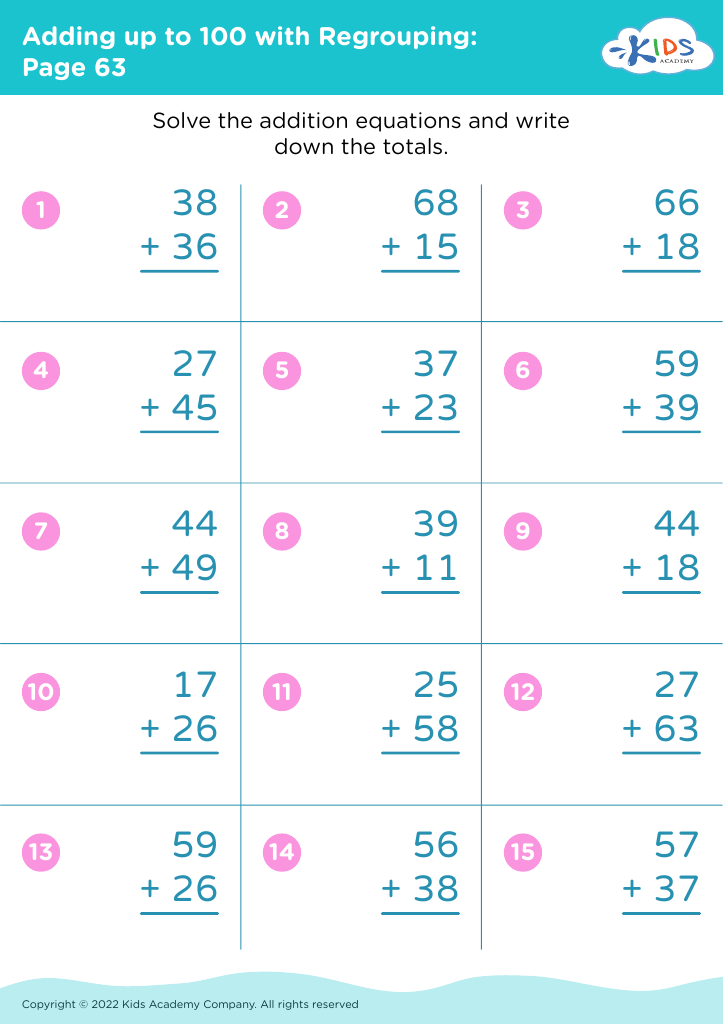
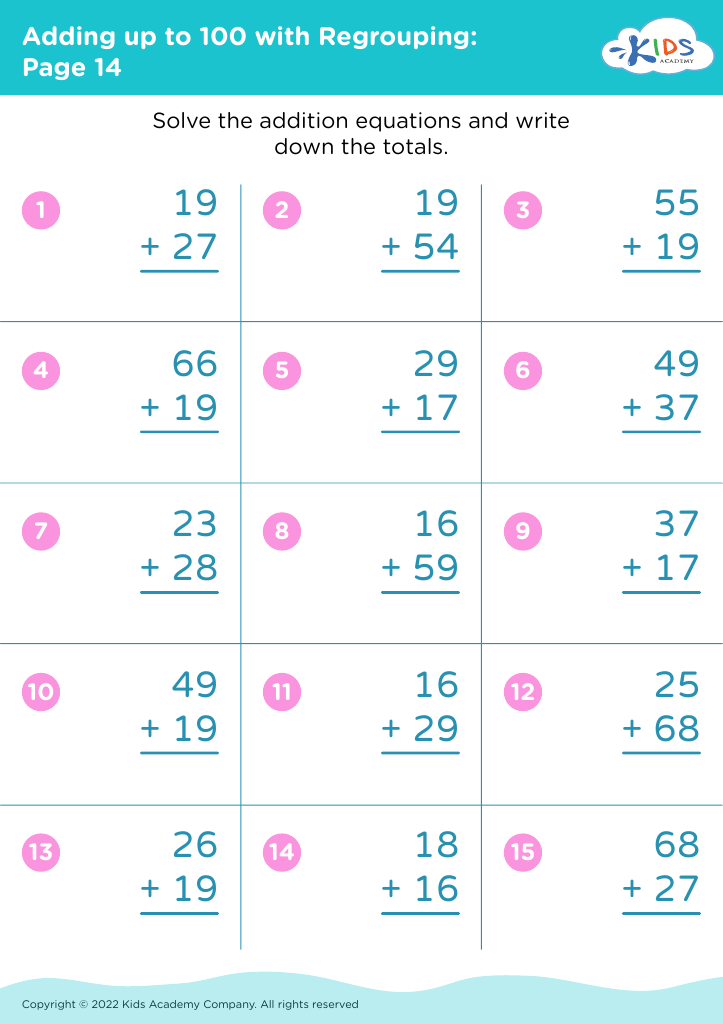
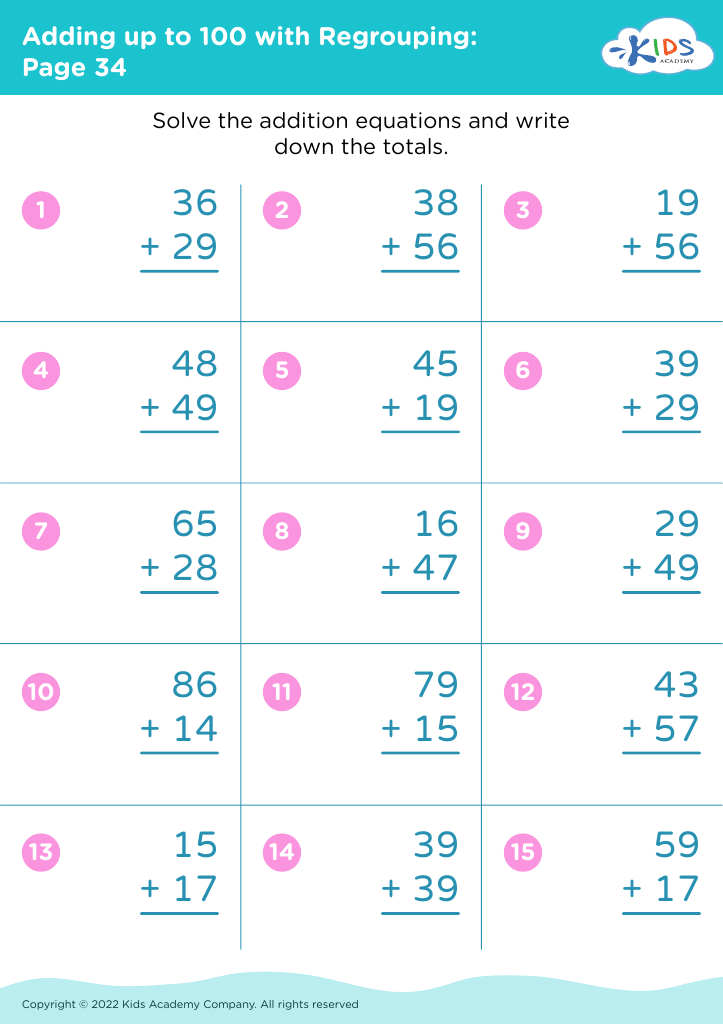




Enhancing number recognition and the ability to add up to 100 with regrouping is crucial for children aged 7-8, as it lays the groundwork for advanced mathematical understanding. At this age, children are transitioning from basic arithmetic operations to more complex problem-solving skills. Proficient number recognition allows them to quickly identify numerical values and foster confidence in their abilities.
Teaching regrouping, also known as carrying or borrowing, equips children with strategies to handle larger numbers effectively. This technique enables them to tackle addition problems beyond their immediate ability by breaking down numbers into manageable parts. Mastering these skills can alleviate math anxiety and build a solid mathematical foundation.
For parents and teachers, fostering these skills cultivates critical thinking and promotes a positive attitude towards math. By encouraging children to practice number recognition and regrouping, adults can support diverse learning styles and ensure that every child grasps essential math concepts. Ultimately, these skills are not only pivotal in academic settings but also in daily life situations, preparing children for future challenges in higher-grade mathematics and real-world contexts. By prioritizing enhance number recognition and regrouping, parents and educators play a vital role in shaping confident, competent young mathematicians.