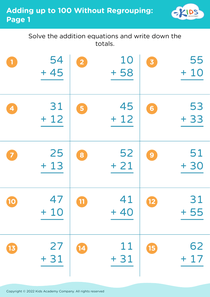
Fraction comparison Adding up to 100 with Regrouping Worksheets for Ages 7-8
3 filtered results
-
From - To
Explore our engaging "Fraction Comparison Adding up to 100 with Regrouping Worksheets for Ages 7-8." Designed to enhance your child's math skills, these worksheets focus on addition and regrouping within 100, seamlessly integrating fraction comparisons. Perfect for young learners, they offer a mix of fun and educational activities that sharpen both their calculation and critical thinking abilities. Through a variety of problems, kids practice regrouping techniques while comparing fractions, all tailored to their grade level. Boost your child's confidence and proficiency in math with these printable worksheets that make learning interactive and enjoyable. Ideal for classroom and home use.
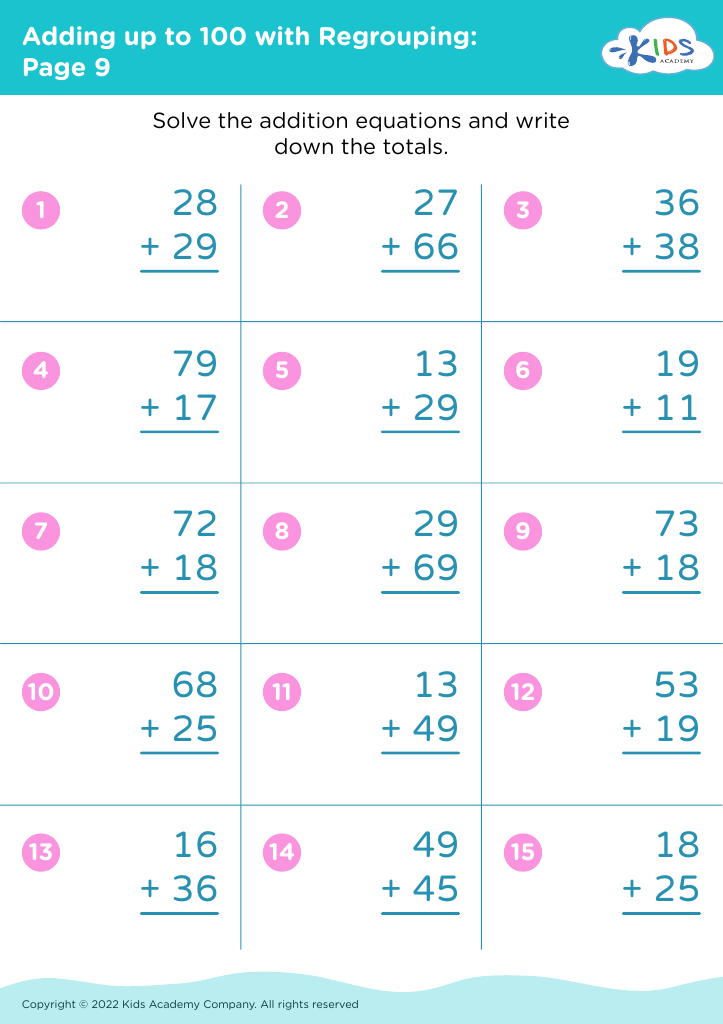
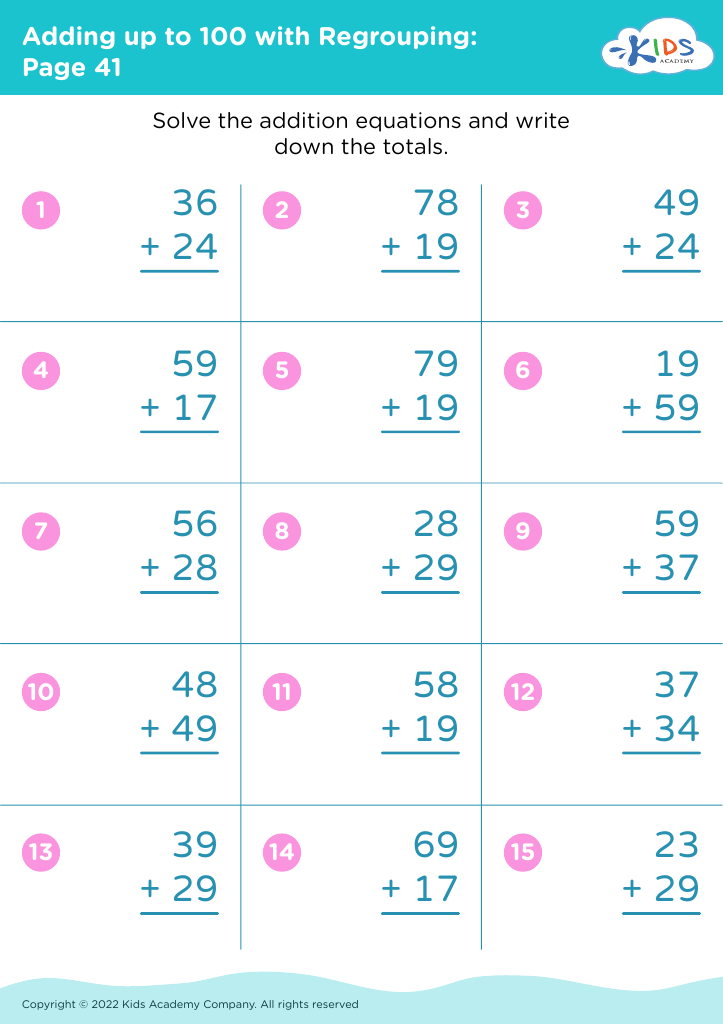
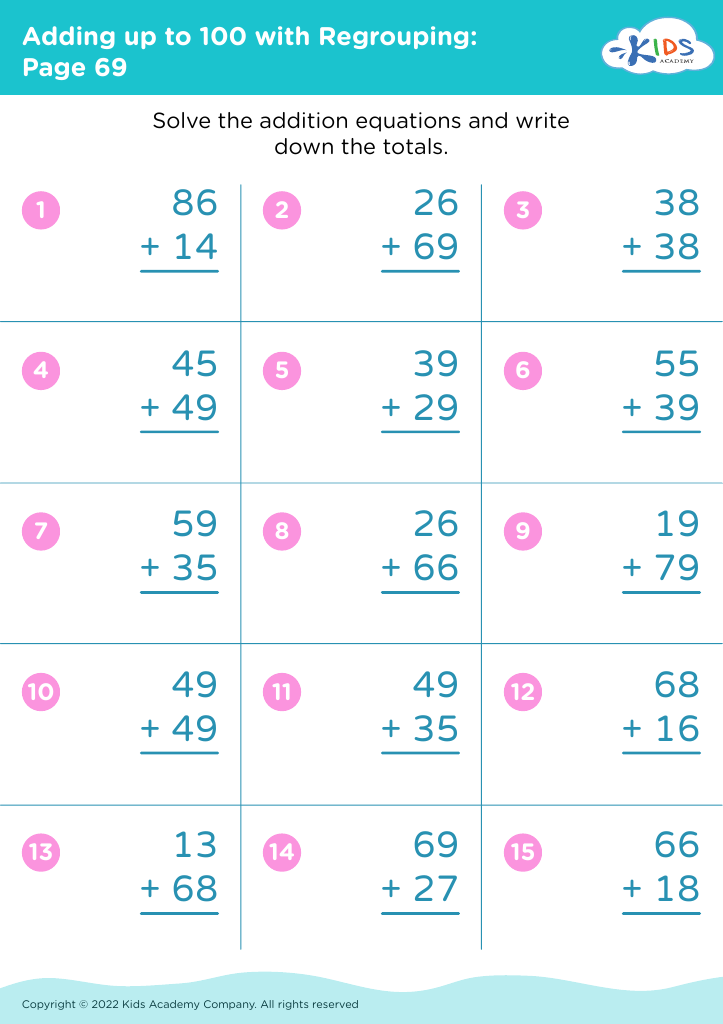




Understanding fraction comparison and adding up to 100 with regrouping is crucial for children aged 7-8, as it builds foundational math skills needed for advanced concepts. At this age, children are transitioning from basic arithmetic to more complex operations, and mastering these skills not only improves their current mathematical abilities but also boosts their confidence.
Fraction comparison is essential because it helps children understand the size and value of different fractions, which applies to everyday situations such as dividing food or measuring ingredients in cooking. Grasping these concepts early ensures they can handle more complex fractions and fractions incorporated into algebra later on.
Adding up to 100 with regrouping, or carrying over, hones children's addition and subtraction skills. This critical skill helps them perform arithmetic quickly and accurately. It also teaches them to handle larger numbers, developing their number sense and flexibility with numerical operations.
Moreover, these skills foster logical thinking and problem-solving. When parents and teachers emphasize these areas, they equip children with tools to tackle real-world problems and STEM (Science, Technology, Engineering, and Mathematics) subjects in future learning. Therefore, caring about these mathematical competencies now sets the stage for a child's academic growth and practical life applications.