Problem-Solving Skills Adding up to 100 with Regrouping Worksheets for Ages 7-8
7 filtered results
-
From - To
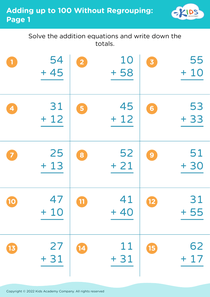
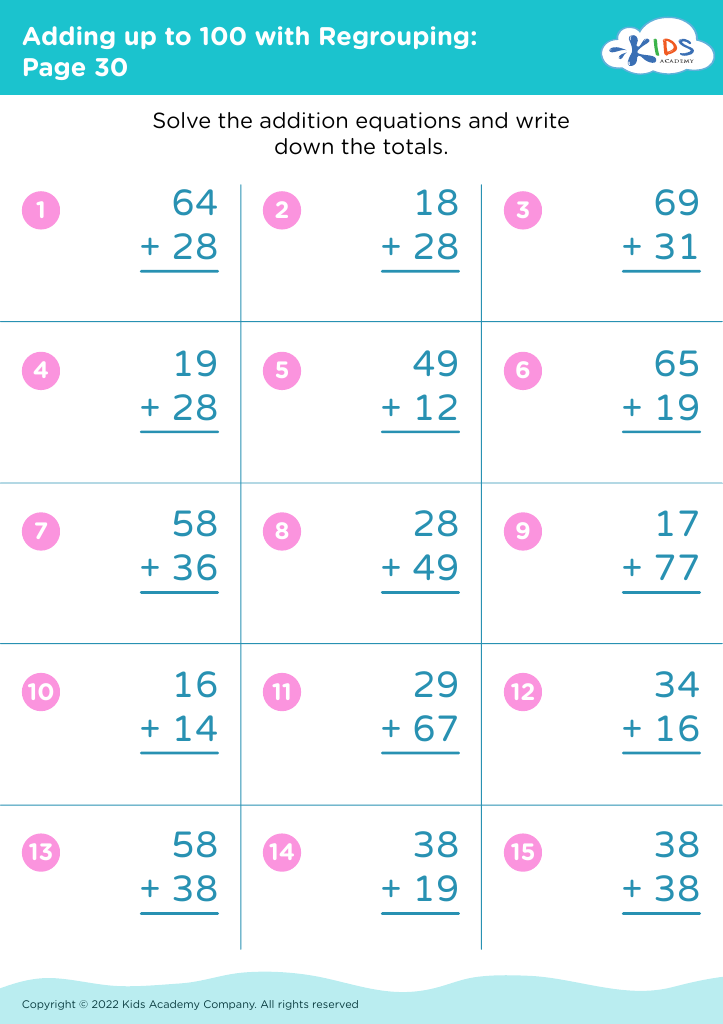
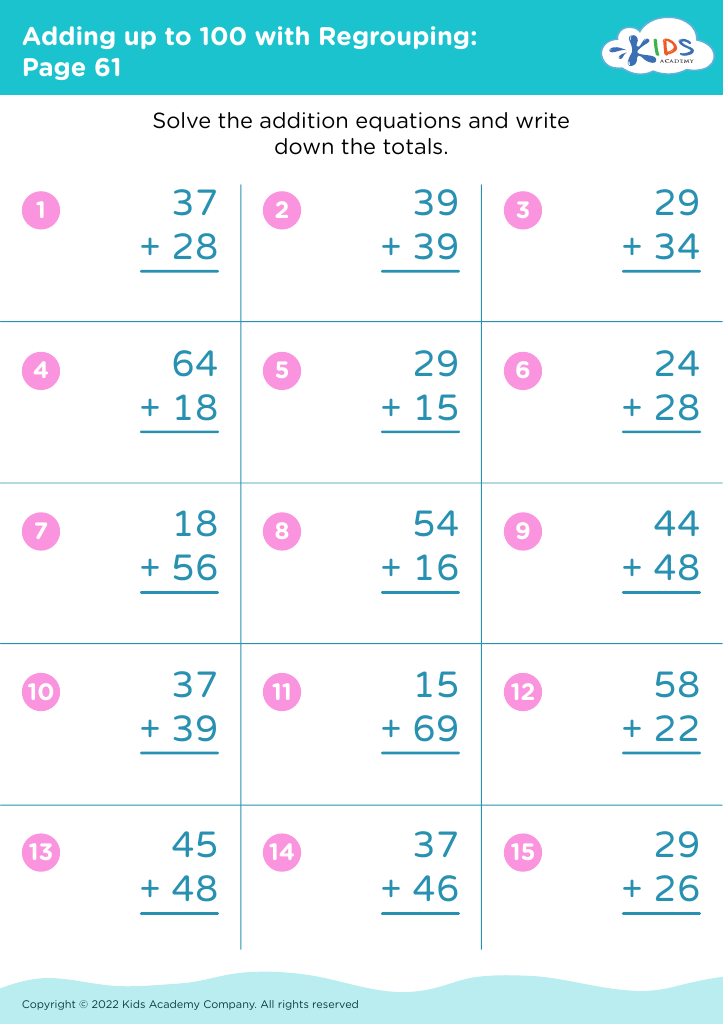
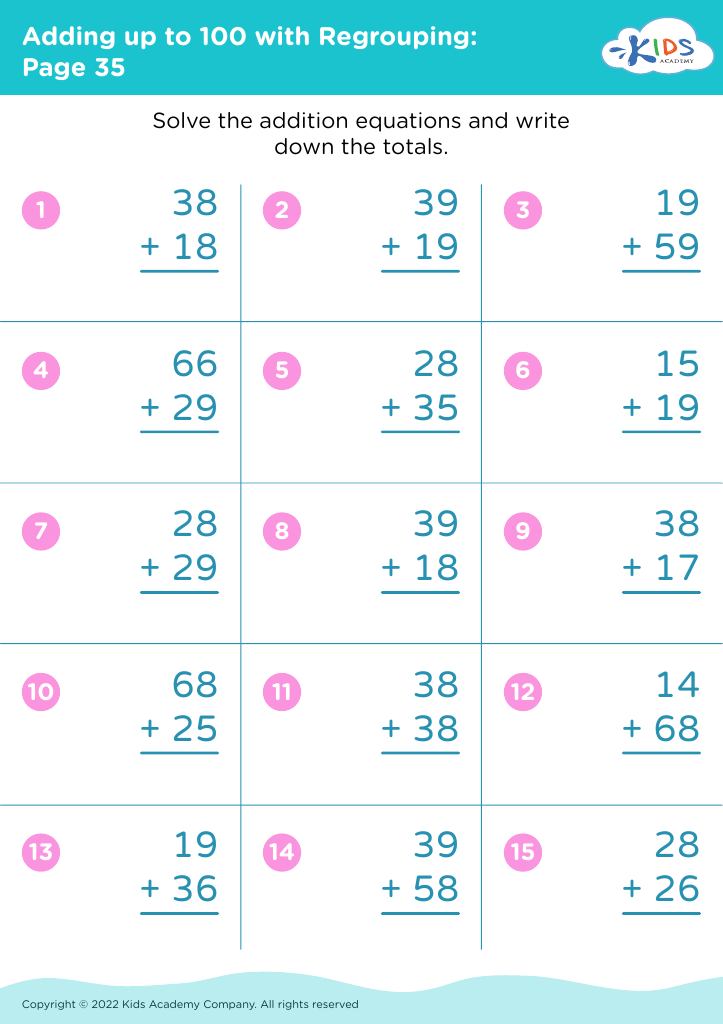
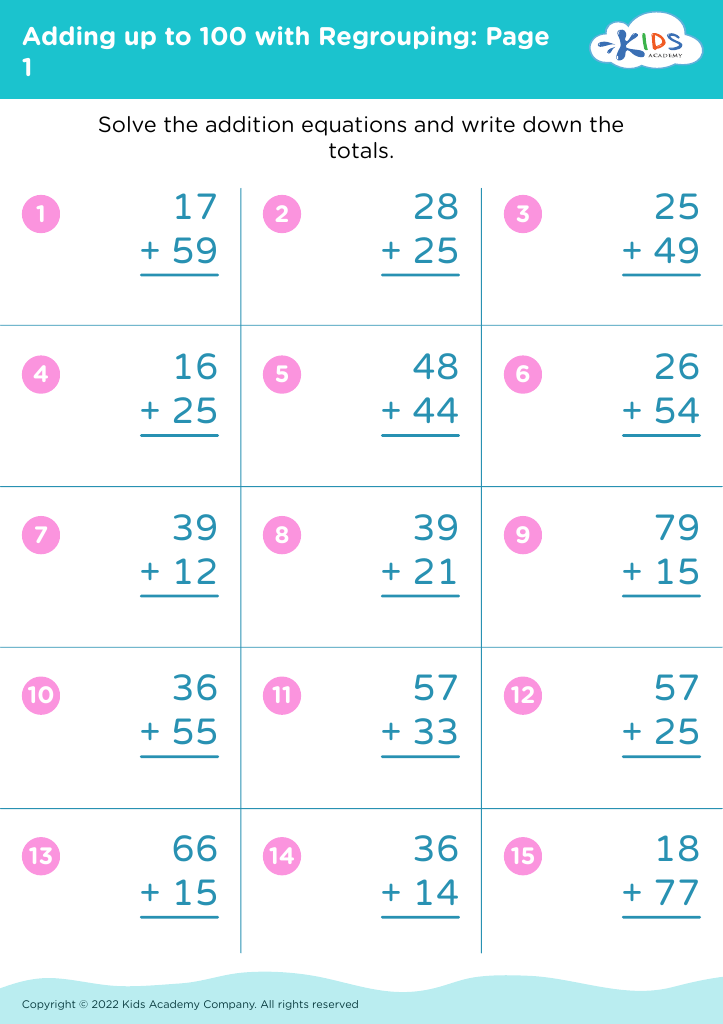
Enhance your child's mathematical abilities with our "Adding Up to 100 with Regrouping" worksheets, designed specifically for ages 7-8. These engaging resources focus on developing problem-solving skills through interactive exercises that challenge young learners to tackle addition problems while mastering the regrouping concept. By practicing with various problem types, kids will strengthen their understanding of numbers and improve their mathematical reasoning. Our worksheets are kid-friendly and designed to make learning fun, ensuring your child gains confidence as they work towards adding up to 100. Start transforming math into an enjoyable adventure today with our thoughtfully crafted worksheets!
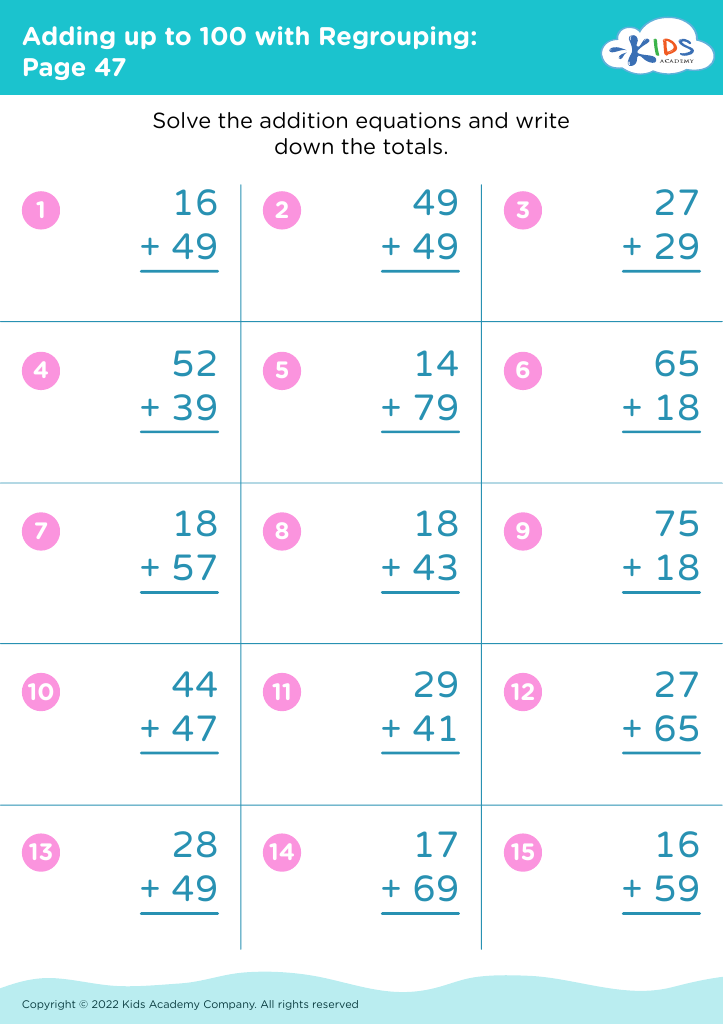
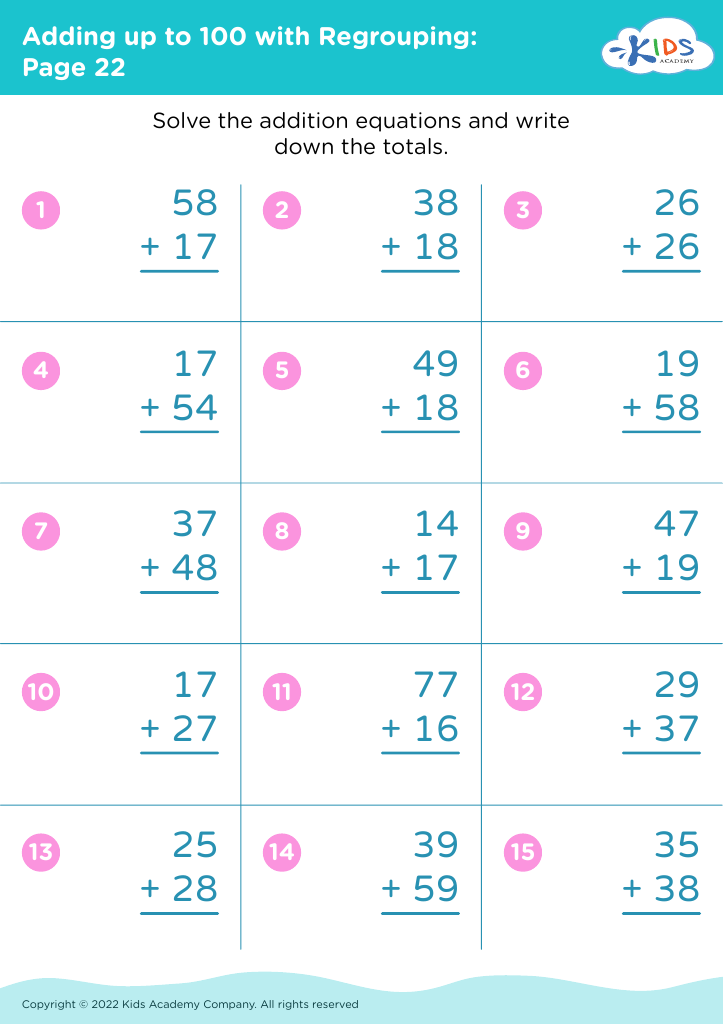
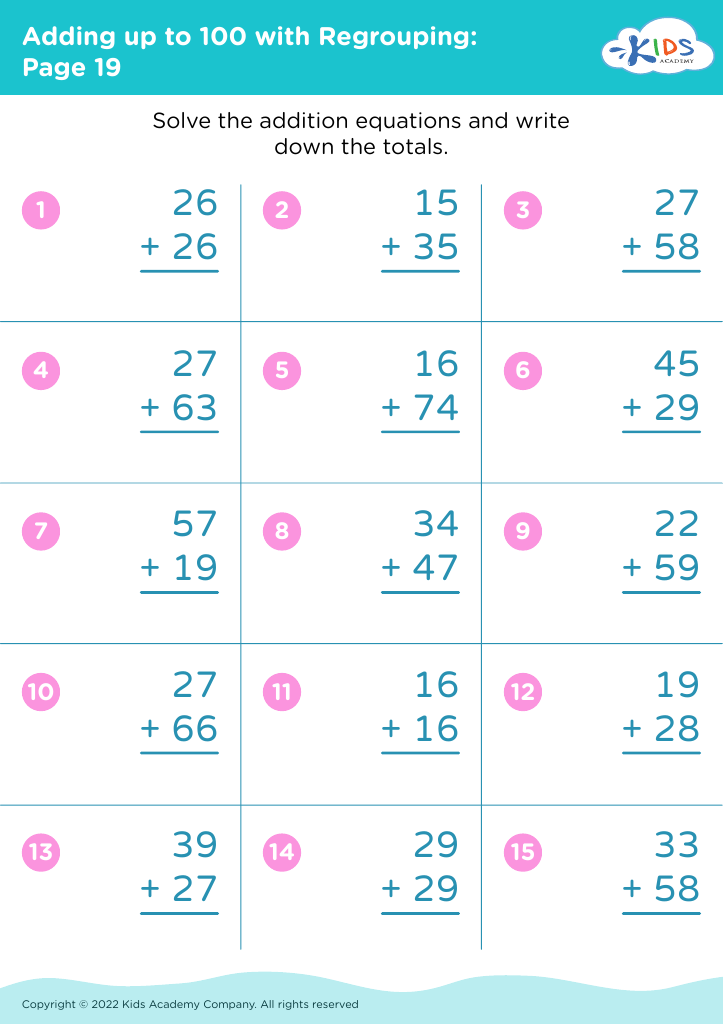




Parents and teachers should prioritize teaching problem-solving skills, particularly in concepts like adding up to 100 with regrouping, for children aged 7 to 8. This foundational skill not only enhances a child’s mathematical proficiency but also fosters critical thinking and cognitive flexibility. At this developmental stage, children are beginning to grasp more complex concepts. Understanding how to regroup allows them to manipulate numbers effectively, breaking down larger problems into manageable parts, which is essential for advanced math in later grades.
Additionally, engaging in problem-solving helps build perseverance and resilience. By learning to approach challenges systematically, children develop a growth mindset, learning that mistakes are opportunities for growth. This boosts their confidence not only in mathematics but in other areas of learning and life.
Finally, these skills contribute to broader cognitive development. As children learn to visualize numbers and think critically, they are better equipped to tackle real-world situations, whether budgeting, planning, or assessing risk. Ultimately, fostering these abilities builds a strong mathematical foundation and equips children with necessary life skills, encouraging them to become capable problem-solvers in both academic environments and everyday scenarios. This makes early education around math crucial for their future success.