Identifying shapes Adding up to 100 Without Regrouping Worksheets for Ages 7-8
4 filtered results
-
From - To
Discover engaging worksheets designed for ages 7-8 to help children identify shapes and add up to 100 without regrouping! These activities blend fun and learning, enabling kids to recognize various geometric shapes while honing essential math skills. Our expertly crafted resources encourage young learners and build their confidence in problem-solving. Each worksheet is tailored to support classroom learning and provide extra practice at home. Start your journey with our interactive materials and watch your child excel in math fluency and shape recognition effortlessly! Perfect for early grade students seeking enjoyable educational experiences.
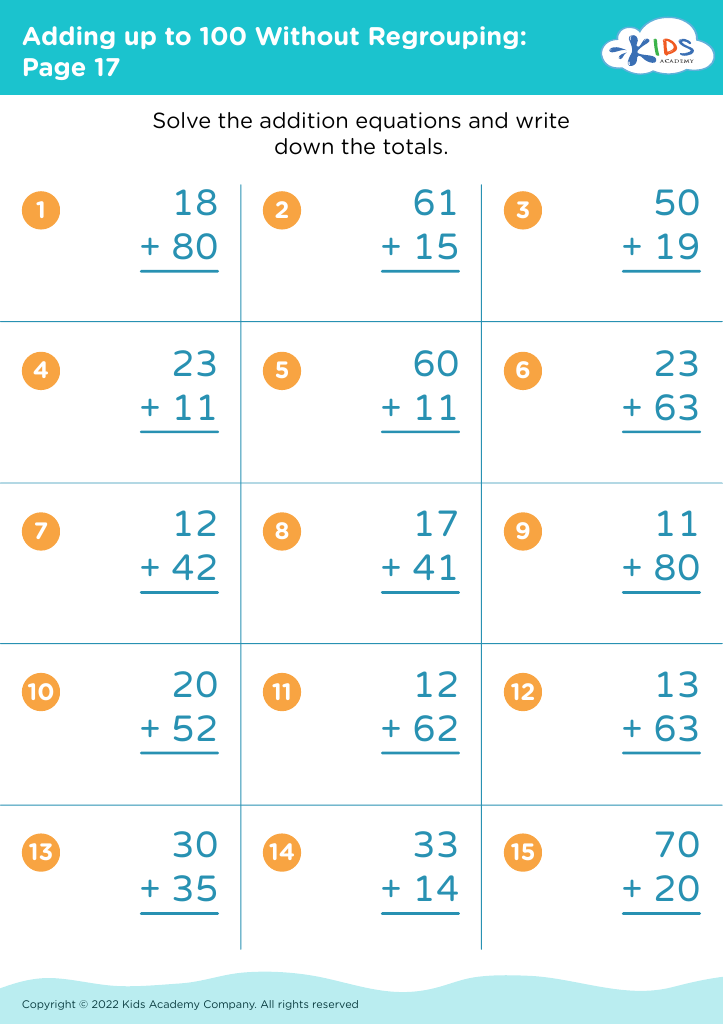
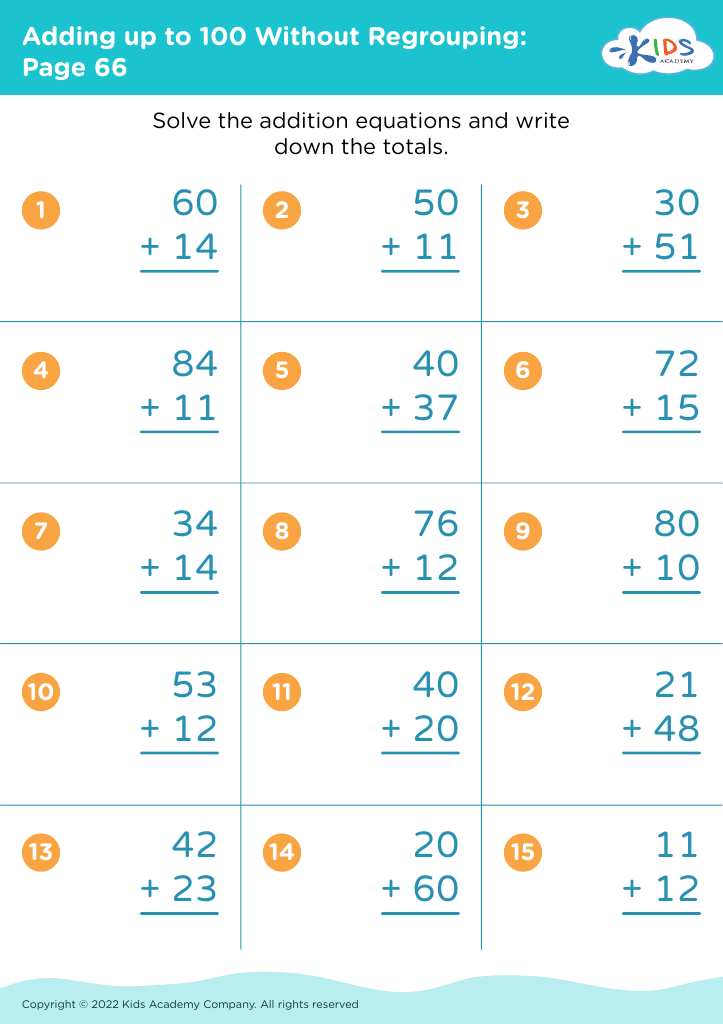
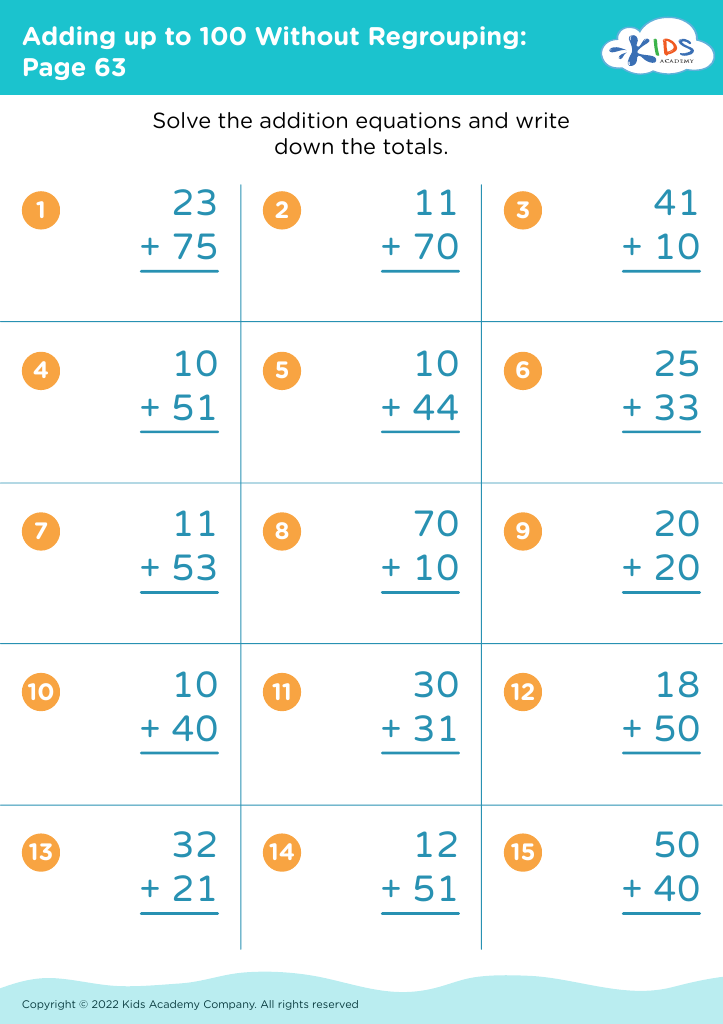
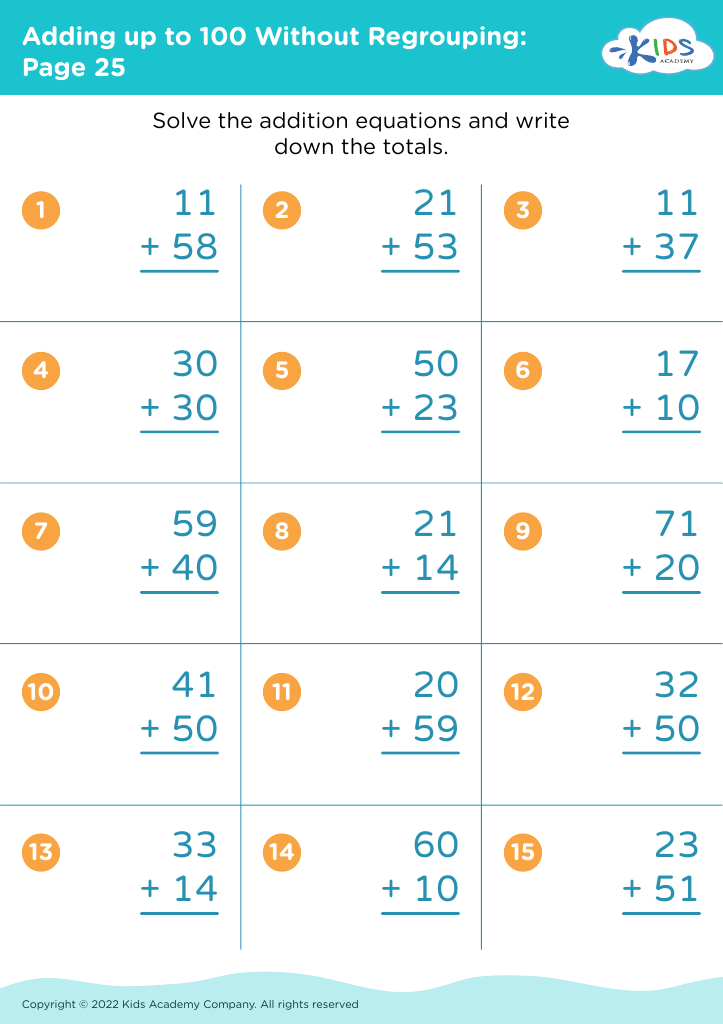




Understanding basic numerical skills and recognizing shapes are foundational milestones for children aged 7-8. For several important reasons, parents and teachers need to prioritize these educational fundamentals:
Firstly, identifying shapes aids in children's cognitive development. Shapes are everywhere in daily life, making it crucial for young minds to recognize and categorize objects based on their form. This helps improve visual perception, spatial awareness, and logical thinking, essential skills in more advanced mathematics and everyday problem-solving.
Secondly, adding up to 100 without regrouping helps build a strong math foundation. Mastering this skill indicates that a child understands number relationships and the fundamental concept of addition. It boosts numerical fluency, meaning kids can solve problems more quickly and confidently. These early math skills are precursors to more complex operations and algebraic thinking in later years.
Moreover, achieving proficiency in these basic concepts also bolsters children's confidence. Success in recognizing shapes and performing addition boosts their self-esteem, encouraging a positive attitude towards learning overall.
Thus, focusing on these foundational skills not only equips children with essential math abilities but also enhances their cognitive development and builds a stronger foundation for future academic and life success.