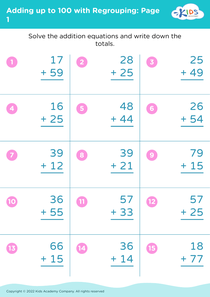
Improve reading comprehension Adding up to 100 Without Regrouping Worksheets for Ages 7-8
3 filtered results
-
From - To
Boost your child's reading comprehension and math skills with our specialized "Adding up to 100 Without Regrouping Worksheets" for ages 7-8. Developed by Kids Academy, these worksheets are carefully designed to improve your child's understanding of addition, without the complexity of regrouping, while enhancing their ability to comprehend written instructions. Each engaging exercise integrates clear, step-by-step guidance and fun themes to keep young learners motivated. By combining math practice with reading comprehension exercises, your child will build confidence and proficiency in multiple areas. Experience the perfect blend of learning and fun with these expertly crafted worksheets.
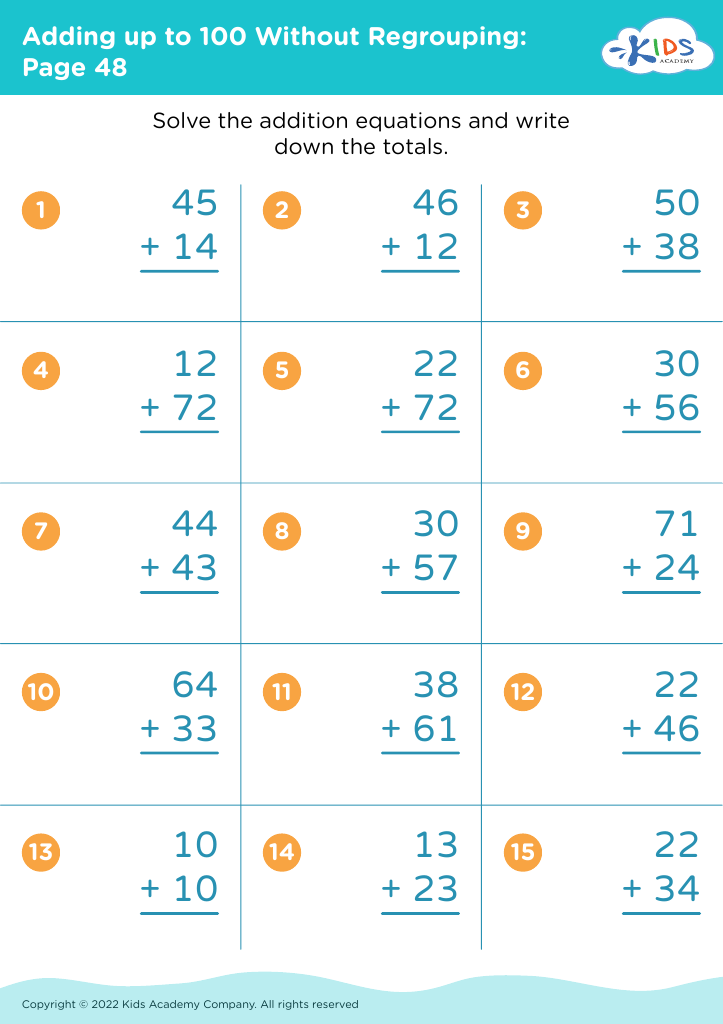
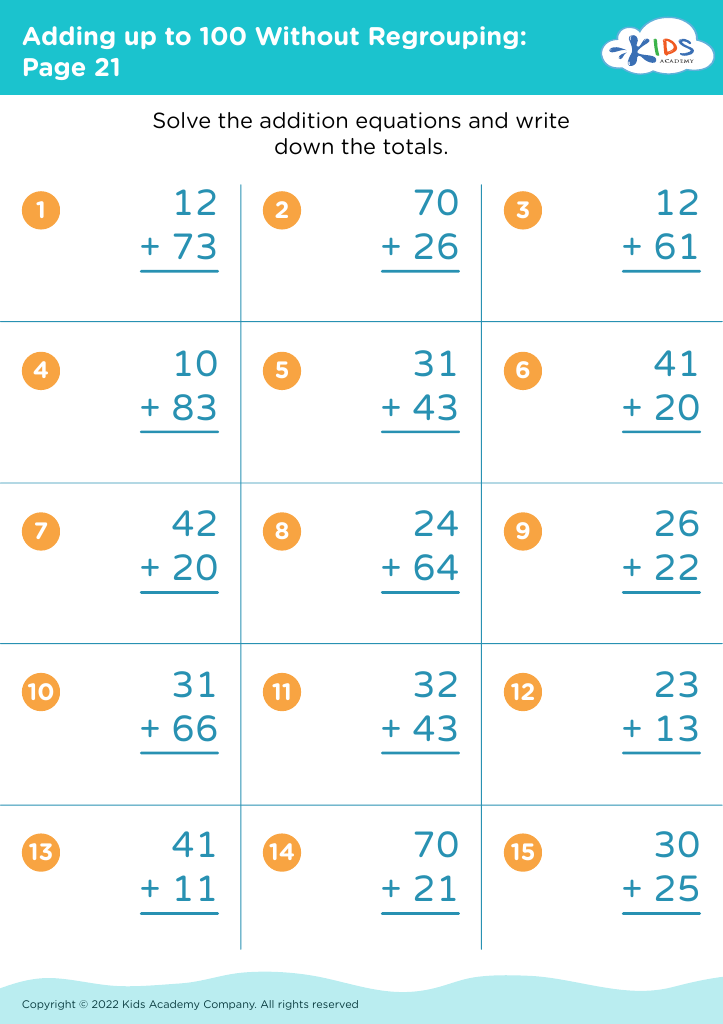
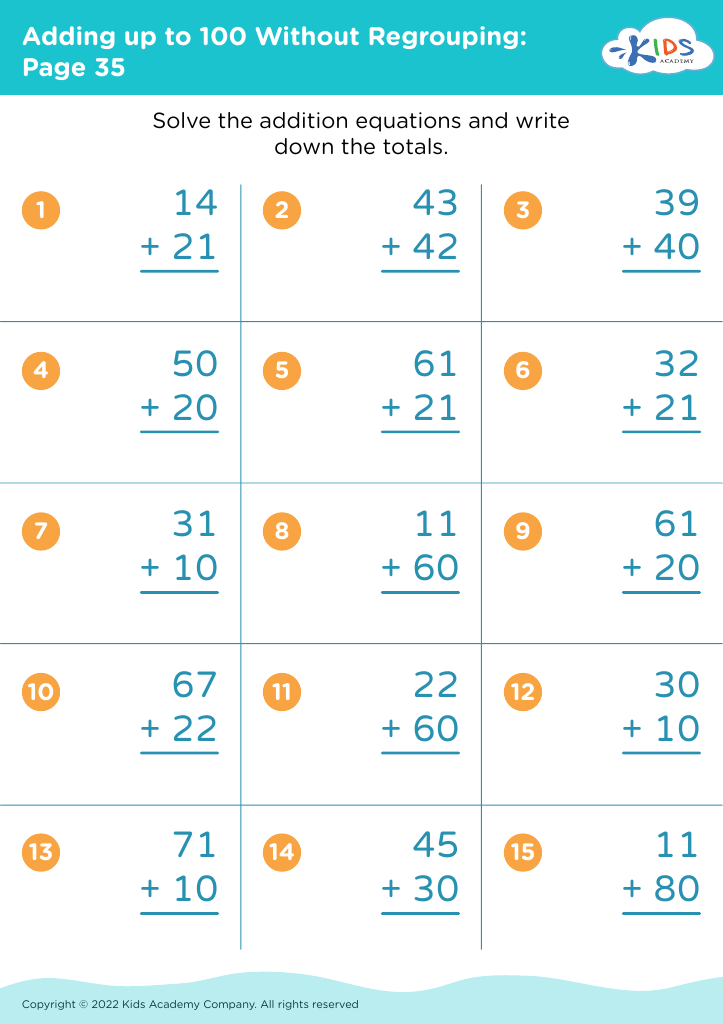




Improving reading comprehension and mastering basic math skills, like adding up to 100 without regrouping, are critical components of a child's early education, especially for ages 7-8. At this stage, children transition from learning-to-read to reading-to-learn. Strong reading comprehension skills not only enhance a child's vocabulary and language abilities but also bolster their capacity to understand instructions, follow stories, and build a foundation for successful learning across all subjects.
Simultaneously, arithmetic skills serve as the building blocks for more complex mathematical concepts introduced in later grades. When children confidently add numbers up to 100 without regrouping, they develop a solid understanding of basic number sense, which is crucial for higher-level problem-solving and critical thinking.
Moreover, integrating math practice with reading materials strengthens both sets of skills. For instance, word problems require kids to read, understand context, and apply mathematical operations, marrying the two subjects seamlessly. This integration supports a more holistic development process, promoting cognitive skills like attention to detail, logical reasoning, and persistence.
Investing in these foundational skills creates a strong educational base, ensuring children can tackle future academic challenges with greater ease and confidence, ultimately paving the way for lifelong learning success. Therefore, parents and teachers should prioritize and actively nurture these critical competencies in early childhood education.