Improve reading skills Adding up to 100 Without Regrouping Worksheets for Ages 7-8
3 filtered results
-
From - To
Enhance your child's reading skills while mastering addition with our engaging "Adding Up to 100 Without Regrouping Worksheets" designed for ages 7-8. These fun, interactive worksheets offer a dynamic approach to learning, seamlessly integrating math and literacy. Students will improve their reading comprehension by navigating instructions and problem scenarios, fostering their ability to read numbers and mathematical terms fluently. Each worksheet is tailored to reinforce key concepts—helping kids build confidence in both reading and basic arithmetic skills. Watch your child thrive academically as they develop a solid foundation for future learning, making mathematics an enjoyable adventure.
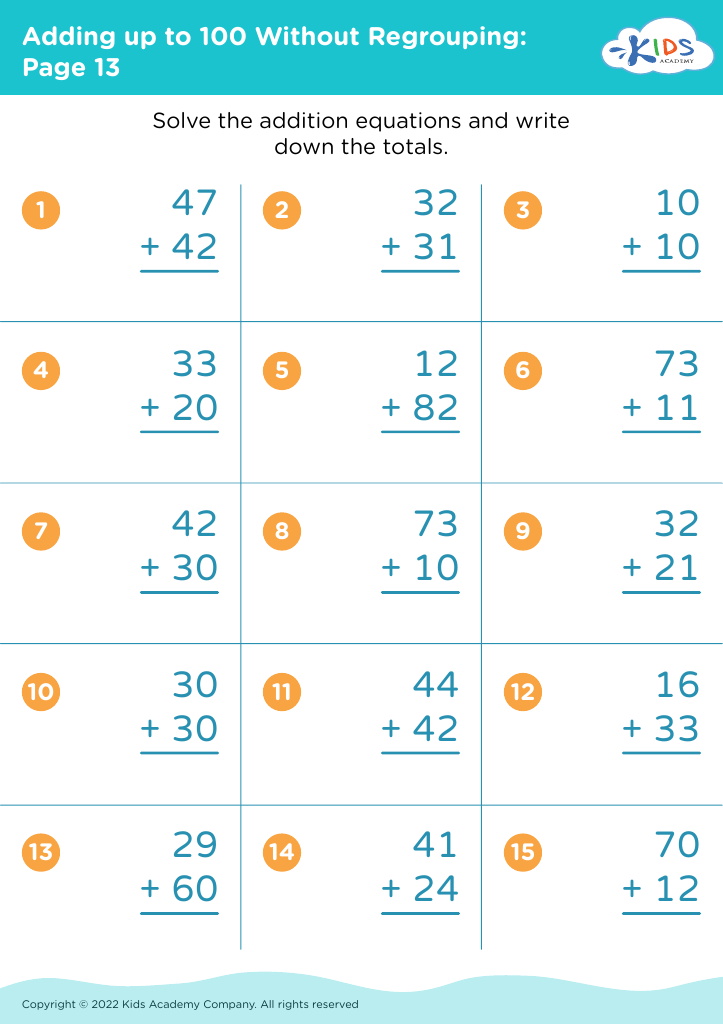
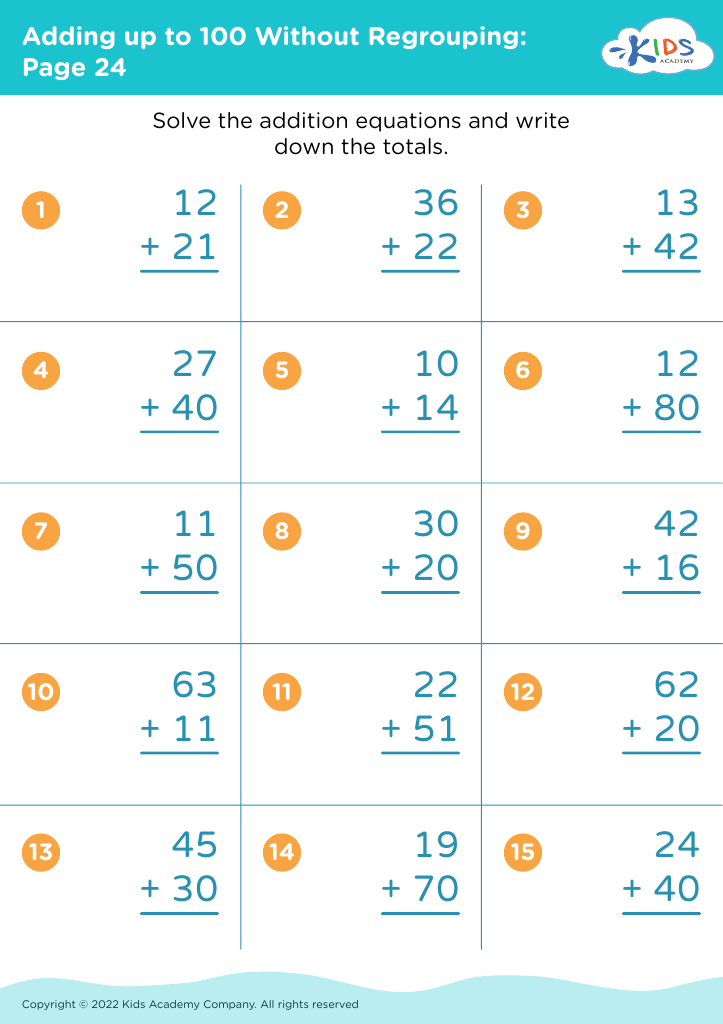
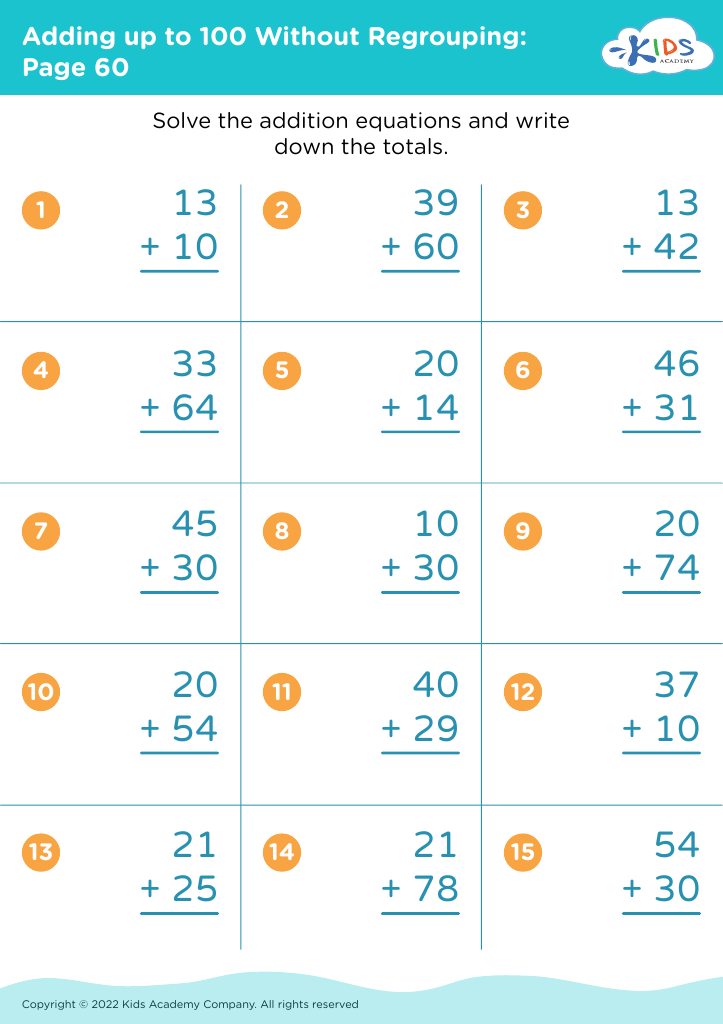




Improving reading skills and the ability to add numbers up to 100 without regrouping are foundational competencies for children aged 7-8. Both skills play a critical role in the development of strong cognitive abilities and overall academic success.
Reading proficiency is crucial, as it enhances children's comprehension of various subjects and empowers them to access information independently. Strong reading skills also promote better communication and critical thinking, which are vital in both academic and social settings. When children can read confidently, they are more likely to engage with diverse materials, foster a love for learning, and build a solid foundation for future educational success.
Similarly, mastering addition without regrouping lays the groundwork for more complex mathematical concepts. It helps children understand number relationships, develop problem-solving strategies, and enhances their ability to perform calculations mentally. This skill cultivates logical reasoning and confidence in math, promoting a positive attitude toward the subject.
By prioritizing both reading and basic math skills, parents and teachers set children on a path to academic achievement, helping them become well-rounded learners ready to tackle more advanced concepts in the future. Investing time in these areas now can lead to lasting benefits in various aspects of their education and personal growth.