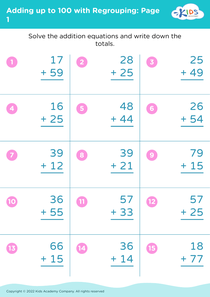
Understanding multiplication Adding up to 100 Without Regrouping Worksheets for Ages 7-8
5 filtered results
-
From - To
Explore our "Understanding Multiplication: Adding Up to 100 Without Regrouping" worksheets, specially designed for kids ages 7-8. These engaging resources help young learners grasp multiplication as repeated addition, essential for building strong math foundations. With clear visuals and step-by-step exercises, children will confidently tackle addition problems that sum up to 100 without regrouping. This hands-on practice reinforces their understanding of mathematical concepts, enhancing both their multiplication and addition skills. Perfect for classroom use or home learning, these worksheets inspire curiosity, boost confidence, and make math enjoyable! Unlock your child’s potential and lay the groundwork for future success in mathematics.
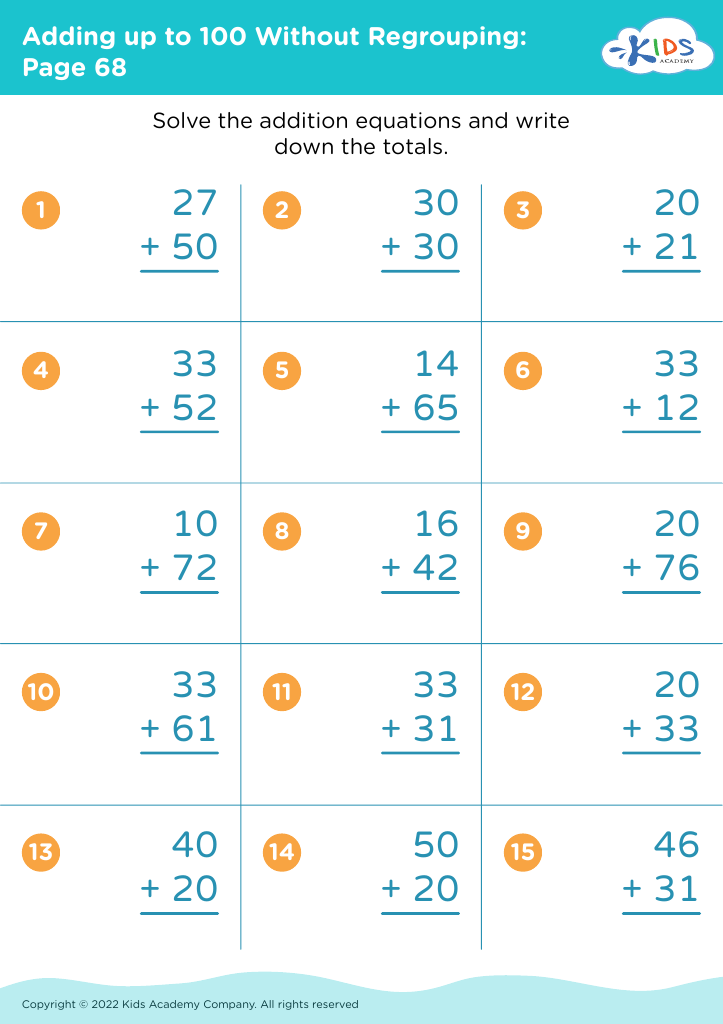
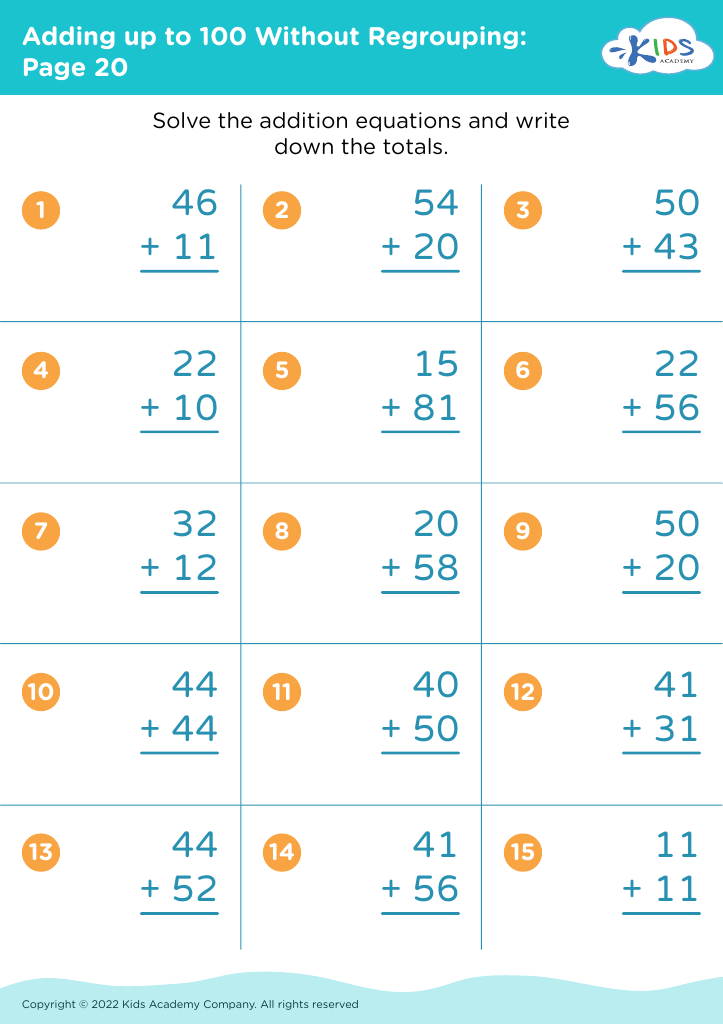
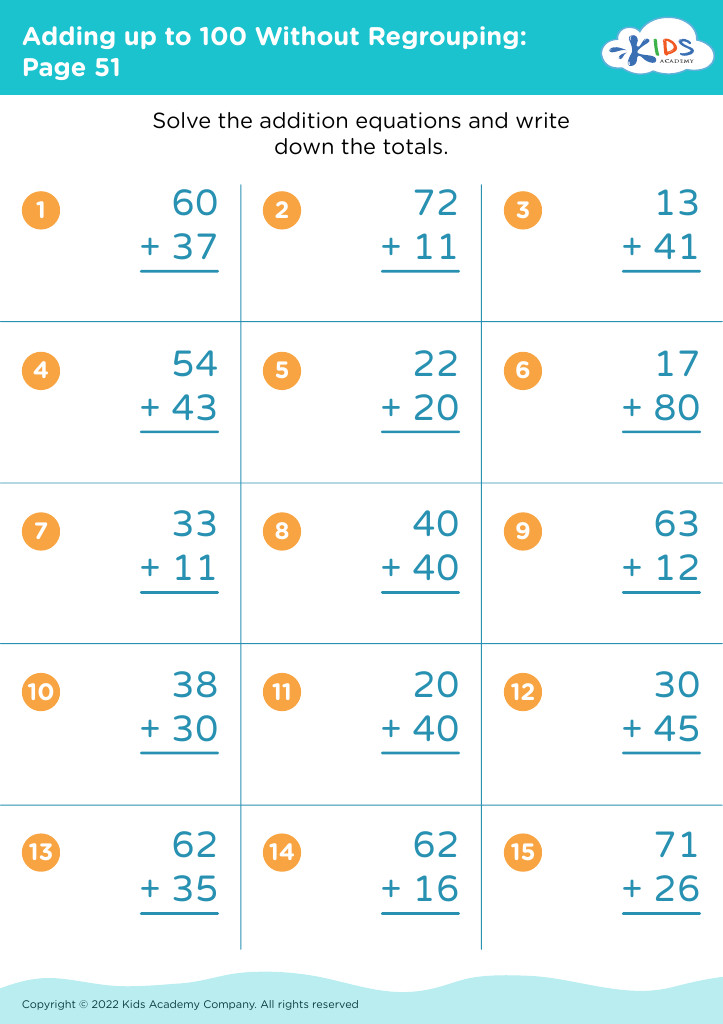
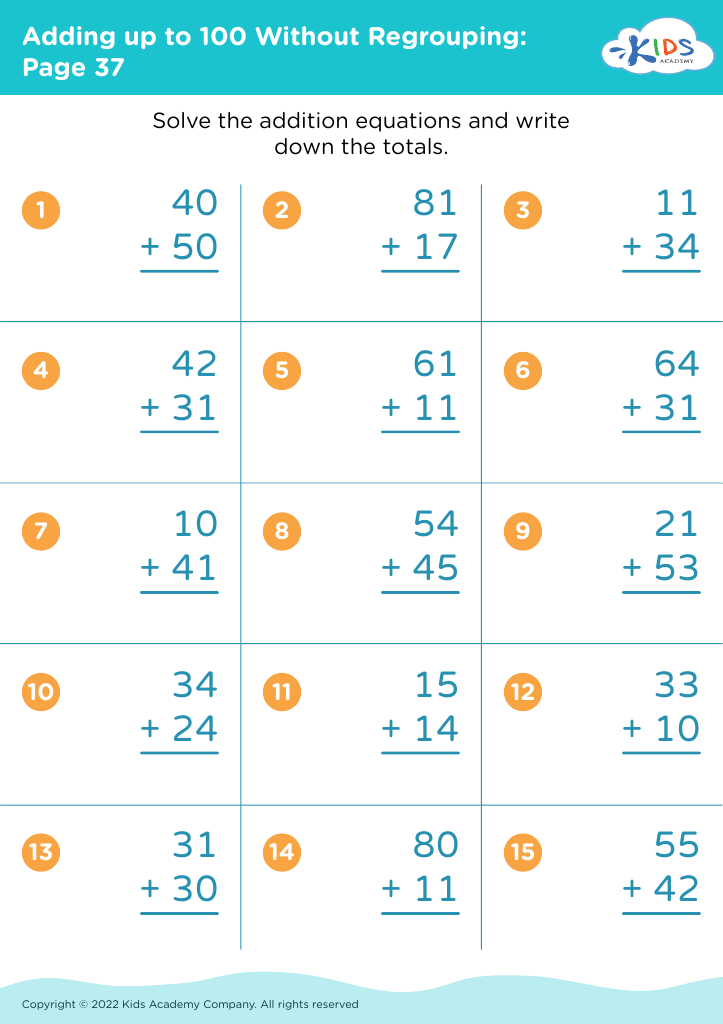
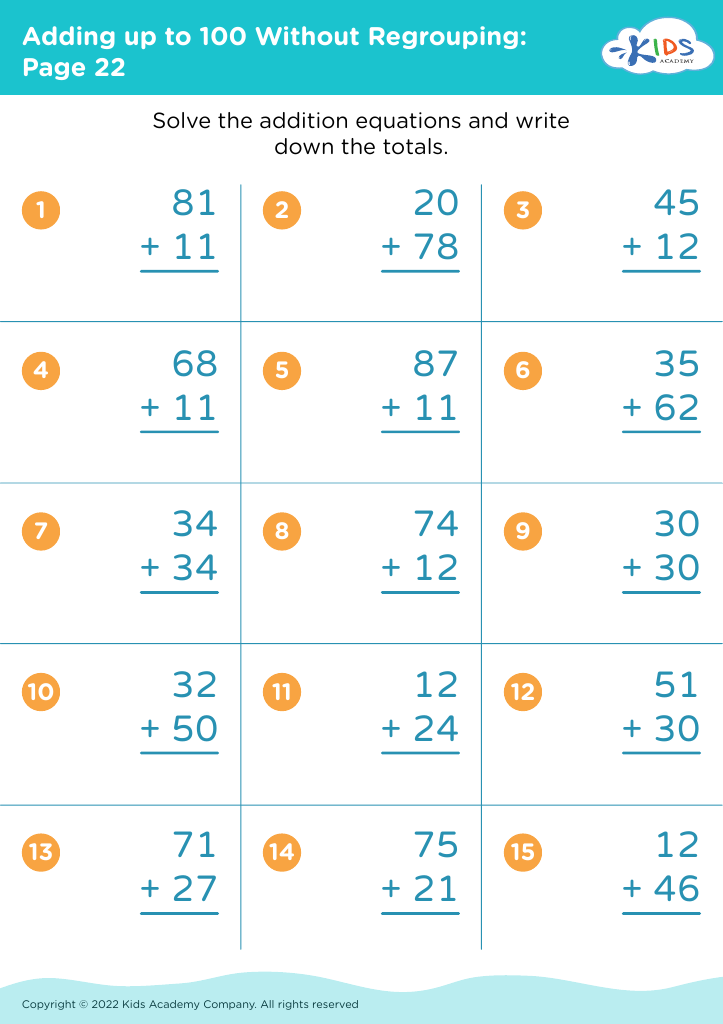




Understanding multiplication and addition up to 100 without regrouping is crucial for children aged 7-8, laying a strong foundation for their mathematical skills. At this age, students begin transitioning from basic arithmetic to more complex mathematical concepts. Mastery of these skills helps them develop numerical fluency, which enhances their confidence and interest in math.
When children comprehend multiplication, they can easily see the relationship between addition and multiplication, fostering a deeper understanding of math operations. It also improves their problem-solving abilities, enabling them to tackle word problems and real-life scenarios effectively.
Additionally, focusing on addition up to 100 without regrouping encourages accuracy in calculations and strengthens their number sense. Such skills are essential not only for math but also in daily situations, like budgeting or measuring.
Teachers and parents should care about this because a strong grasp of these concepts can reduce math anxiety, encourage persistence, and promote critical thinking. Engaging students in this area helps cultivate positive attitudes toward learning, shaping their approach to future challenges and opportunities. Ultimately, investing in these foundational skills benefits children's overall academic growth and lifelong learning.