Counting skills Adding up to 1000 Misc Worksheets for Ages 7-8
8 filtered results
-
From - To
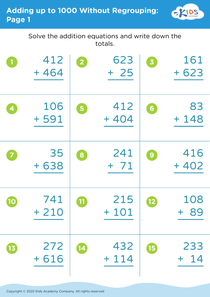
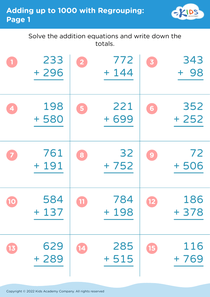
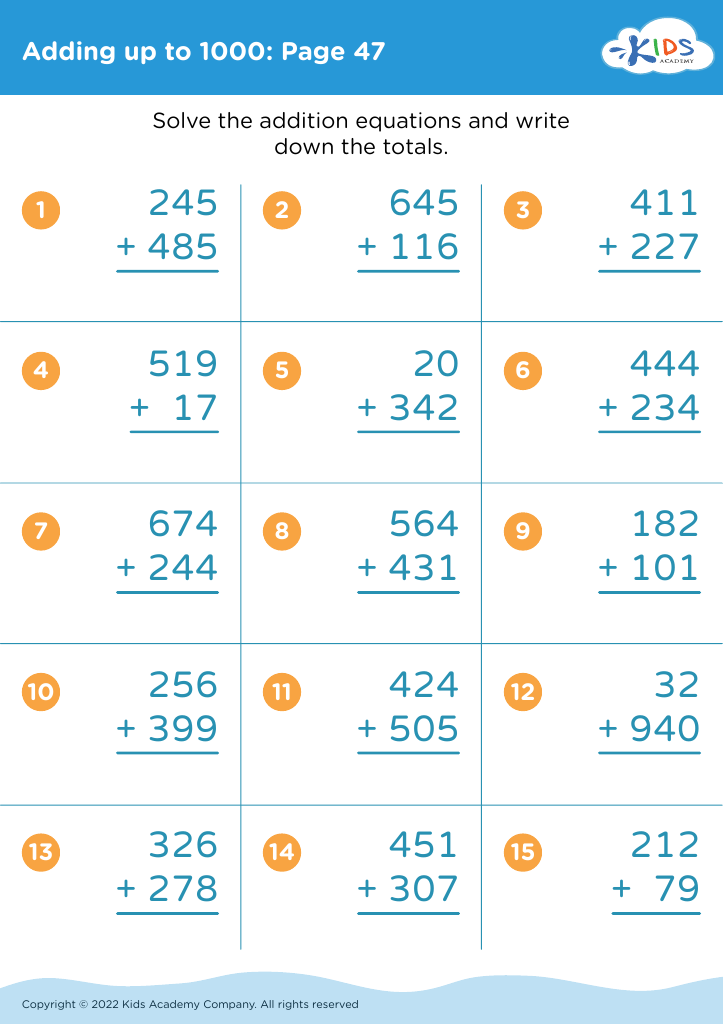
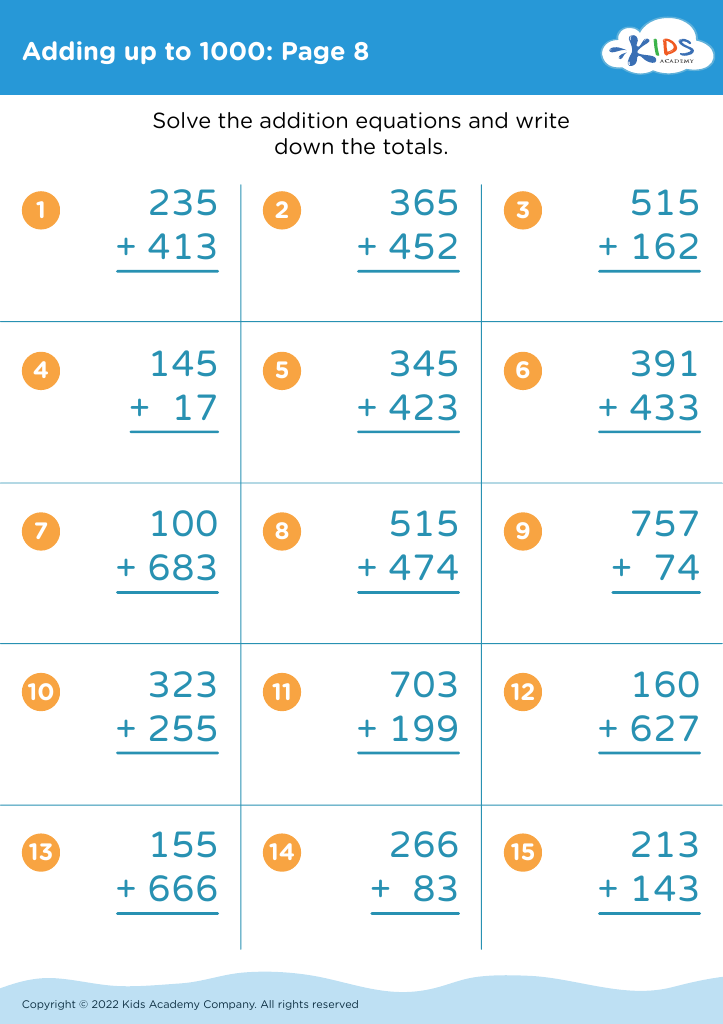
Help your child boost their math abilities with our Counting Skills: Adding up to 1000 Misc Worksheets for ages 7-8. These engaging worksheets enhance counting proficiency by focusing on adding up to 1000, perfect for young learners. Carefully designed to develop essential math foundations, each worksheet presents fun and stimulating activities. Ideal for classroom or home use, they support your child's numerical fluency and problem-solving skills. Keep your little mathematician motivated and confident while mastering addition up to 1000 with these comprehensive and educational resources, providing an enjoyable learning journey.
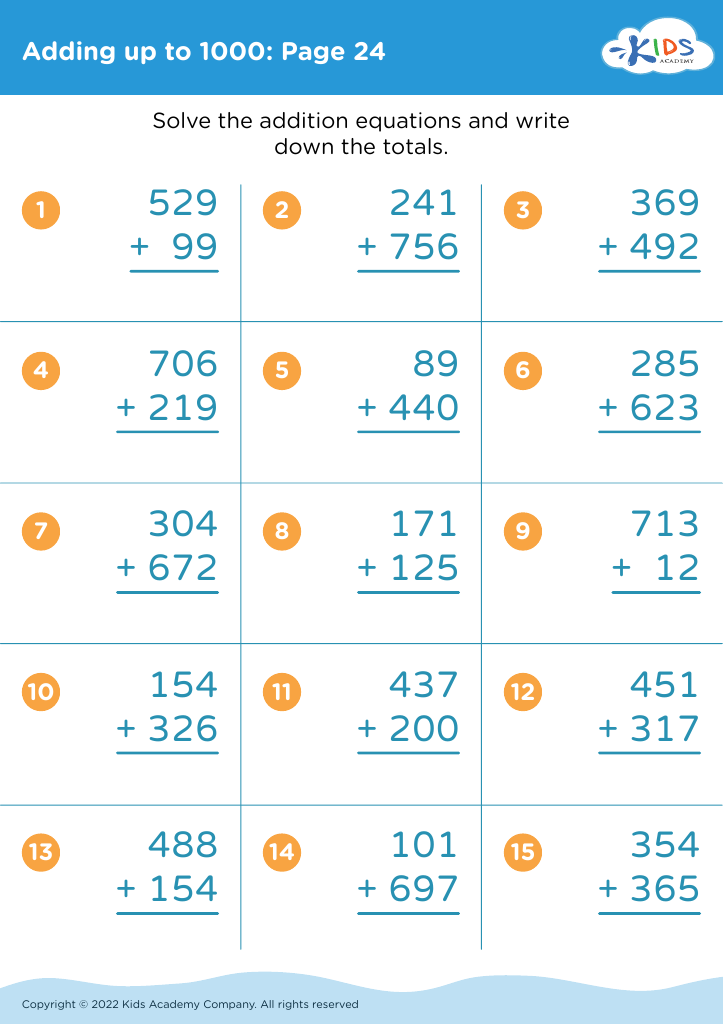
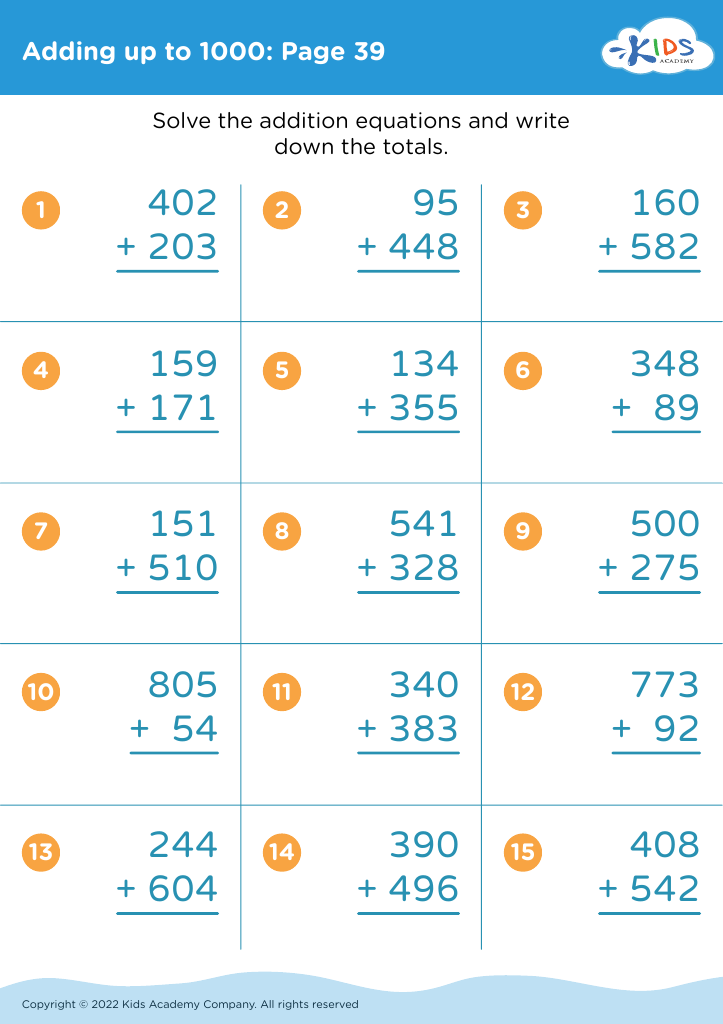
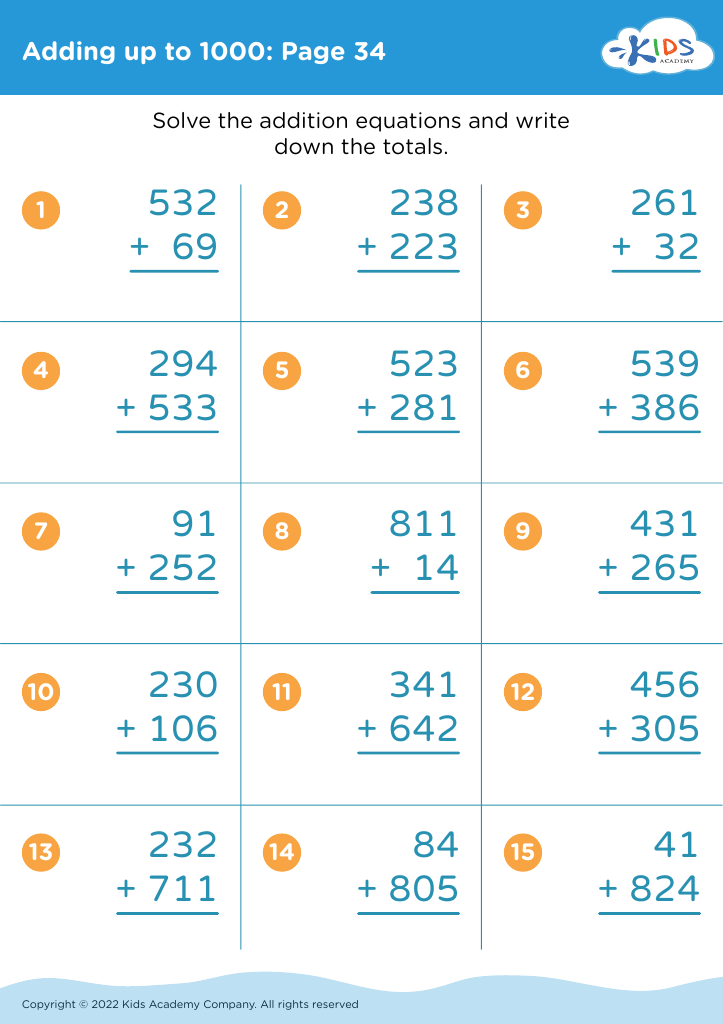
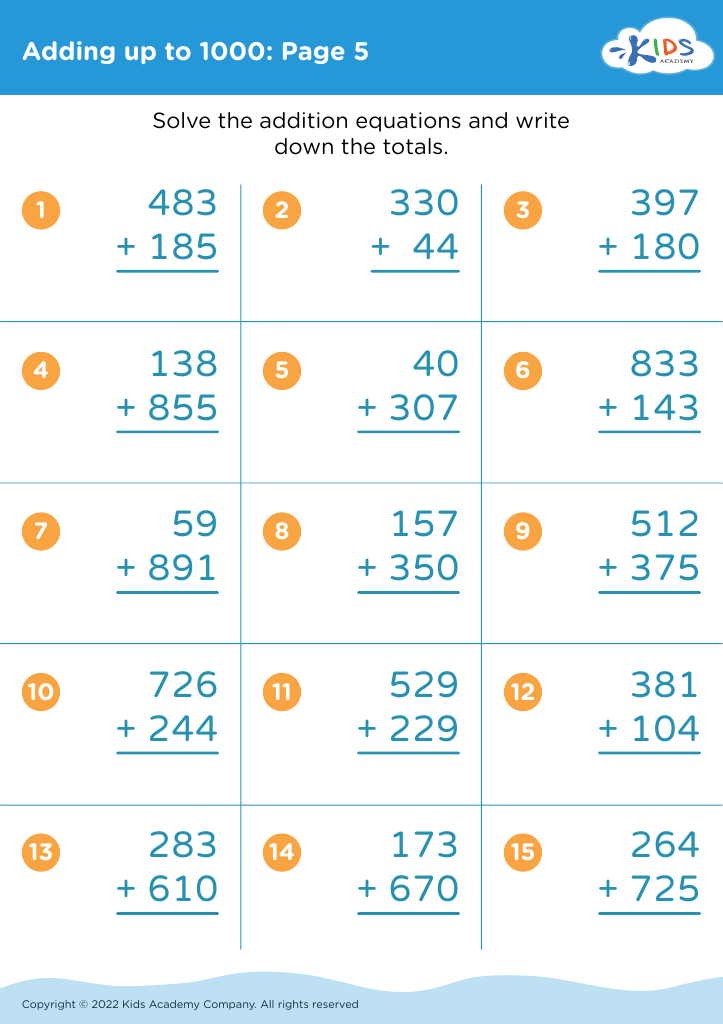
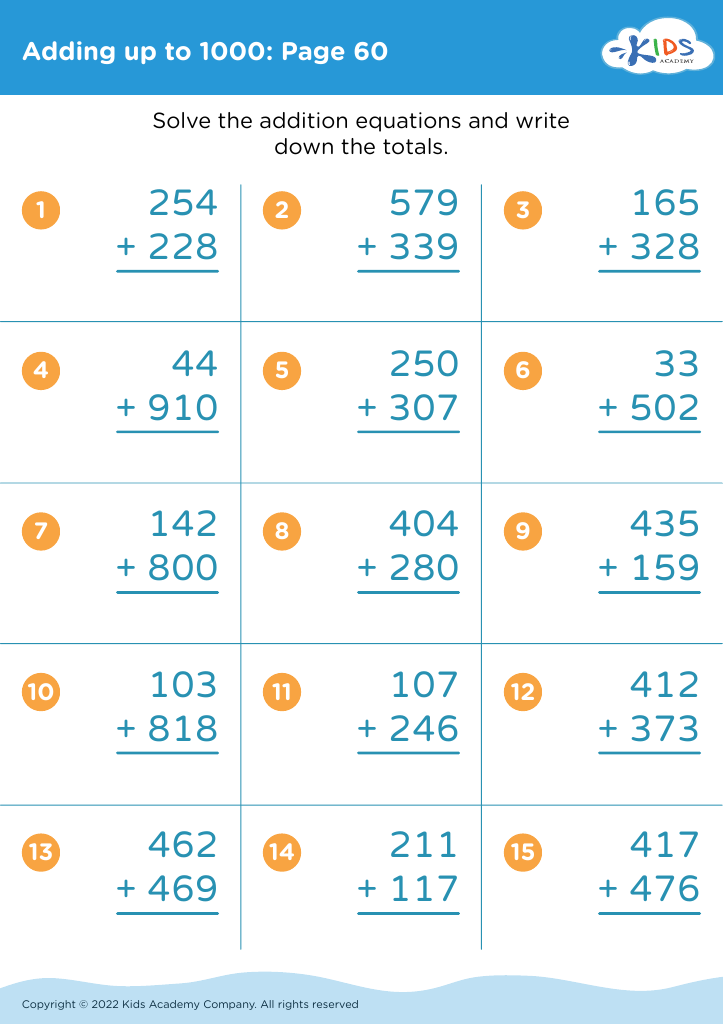
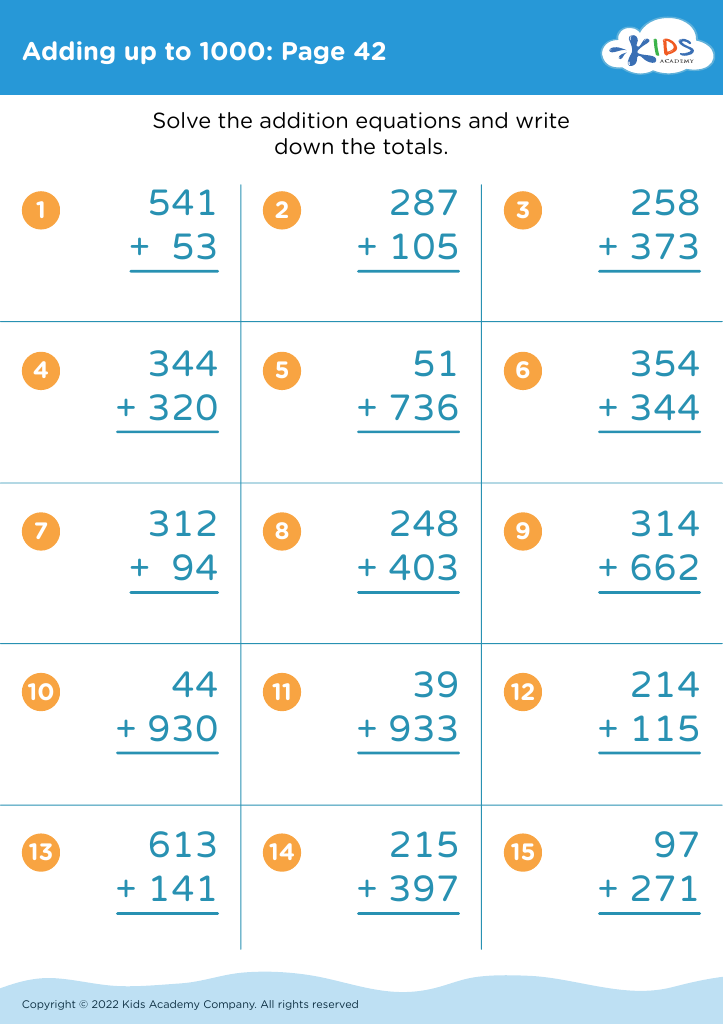


Counting skills and understanding how to add numbers up to 1000 are crucial for children aged 7-8, and both parents and teachers should place importance on these skills for several key reasons. First, early mastery of counting and addition forms the foundation for more complex mathematical concepts. As children become comfortable with numbers and arithmetic, they build the confidence necessary for future success in subjects such as algebra, geometry, and calculus.
Second, these skills significantly enhance cognitive development. Engaging with numbers exercises a child's brain, building problem-solving abilities, memory, and logical thinking skills. This cognitive engagement supports overall academic performance, fostering better critical thinking and analytic abilities useful across various subjects.
Third, proficiency with counting and addition prepares kids for real-world situations where they will apply these skills regularly. Whether managing money, measuring ingredients for a recipe, or determining time and distance, having a solid grasp of basic arithmetic is necessary for daily life.
Lastly, having these skills at an early age can help prevent math anxiety, a common issue that develops when children struggle to grasp foundational concepts. Early mastery leads to increased self-efficacy, which diminishes fear and anxiety related to math. By prioritizing these skills, parents and teachers enable children to not only excel academically but also navigate everyday tasks with confidence and competence.