Fine Motor Skills Adding up to 1000 Misc Worksheets for Ages 7-8
5 filtered results
-
From - To
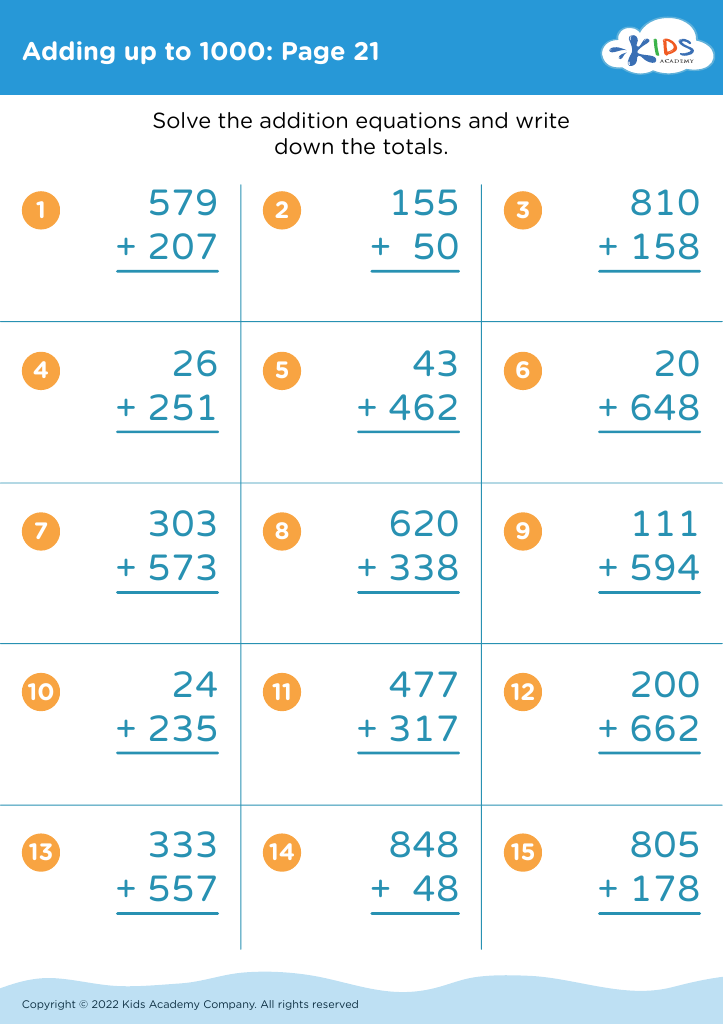
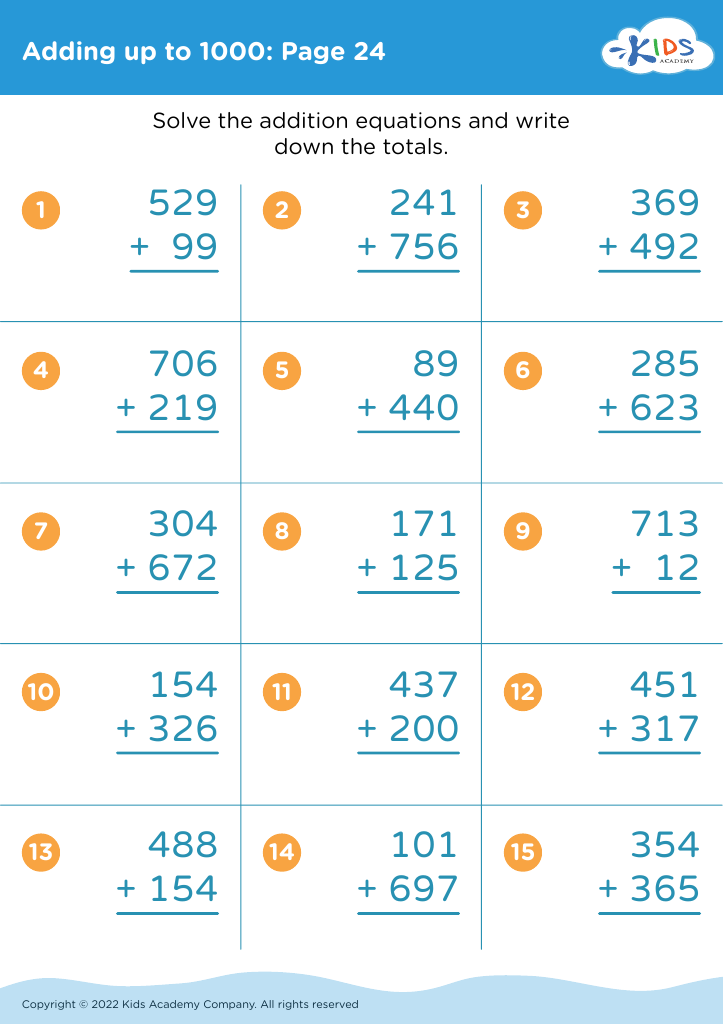
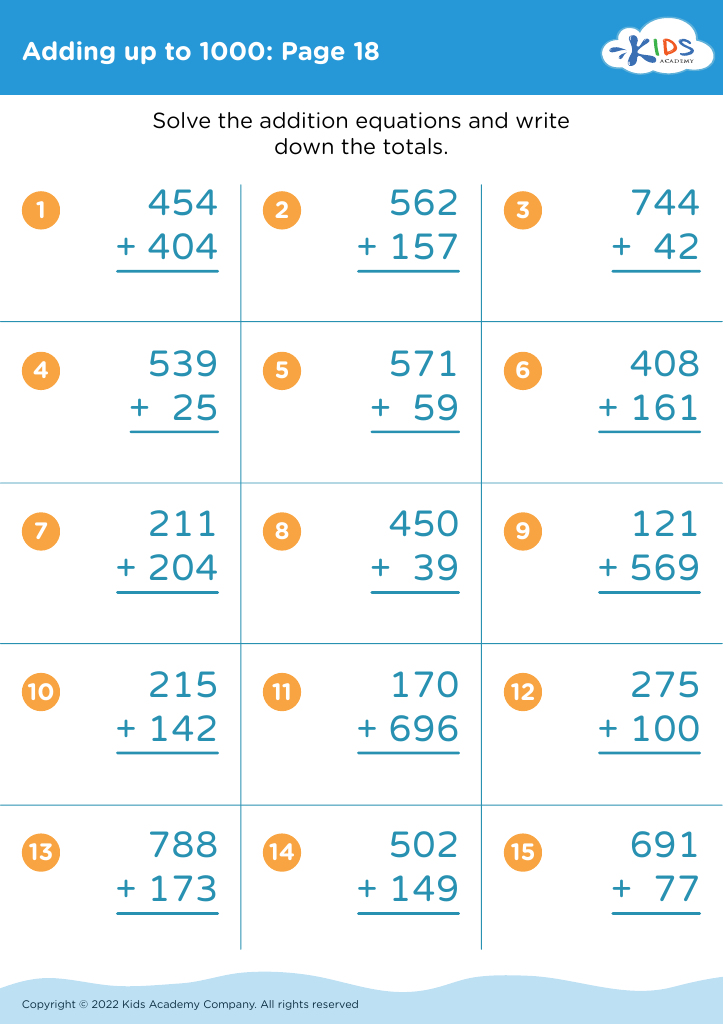
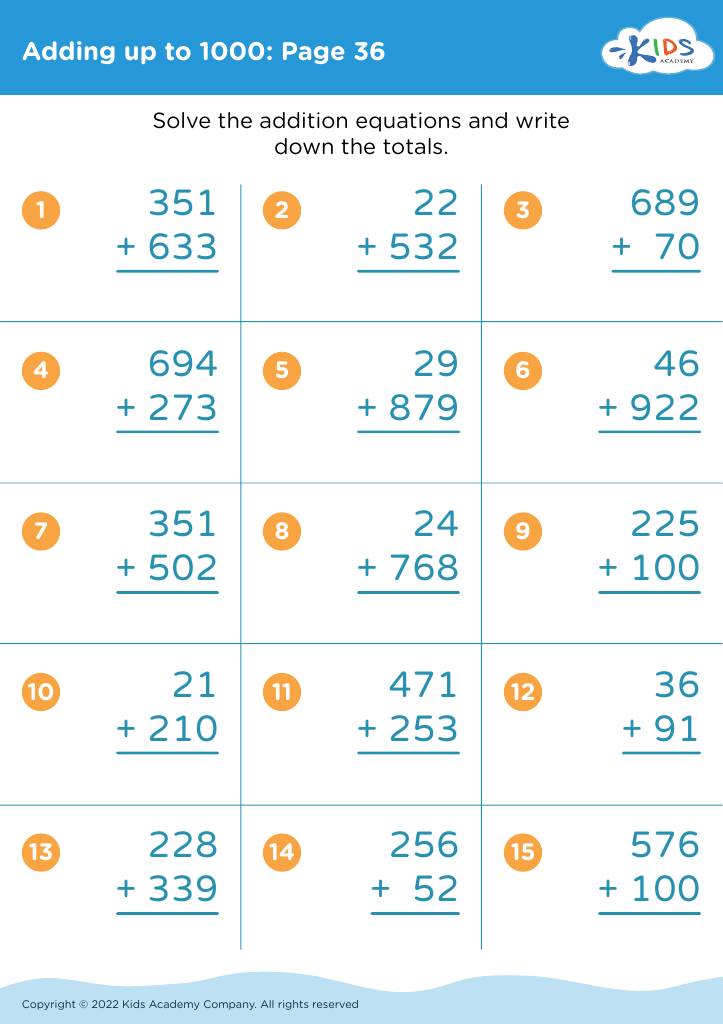
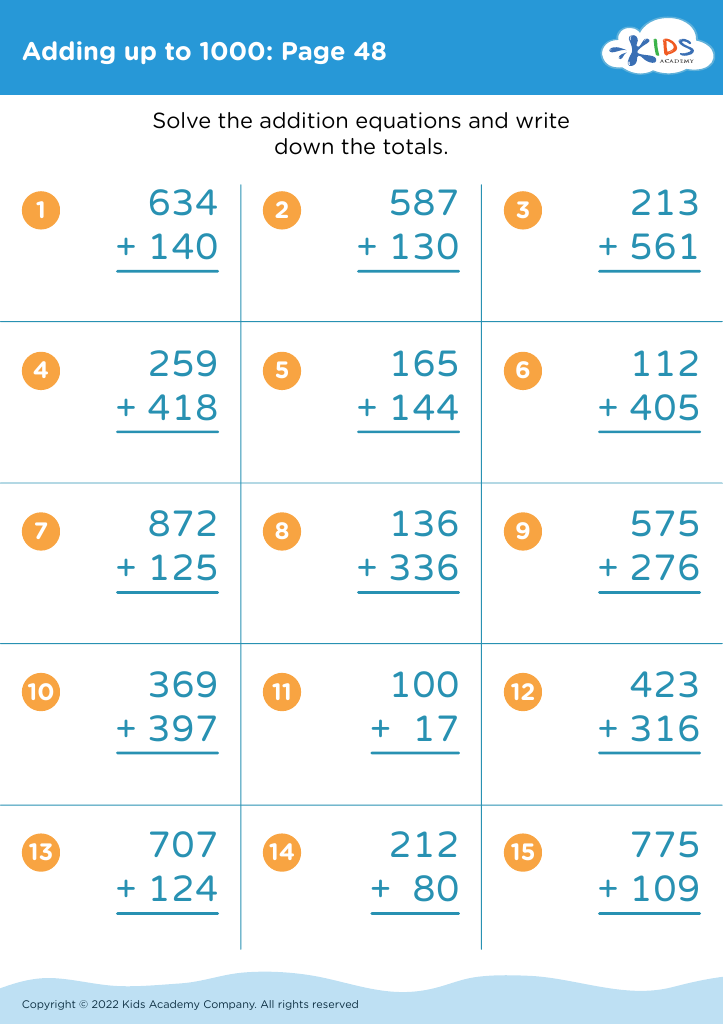
Enhance your child's fine motor skills with our comprehensive collection of 1,000 engaging worksheets designed for kids aged 7-8. These fun and interactive activities not only promote mathematical understanding by practicing addition up to 1,000 but also strengthen hand-eye coordination and dexterity. Each worksheet is crafted to captivate young minds, ensuring they develop essential academic skills while improving their ability to grip, write, and trace. Ideal for teachers, parents, and tutors, these resources serve as perfect supplementary materials for any learning environment, making math enjoyable and accessible. Get ready to watch your child's confidence and skills flourish!


Fine motor skills are crucial for children aged 7-8, as they help develop the intricate coordination needed for everyday tasks and learning activities. Parents and teachers should prioritize these skills because they lay the foundation for more complex abilities. For instance, proficient fine motor skills enhance handwriting, making it more legible and fluid, which directly impacts a child’s confidence and performance in school.
Additionally, fine motor skills are linked to academic skills like math and art. Activities such as cutting, pasting, or manipulating small objects improve hand-eye coordination and dexterity, allowing children to approach tasks with greater ease. By refining these skills, children can excel in problem-solving and creative tasks, fostering cognitive development.
Moreover, strong fine motor skills boost a child's independence and self-esteem, as they become capable of handling various tasks on their own. This sense of accomplishment motivates them to tackle more challenging tasks in the future.
In summary, investing time in developing fine motor skills during early childhood is essential for promoting academic success, creativity, and emotional well-being, making it a crucial focus for both parents and teachers.