Fraction comparison Adding up to 1000 Misc Worksheets for Ages 7-8
6 filtered results
-
From - To
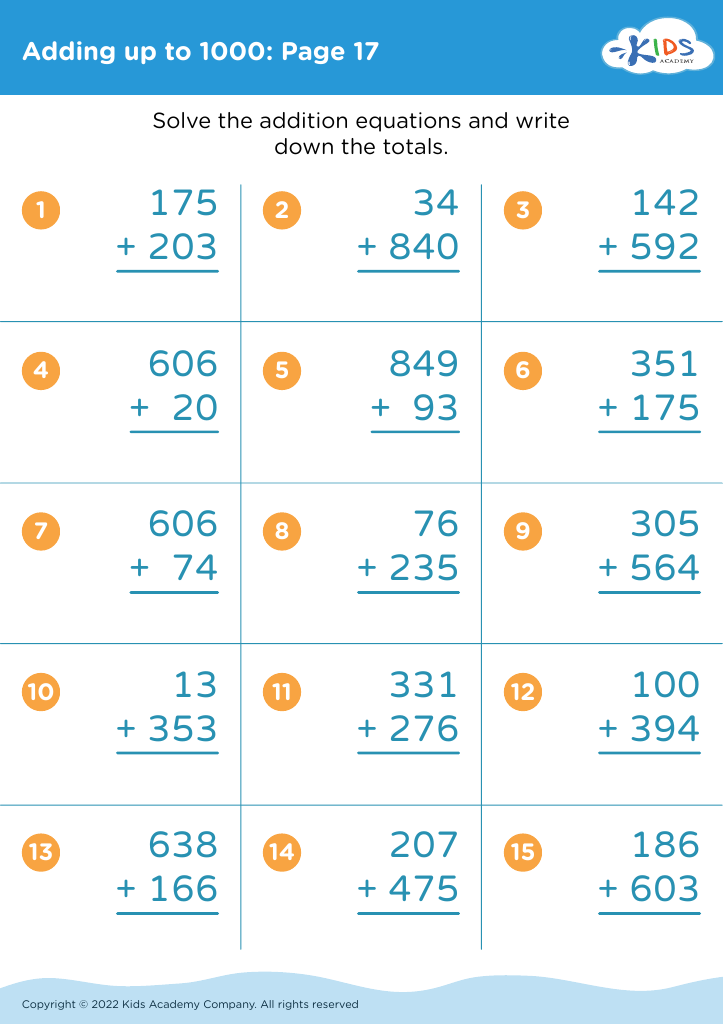
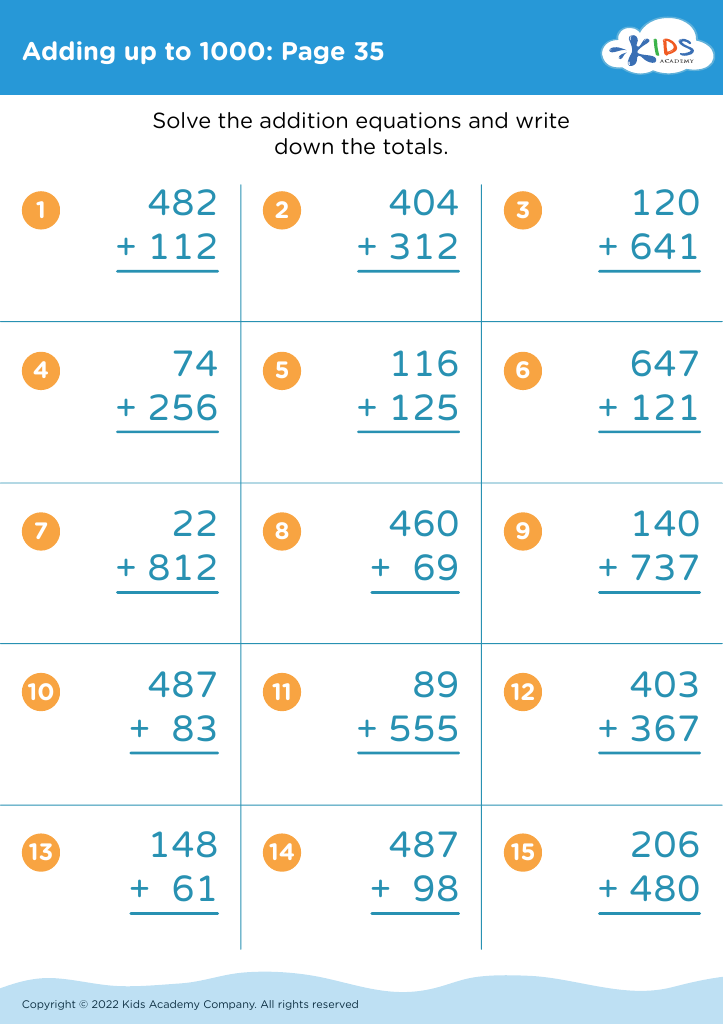
Explore our comprehensive "Fraction Comparison Adding Up to 1000" worksheets designed for children aged 7-8! These engaging and interactive resources aim to enhance students’ understanding of fractions and their comparisons. Featuring a variety of fun activities and problems, kids will develop essential math skills, boost their confidence, and sharpen their problem-solving abilities. Whether in the classroom or at home, these worksheets are perfect for reinforcing fraction concepts and addition strategies. Let your child dive into the world of mathematics with our thoughtfully crafted materials, making learning both enjoyable and effective. Start their journey towards numerical fluency today!
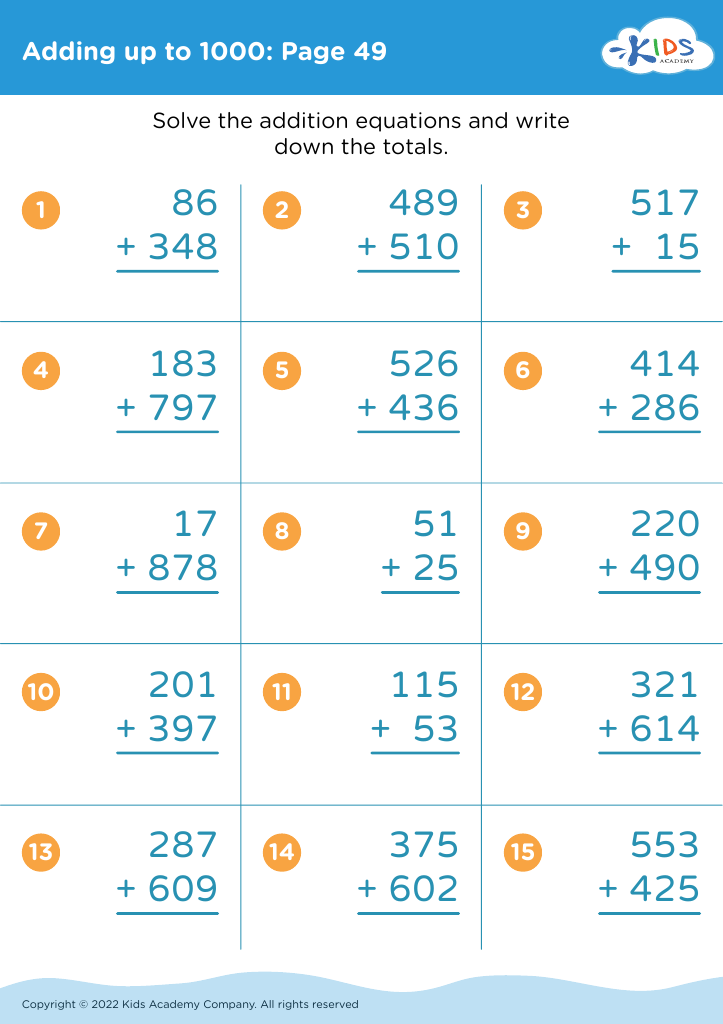
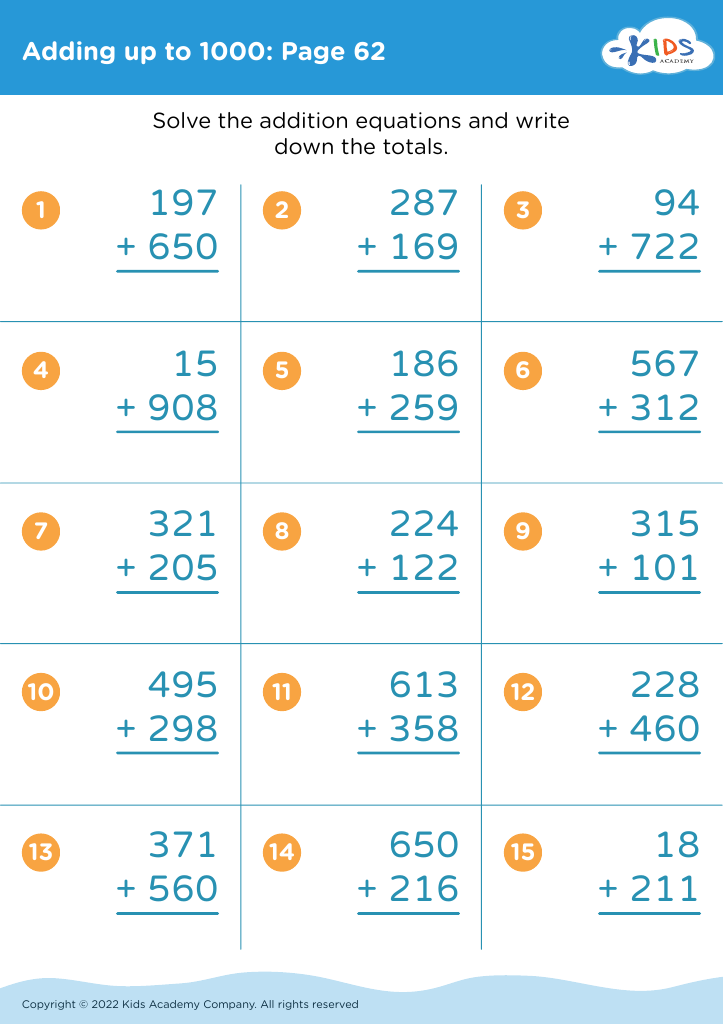
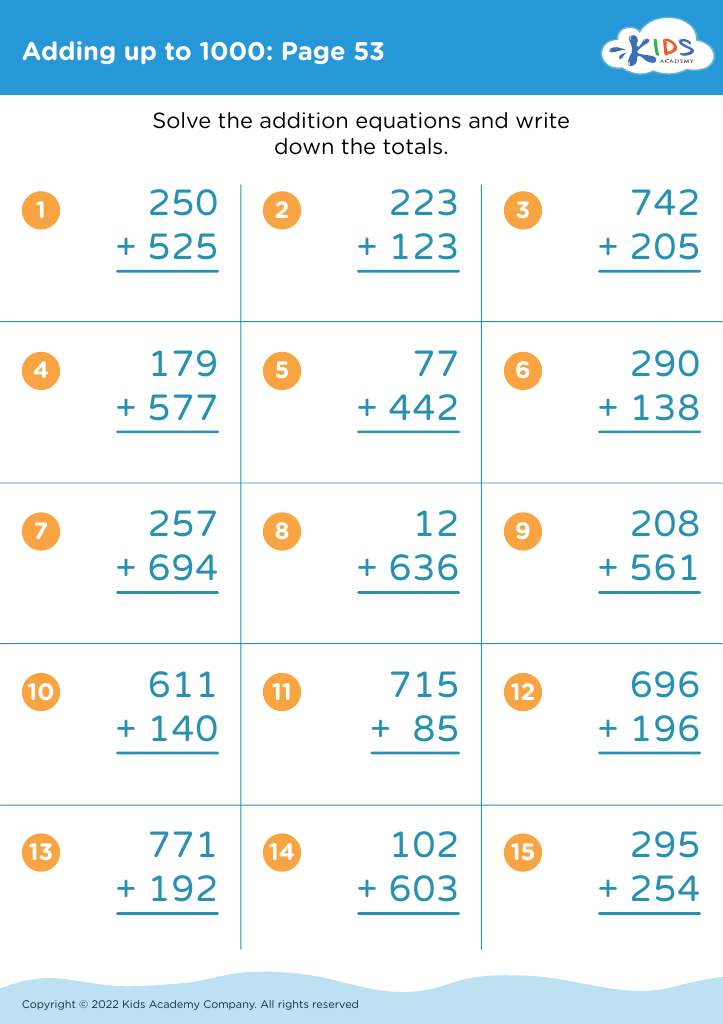
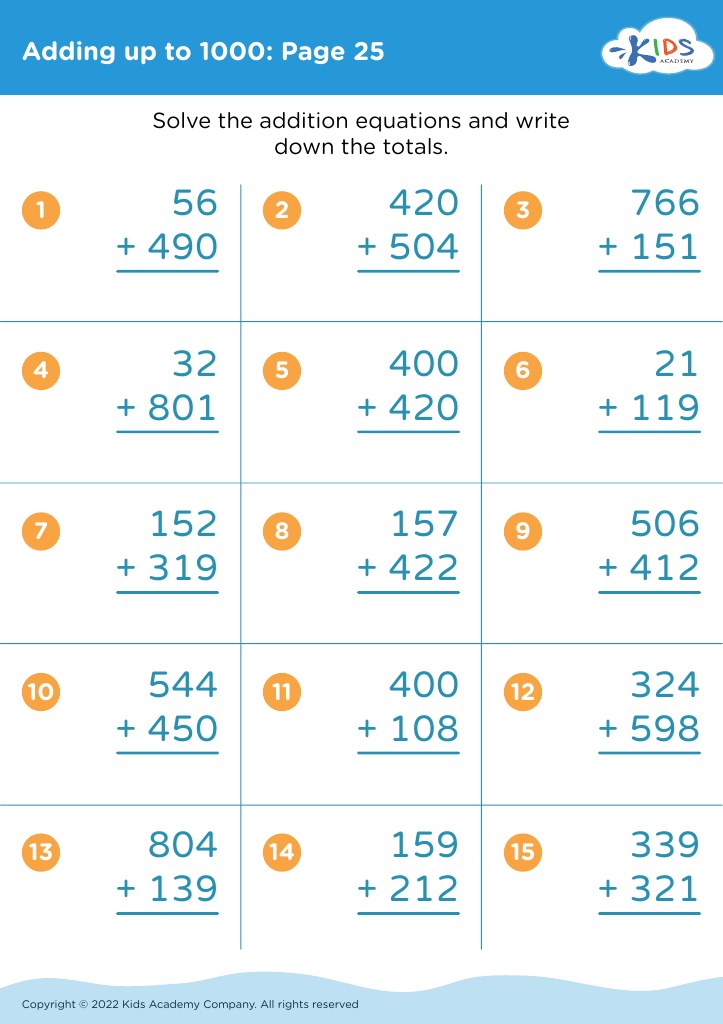


Understanding fraction comparison is crucial for children aged 7-8, as it serves as a foundational skill in mathematics and problem-solving. For parents and teachers, fostering this understanding cultivates critical thinking and helps children grasp complex concepts later on.
Firstly, mastering how to compare fractions aids in enhancing numerical literacy. This skill allows students to make informed decisions in everyday situations—whether cooking, shopping, or sharing resources. Additionally, comparing fractions lays the groundwork for future mathematical learning, such as adding, subtracting, or multiplying fractions, which are essential in advanced mathematics.
Furthermore, engaging in fraction comparison through age-appropriate activities encourages teamwork and communication skills, as students often work in pairs or groups. This collaborative aspect of learning fosters relationships and promotes a sense of belonging among peers.
In concluding, prioritizing fraction comparison in the curriculum not only cultivates foundational skills in mathematics but also prepares young learners for more complex challenges ahead. It promotes confidence in their abilities while enriching their understanding of the world around them. Consequently, both parents and teachers play a vital role in supporting this intertwined learning journey.