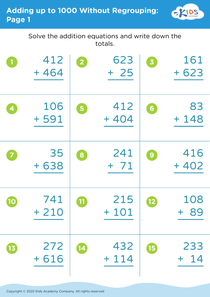
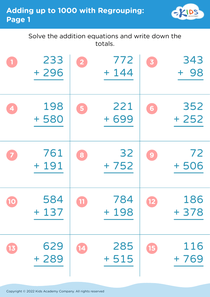
Understand fractions Adding up to 1000 Misc Worksheets for Ages 7-8
3 filtered results
-
From - To
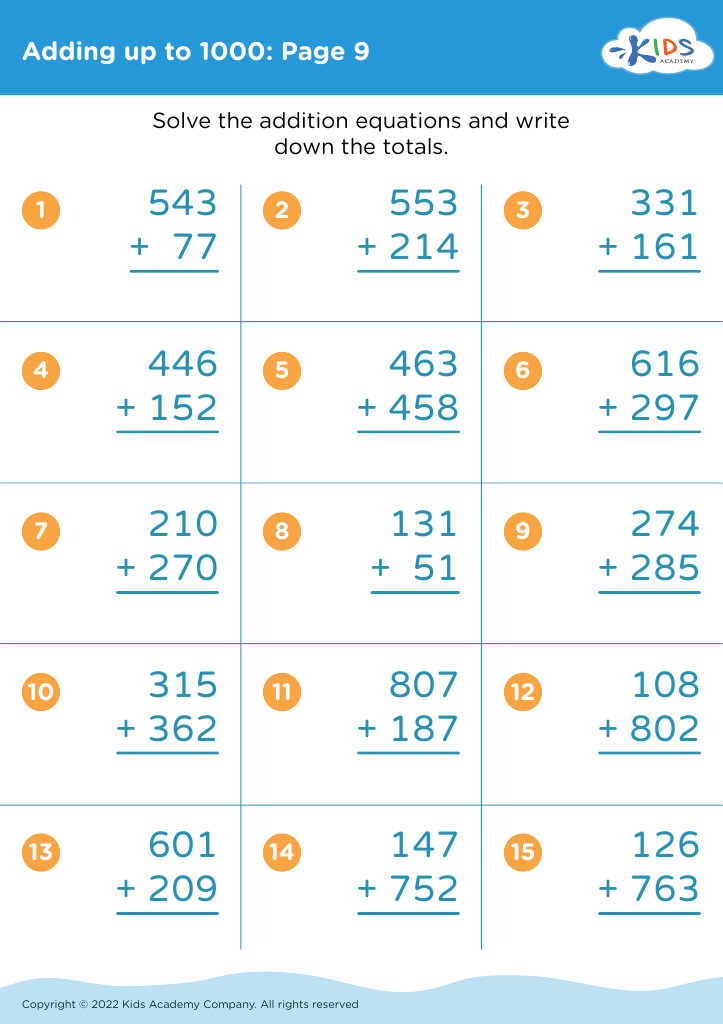
Explore our "Understand Fractions: Adding up to 1000" miscellaneous worksheets, expertly designed for children aged 7-8. These engaging resources make learning fractions fun and accessible while reinforcing essential math skills. With a variety of activities, including visual aids and real-life scenarios, students will grasp concepts of numerator and denominator, visual fraction models, and equivalent fractions. Perfect for classroom or home practice, these worksheets support young learners in developing a solid foundation in fractions as they work towards adding up to 1000. Help your child sharpen their math abilities and boost their confidence with these thoughtfully crafted resources!
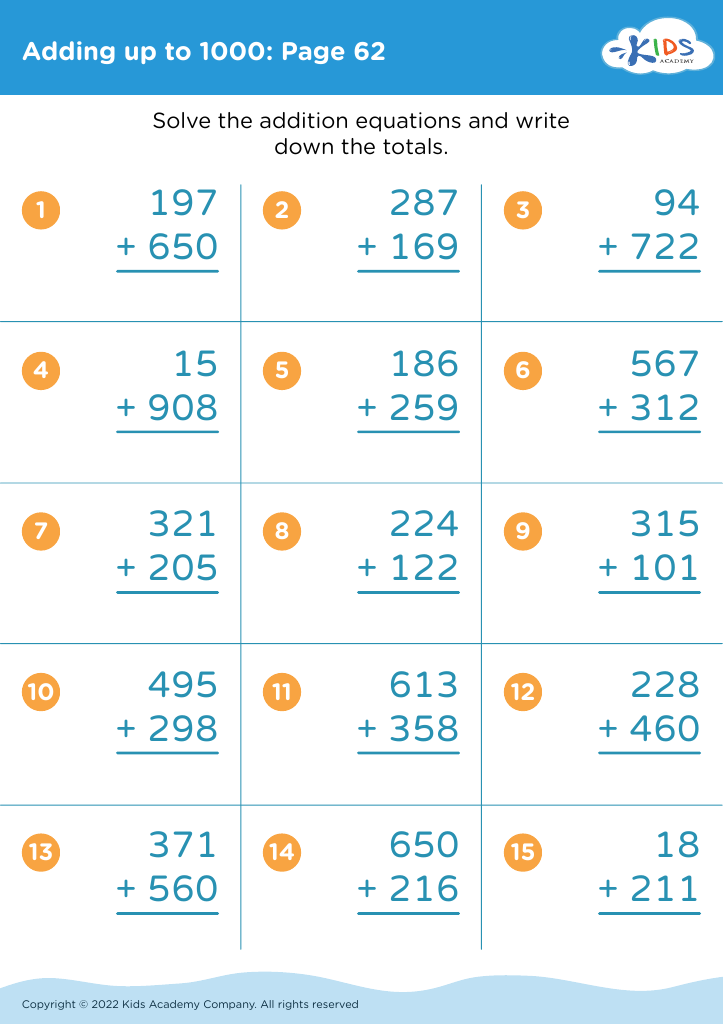
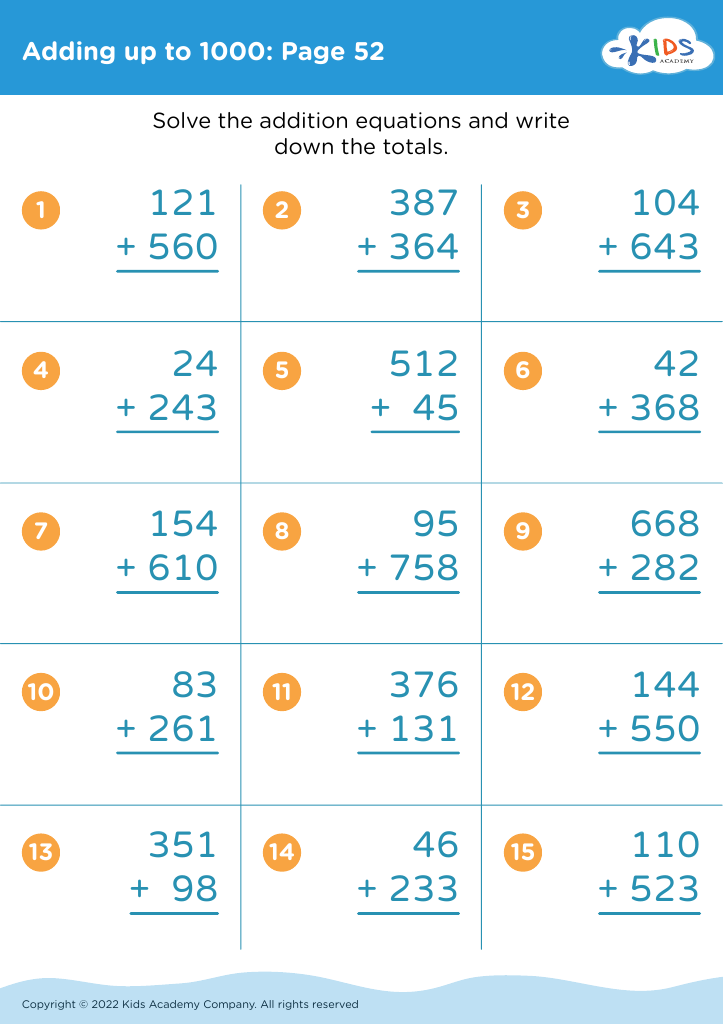


Understanding fractions and their relationship with whole numbers is crucial for children aged 7-8. This foundational math concept not only enhances their numerical problem-solving skills but also lays the groundwork for more complex mathematical notions in the future.
Fractions are integral to daily life, from cooking to budgeting, making it essential for children to grasp this concept. When children learn to understand fractions, they improve their ability to compare quantities, assess proportions, and interpret data. This knowledge becomes particularly relevant as they encounter tasks that involve dividing pizza slices, measuring ingredients in recipes, or scaling down projects.
Adding fractions helps students comprehend that fractions can represent parts of a whole, aiding in understanding percentages and decimal concepts later on. Moreover, the notion of addition and reaching a total of 1000 introduces them to patterns and relationships between numbers, honing their critical thinking skills.
Teachers and parents who prioritize these math concepts not only empower children with essential skills but also foster a positive attitude towards mathematics, paving the way for academic success. Engaging children with interactive and practical activities can make learning fractions enjoyable, increasing their confidence and interest in math, thus benefiting lifelong learning.