Fine Motor Skills Adding up to 1000 with Regrouping Worksheets for Ages 7-8
4 filtered results
-
From - To
Unlock your child's potential with our expertly crafted Fine Motor Skills Adding up to 1000 with Regrouping Worksheets, designed specifically for ages 7-8. These engaging activities combine math practice with fun, helping young learners improve their fine motor skills while mastering the art of addition. Our worksheets encourage hand-eye coordination and dexterity through hands-on exercises, making math enjoyable and interactive. As children learn to add up to 1000 using regrouping strategies, they also refine essential motor skills that are critical for handwriting and everyday tasks. Enhance your child's learning journey today and foster confidence in both math and fine motor abilities!
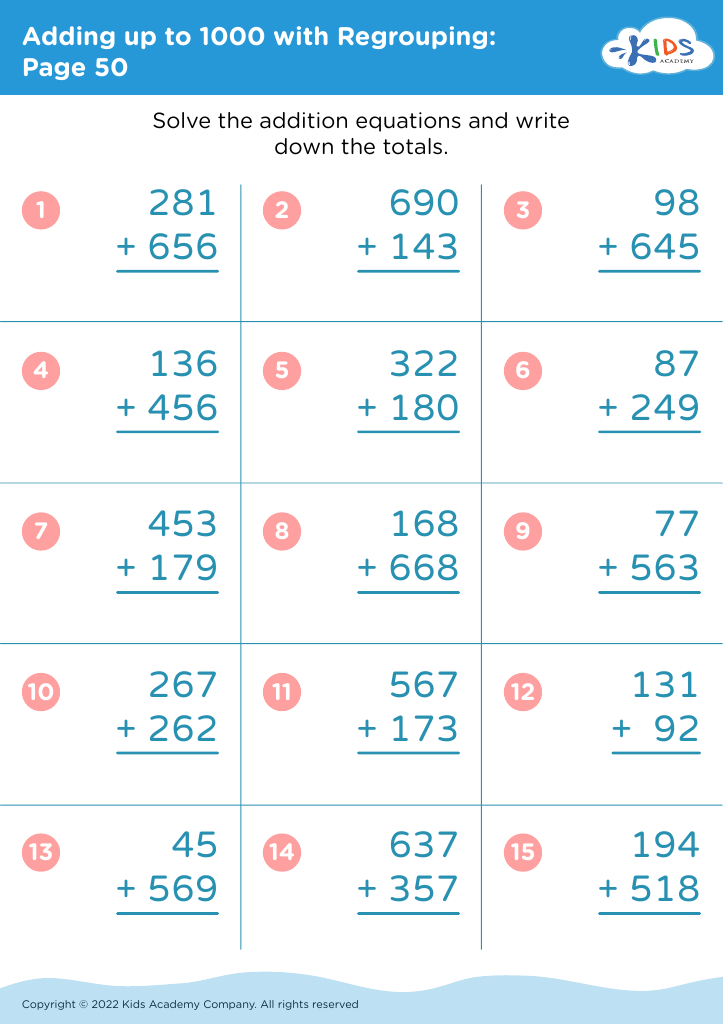
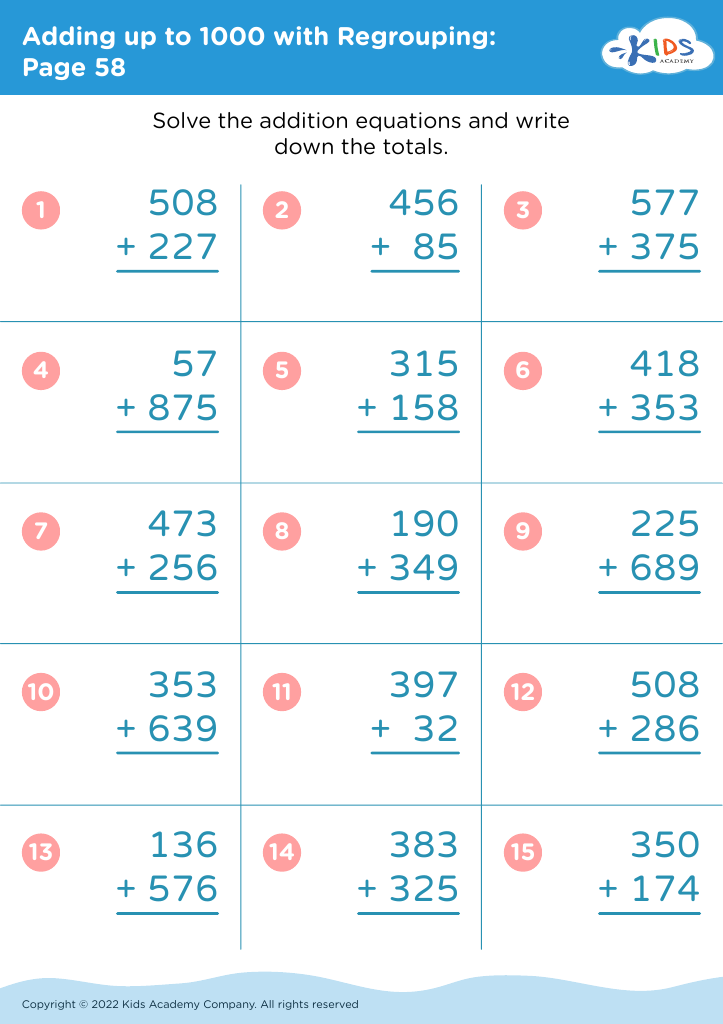
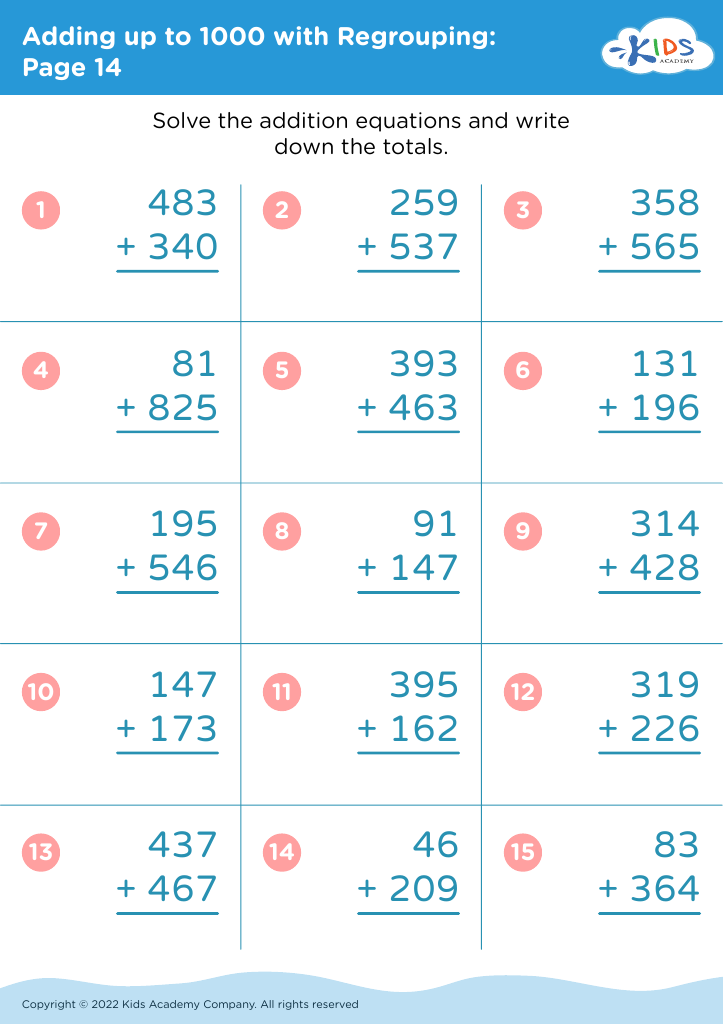
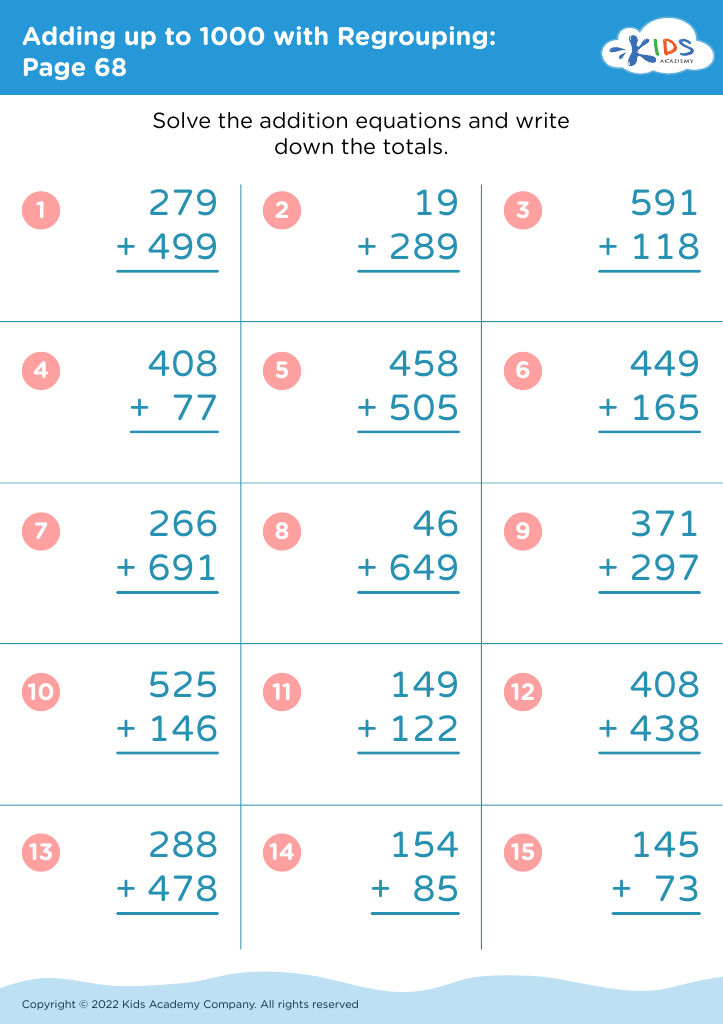


Parents and teachers should prioritize fine motor skills alongside developing mathematical abilities like adding up to 1000 with regrouping for children aged 7-8, as these skills are interconnected and foundational for a child’s overall development. Fine motor skills, involving the coordination of small muscles, are essential for tasks such as writing, drawing, and manipulating tools. As children in this age group engage actively in math activities that involve regrouping, like using manipulatives or drawing visual aids to solve problems, their fine motor development is simultaneously enhanced.
Encouraging fine motor skill practice, through activities like cutting, pasting, or using playdough, lays the groundwork for better handwriting and articulation of numbers in math problems. When students learn to add while accurately engaging with materials, they improve their understanding of concepts like place value and carryover techniques.
Moreover, successfully tackling complex addition problems fosters confidence and problem-solving skills. These skills reinforce perseverance and patience, traits beneficial for learning across all subjects. Thus, parents and teachers mark these developmental stages as vital. Together, they can create an environment that nurtures both fine motor skills and mathematical understanding, ensuring children are well-equipped for future academic success.