Fine Motor Skills Adding up to 1000 Worksheets for Ages 7-8
12 filtered results
-
From - To
Unlock your child's potential with our "Fine Motor Skills Adding up to 1000 Worksheets" designed for ages 7-8! These engaging worksheets merge essential math practice with fine motor skill development, providing a fun way for children to strengthen their hand-eye coordination, dexterity, and control. Featuring a variety of interactive activities, this collection encourages learners to enhance their writing and drawing abilities while mastering addition skills. Perfect for both home and classroom settings, these worksheets keep children motivated and challenged. Watch as they build confidence in their math skills while refining their fine motor abilities, laying a solid foundation for future learning.
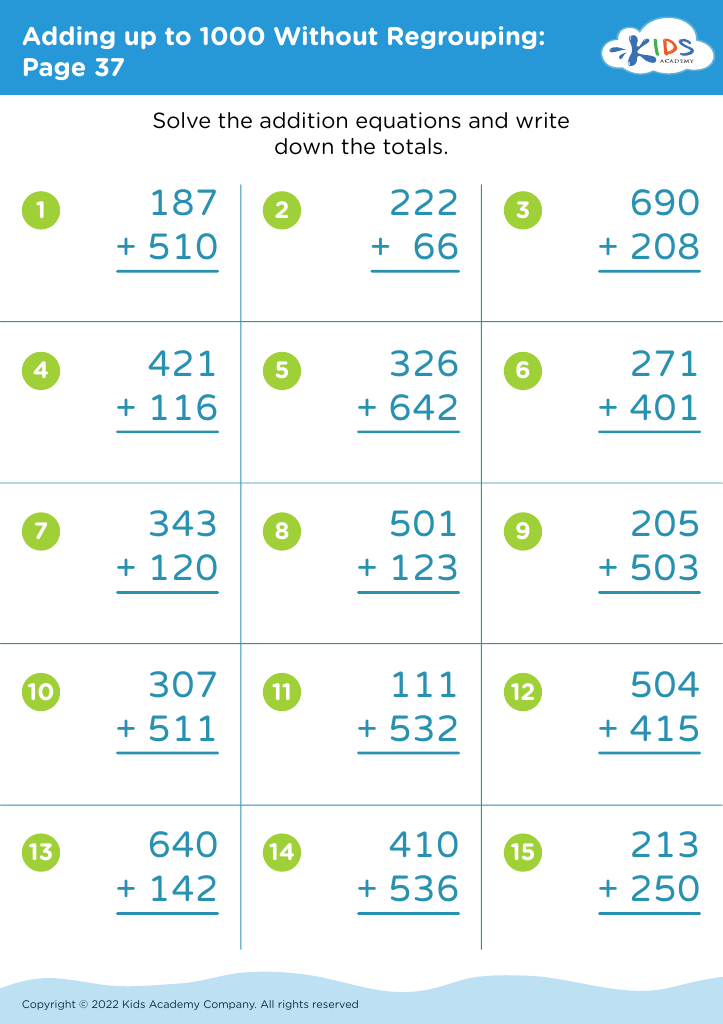
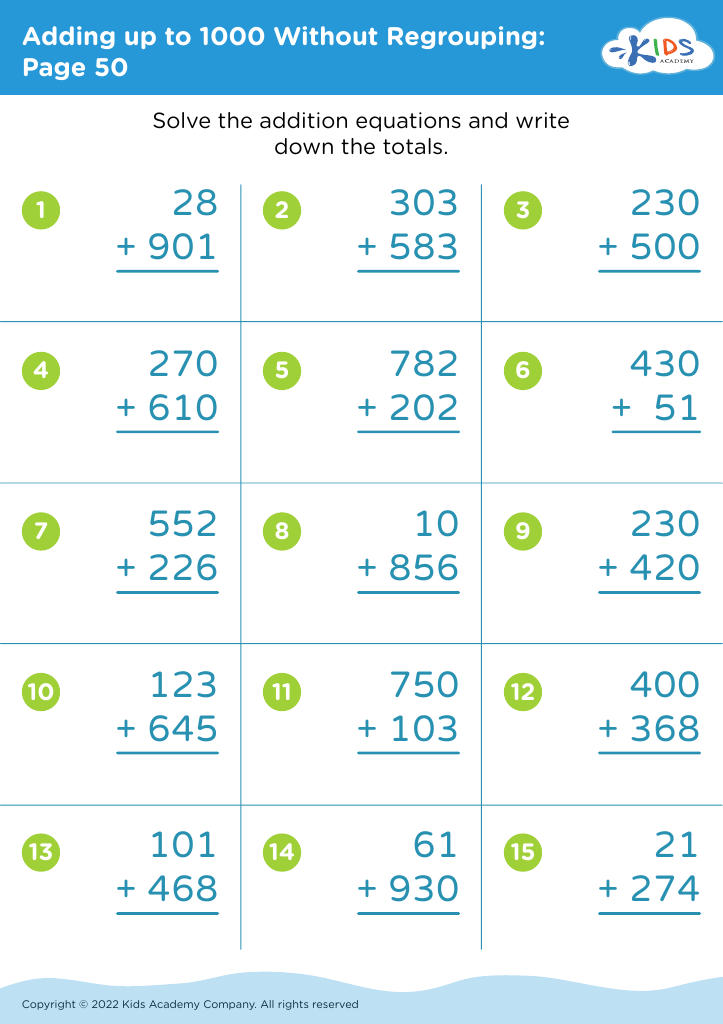
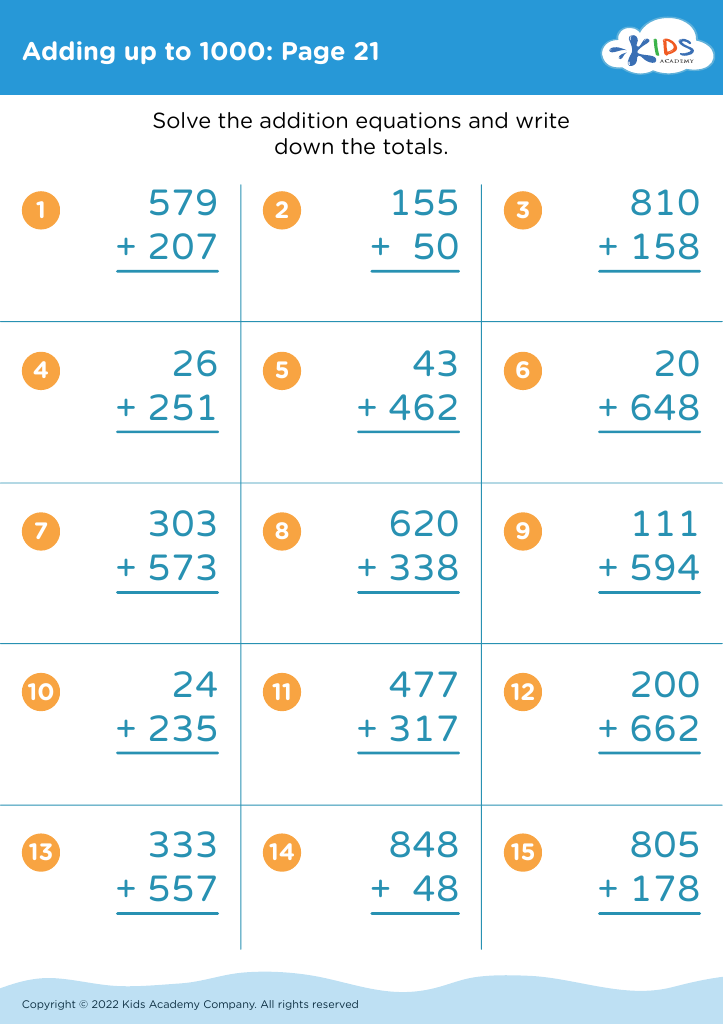
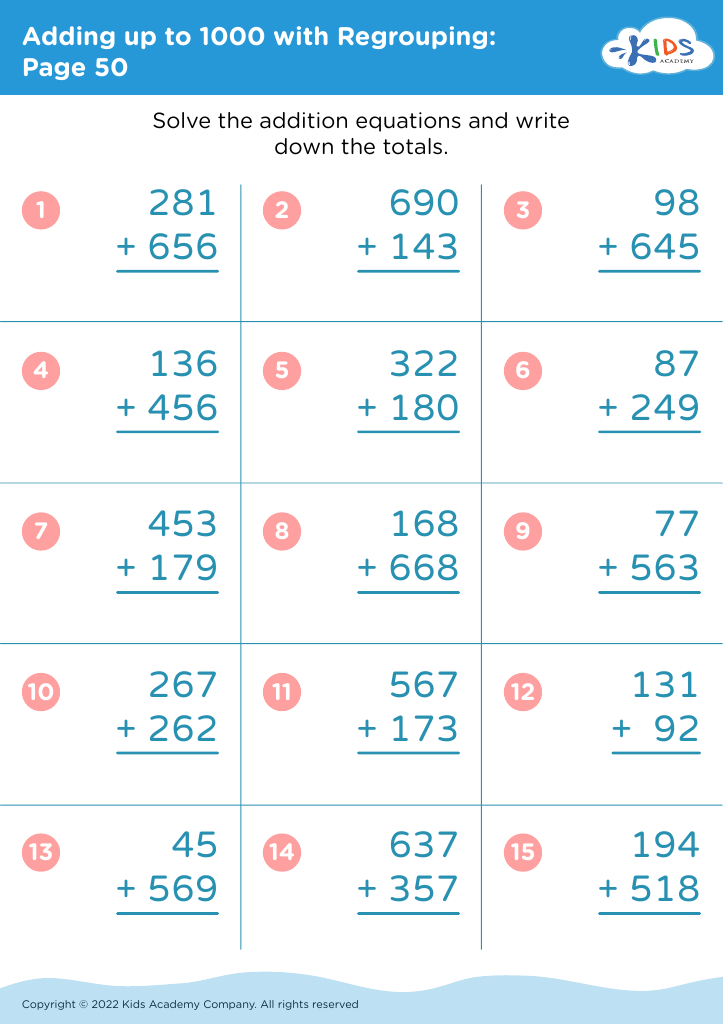
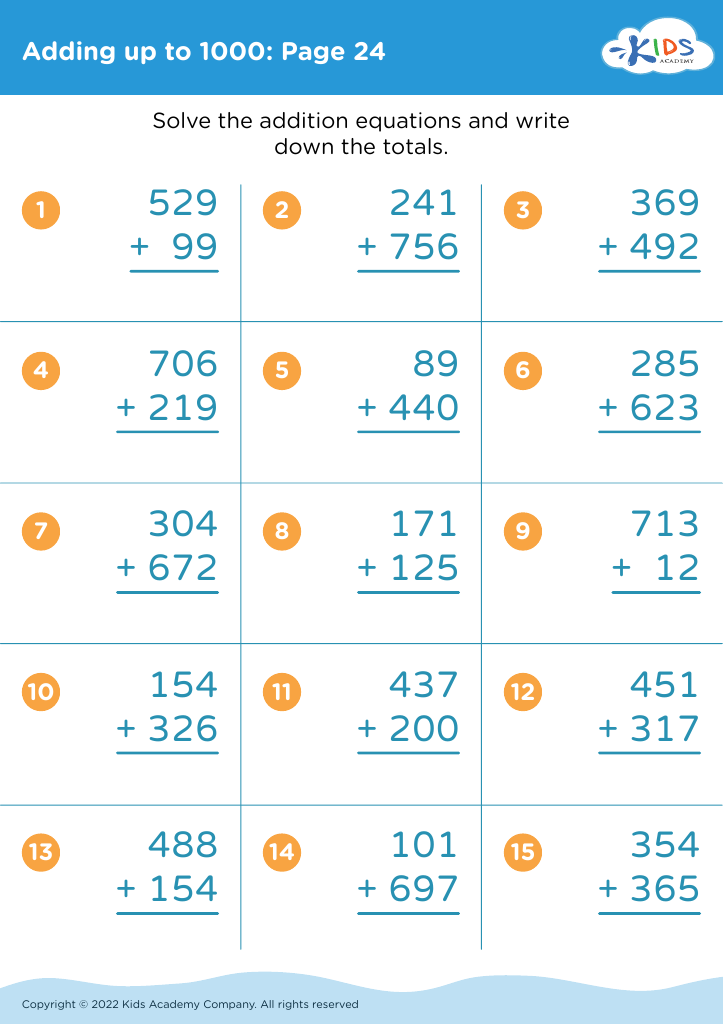
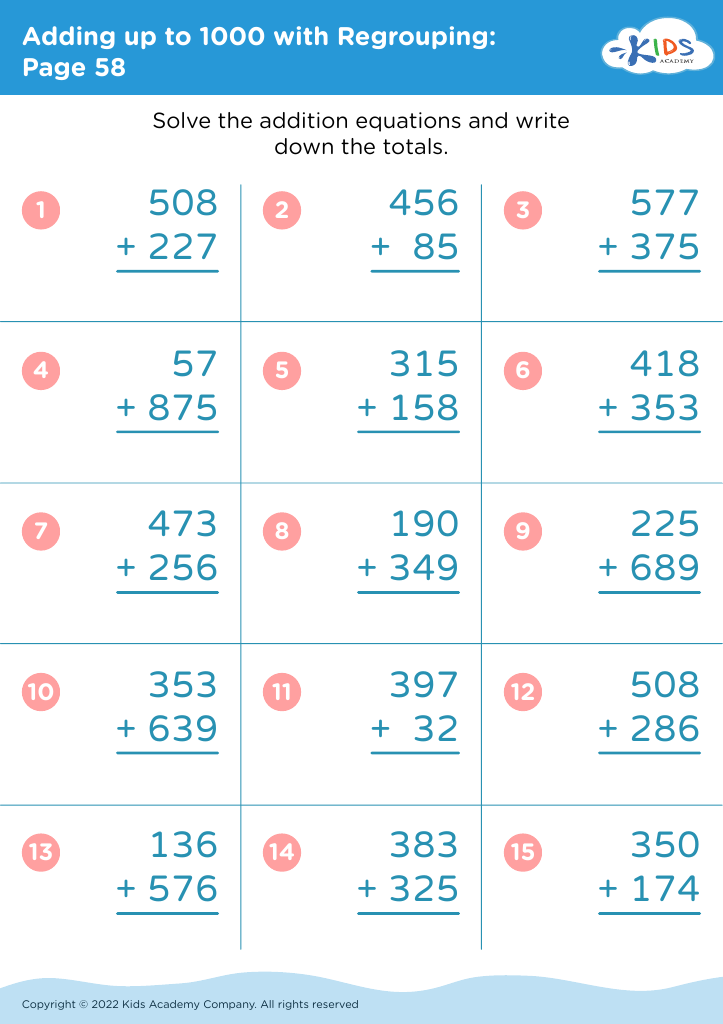
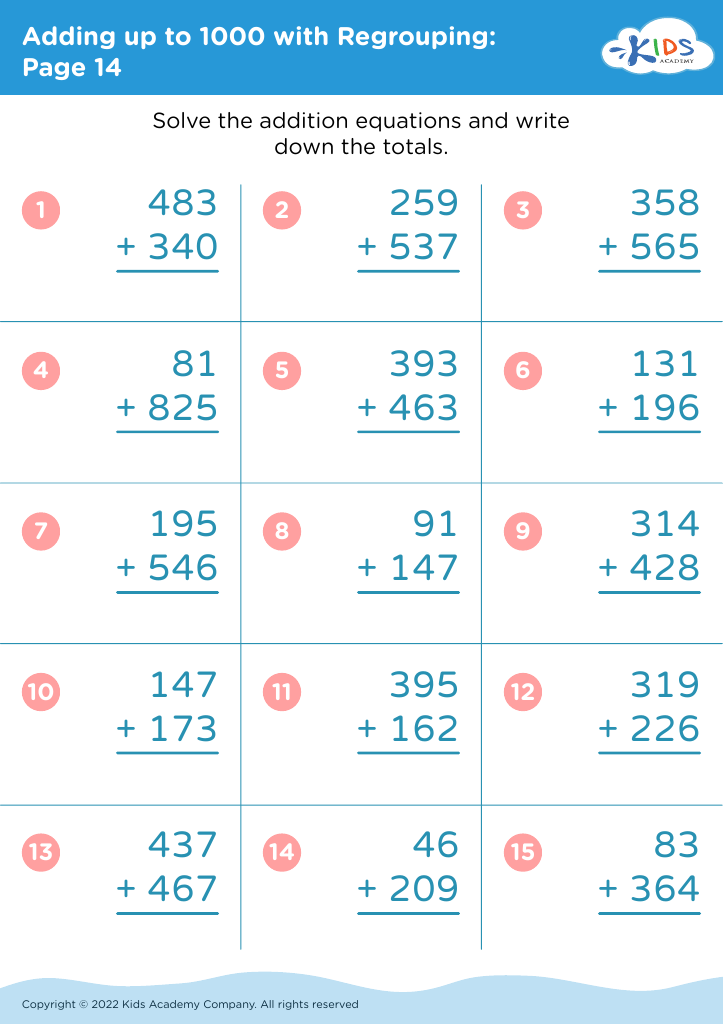
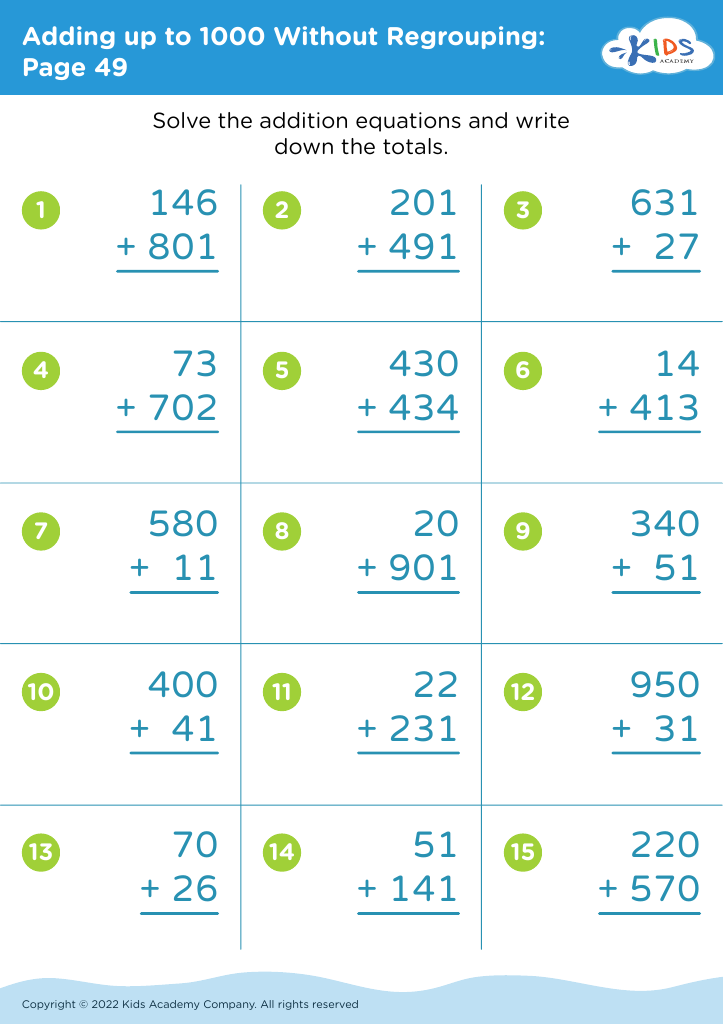
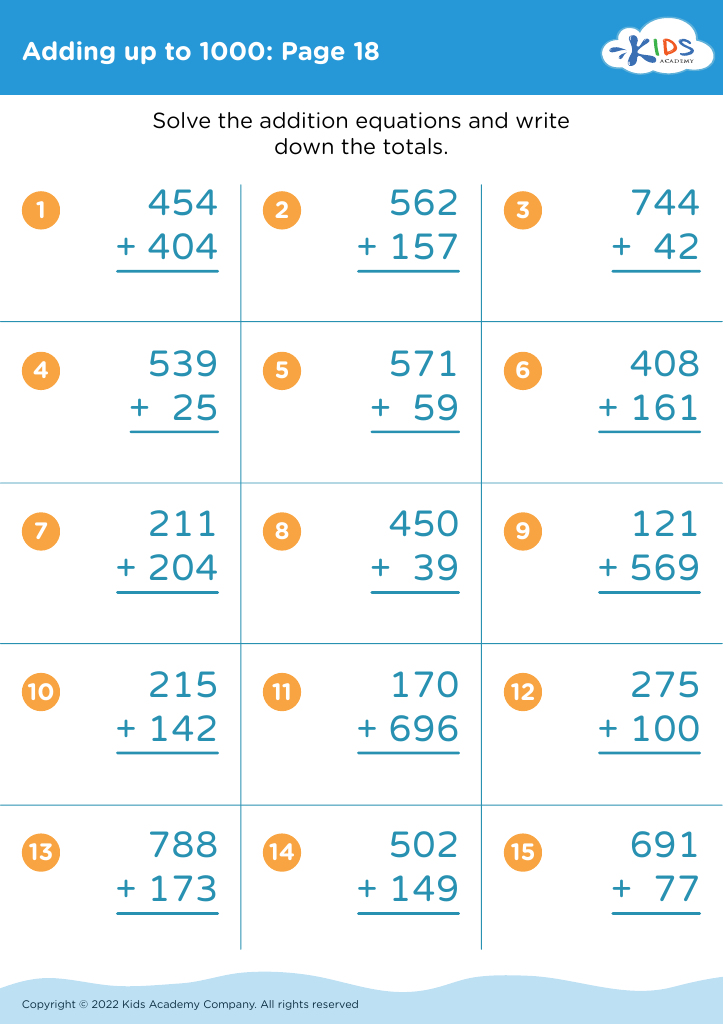
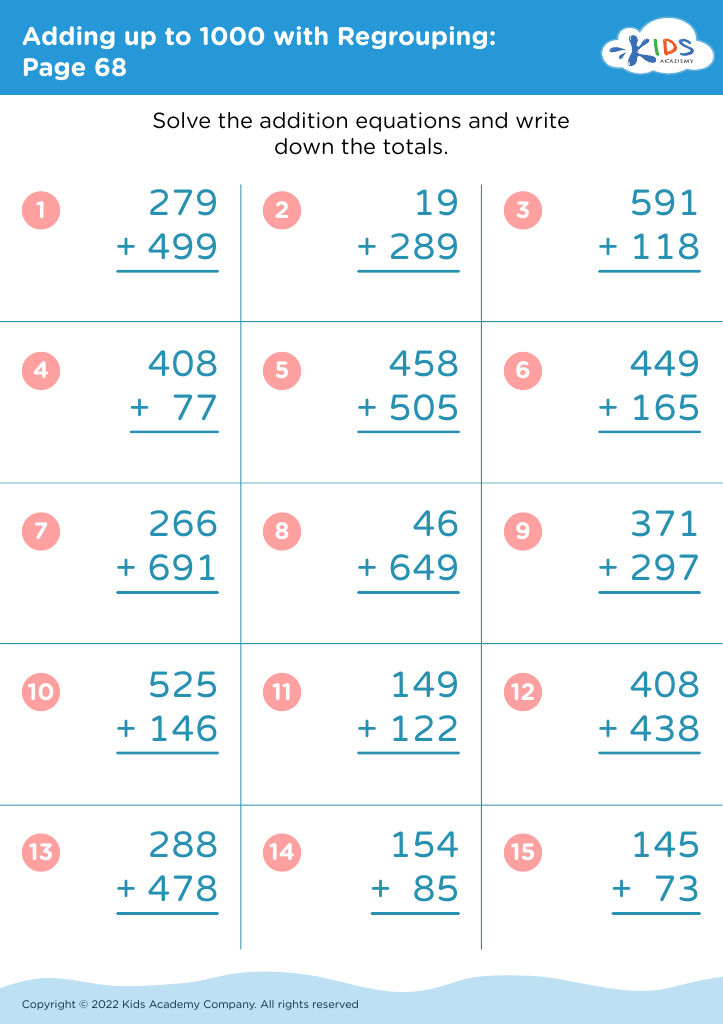
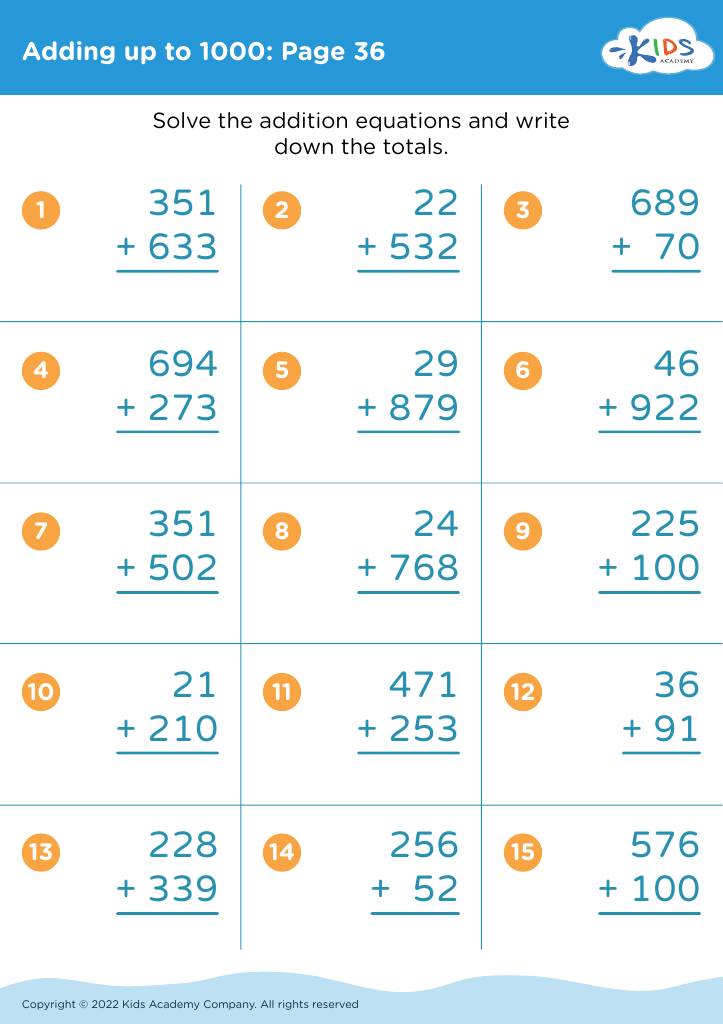
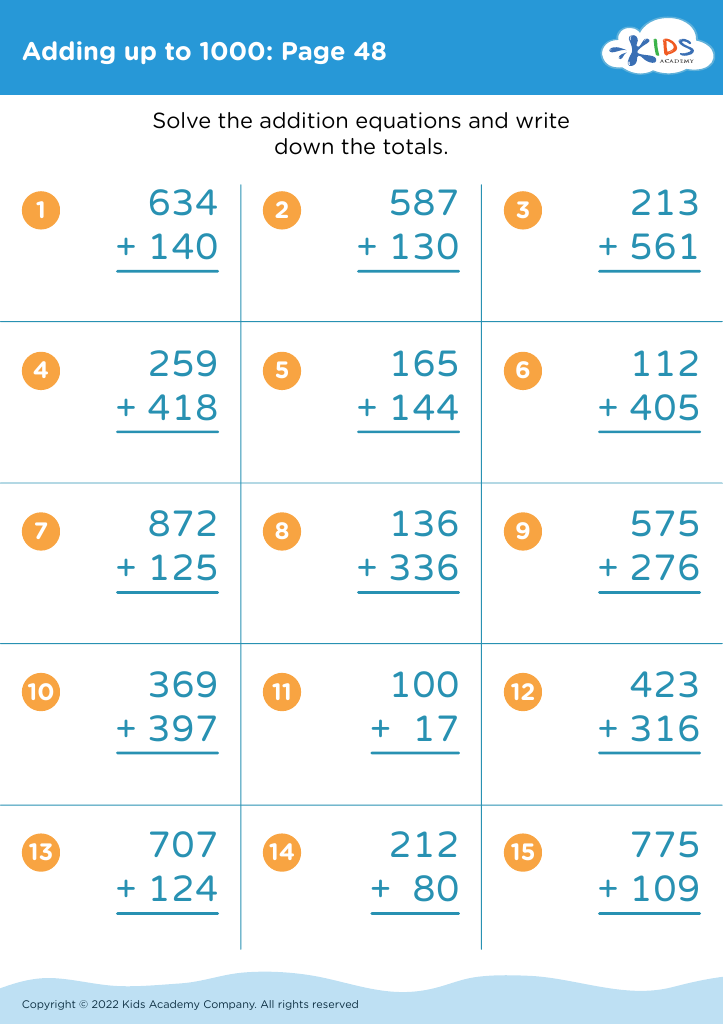



Fine motor skills are crucial for children aged 7-8 as they form the foundation for many academic and daily life tasks. During this developmental phase, children refine their ability to manipulate small objects, control their hand movements, and improve hand-eye coordination, which are all essential for writing, drawing, and completing basic math tasks—such as adding up to 1000.
Parents and teachers should care about fine motor skills for several reasons. First, these skills enable children to perform numeracy tasks with confidence, such as writing numbers and organizing information, which is vital for their mathematical development. Second, strong fine motor skills contribute to a child's overall cognitive growth, as they often involve problem-solving and critical thinking—necessary aspects of learning.
Moreover, fostering fine motor skills can reduce frustration and increase a child's motivation and enjoyment for learning activities, promoting a positive educational experience. Engaging in activities like cutting, drawing, or building can also enhance focus and patience, qualities beneficial for their holistic development.
In summary, a focus on fine motor skills helps equip children with the tools they need for academic success, reinforcing their self-esteem and love for learning during these formative years.








