Identifying shapes Adding up to 1000 Worksheets for Ages 7-8
3 filtered results
-
From - To
Discover our engaging "Identifying Shapes Adding Up to 1000 Worksheets" tailored for ages 7-8! These worksheets combine the excitement of shape recognition with essential math skills, allowing young learners to practice addition while identifying various geometric shapes. With colorful illustrations and age-appropriate activities, children can enhance their critical thinking and problem-solving abilities. Each worksheet is designed to facilitate self-paced learning and build a strong foundation in both math and geometry. Ideal for classroom use or at-home practice, these resources aim to make learning fun and effective. Help your child reach new heights in their education today!
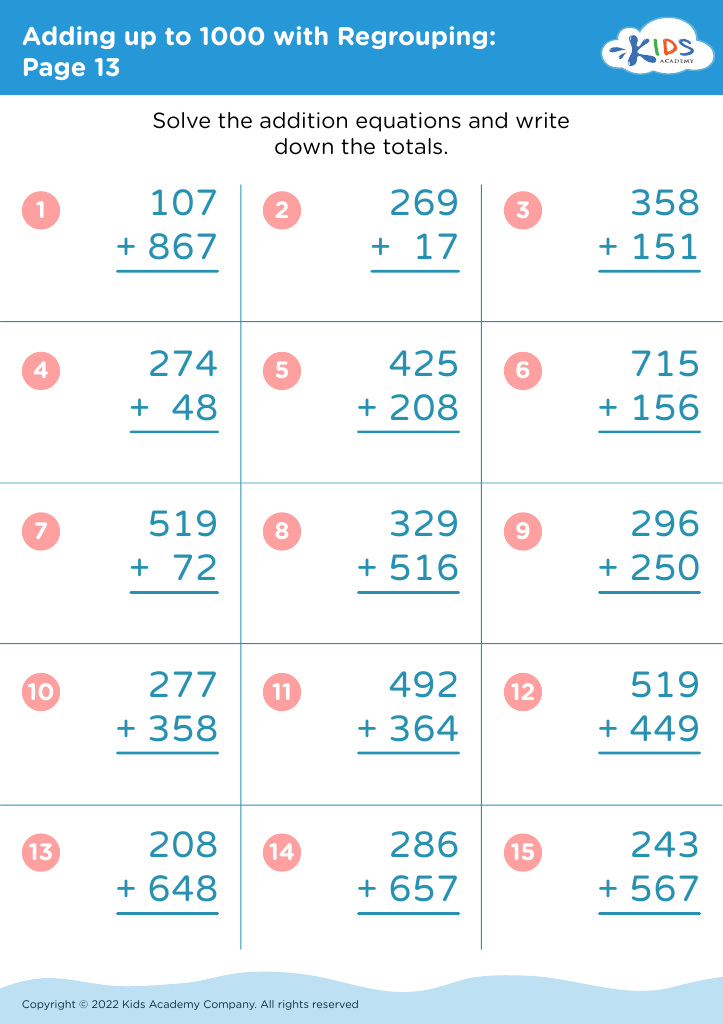
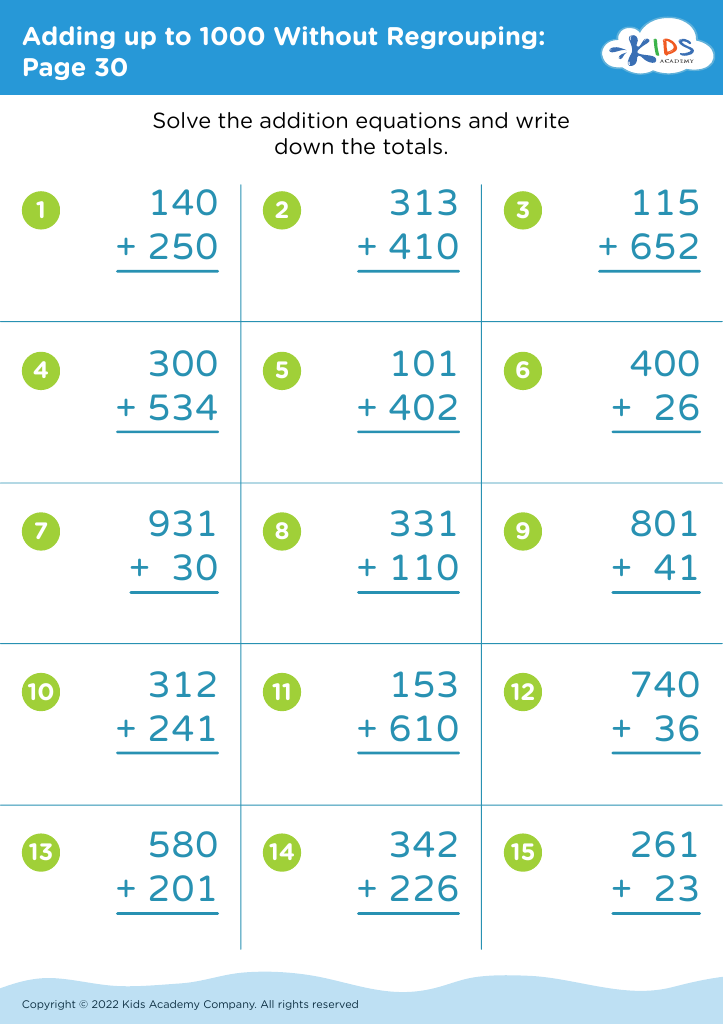
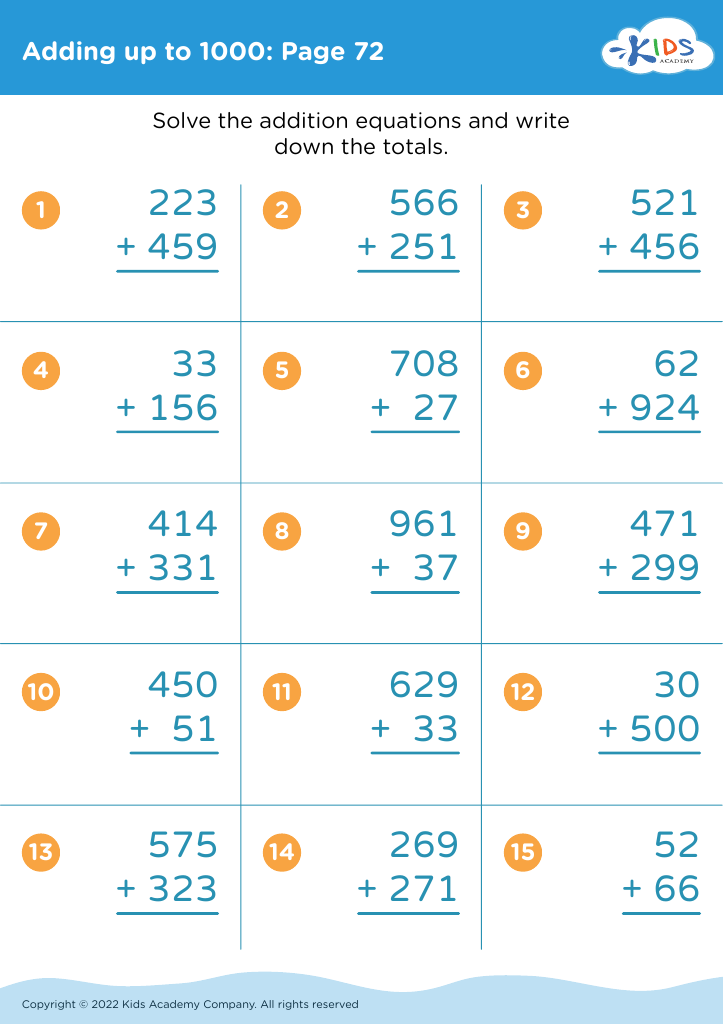



Identifying shapes and understanding the concept of addition up to 1000 are fundamental skills for children aged 7-8 that cultivate essential mathematical reasoning. Parents and teachers should prioritize these skills because they form the building blocks for more complex mathematical concepts.
Identifying shapes enhances spatial awareness, which is crucial not only in math but also in daily life, aiding in tasks like navigation and building comprehension. Proficiency in recognizing geometric shapes fosters creative expression through art and supports problem-solving skills in subjects like science.
On the other hand, addition skills, especially with larger numbers like 1000, help children develop fluency in calculation, an essential skill for more advanced arithmetic and real-world scenarios, such as budgeting or measuring. This foundational competence also builds confidence, as children learn to tackle increasingly challenging mathematical problems.
Moreover, these skills align with educational standards and ensure that children are prepared for future academic success. By engaging children in activities that involve shapes and addition, parents and teachers can create a rich learning environment that promotes critical thinking and a positive attitude towards mathematics. Ultimately, investing time in these areas lays the groundwork for a child's lifelong journey in education and problem-solving.








